16-Apr-20
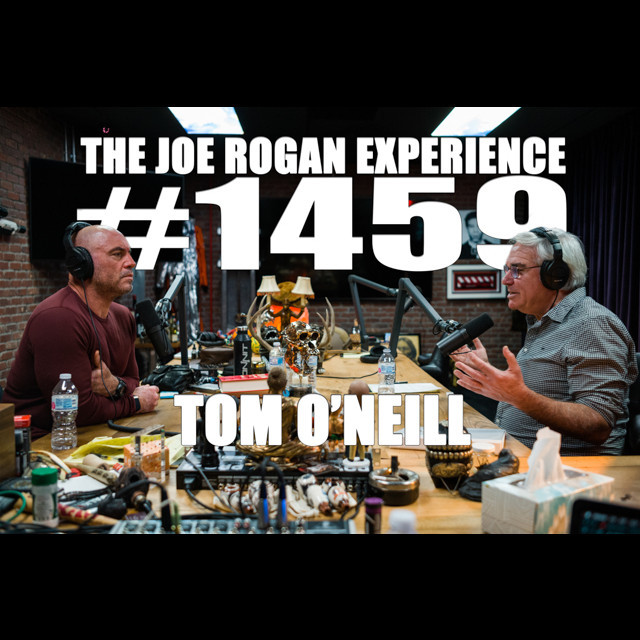
This podcast dives deep into Tom O’Neill’s investigation into the Charles Manson murders, unveiling shocking claims about government involvement, mind control, and a possible conspiracy involving the CIA. O’Neill’s book, “Chaos: Charles Manson, the CIA, and the Secret History of the Sixties,” uncovers a web of intrigue that challenges the official narrative, raising provocative questions about the nature of truth, power, and the dark side of human behavior.
Podcast Topics:
- The Origins of O’Neill’s Investigation:
- Tom O’Neill’s initial reluctance to take on the Manson story due to its perceived oversaturation.
- His editor’s insistence that there was a deeper angle to explore, leading him down a path of revelation.
- The significance of the 30th anniversary of the Manson murders as a starting point for O’Neill’s research.
- Premiere Magazine’s support for his investigation, funding over a year and a half of research before O’Neill transitioned to a book project.
- Manson’s Parole and Roger Smith:
- Manson’s parole officer, Roger Smith, granting Manson leniency despite violations and questionable actions.
- Smith’s role in allowing Manson to stay in San Francisco after a parole violation and his unusual recommendation to send Manson to Mexico.
- The suspicious nature of Manson’s job in Mexico and the disappearance of the company that hired him.
- The connection between Smith and the Haight-Ashbury Free Medical Clinic, where Manson began his transformation into a charismatic leader.
- MK Ultra and the CIA’s Role:
- MK Ultra, a CIA mind control program aimed at creating hypnoprogrammed assassins and couriers, which O’Neill argues Manson embodies.
- The exposure of MK Ultra in the 1970s, leading to congressional hearings and the destruction of program records.
- The connection between Jolly West, a prominent MK Ultra researcher, and the Haight-Ashbury Free Medical Clinic, where he conducted experiments under the guise of a hippie crash pad.
- The possible link between MK Ultra, Manson, and the Haight-Ashbury Free Medical Clinic.
- The Jimmy Shaver Case:
- The case of Jimmy Shaver, an airman who murdered a young girl with no recollection of the crime.
- Jolley West’s involvement as Shaver’s psychiatrist, using sodium pentothal to extract his repressed memories.
- The possible link between Shaver’s experimental treatment at Lackland Air Force Base and his amnesia, raising questions about MK Ultra’s role.
- The missing medical records related to Shaver, leaving the question of his involvement in MK Ultra experiments unanswered.
- Manson in Prison and the Possibility of Experiments:
- Manson’s history of incarceration in federal institutions, highlighting the potential for him to have been subjected to experiments in prison.
- Manson’s accounts of being examined by doctors in prison, though without details about the nature of the examinations.
- The connection between doctors like Mortimer Hartman, who used LSD on patients, and Manson’s time in prison, raising questions about his possible involvement in MK Ultra experiments.
- The lack of concrete evidence of Manson being experimented on, leaving the possibility open for speculation.
- Cointelpro and Chaos:
- Cointelpro, an FBI program aimed at neutralizing the left wing movement, the Black Panthers, and the hippie movement.
- Chaos, a CIA program with similar objectives, operating in San Francisco in the summer of 1967, the same time Manson arrived.
- The involvement of Ronald Reagan and J. Edgar Hoover in Cointelpro, highlighting the government’s desire to control and suppress dissent.
- The limited documentation and exposure of Chaos, making it difficult to fully understand its operations and impact.
- The Official Narrative of the Manson Murders:
- The Helter Skelter theory: Manson’s belief in a race war and his plan to repopulate the world with his “perfect offspring” after the war.
- Vincent Bugliosi’s account of Manson’s motives in his book, “Helter Skelter,” which O’Neill challenges.
- Bugliosi’s statement in interviews that Manson may not have actually believed in Helter Skelter, questioning the motive behind the murders.
- The possibility of alternative motives for the murders, prompting O’Neill to delve deeper into the events surrounding the crimes.
- The Manson Family’s Immunity and Bugliosi’s Role:
- Manson’s consistent release from jail despite numerous arrests and parole violations, suggesting a higher level of influence.
- The speculation that Manson was an informant for either the CIA or the FBI, working within the system to achieve their goals.
- Bugliosi’s close relationship with Rudy Altobello, the owner of the Tate house, and his attempts to control information flow during O’Neill’s investigation.
- Bugliosi’s off-the-record revelation to O’Neill about a missing videotape from the Tate house, challenging the official narrative and highlighting possible manipulation of evidence.
- The Role of Terry Melcher:
- Terry Melcher’s connection to the Tate murders as the former resident of the Cielo Drive house, which Manson’s followers targeted.
- Melcher’s conflicting testimonies about his encounters with Manson, which O’Neill proves to be false, undermining the official motive for the murders.
- The possibility that Melcher, as a figure in the Hollywood elite, was targeted by the government in an effort to incite fear and destabilize the anti-war movement.
- O’Neill’s discovery of Melcher’s encounters with Manson after the murders, further weakening the Helter Skelter motive and raising questions about the official narrative.
- The Case for Manson as an Informant:
- The pattern of Manson’s arrests and releases, suggesting a higher level of protection and purpose.
- Lewis Walknick, a retired judge and district attorney, labeling Manson’s repeated releases as “chicken shit” and suggesting that he was an informant for a higher authority.
- The connection between Manson’s activities and the objectives of Cointelpro and Chaos, with Manson potentially acting as an agent to incite violence and destabilize the left wing movement.
- The lack of clear evidence to prove Manson’s informant status, leaving it as a plausible but unproven theory.
- The Manson Family’s “Catch and Release” Pattern:
- The numerous instances where Manson and his followers were arrested for crimes but then released, raising suspicion about police interference.
- The potential involvement of Roger Smith, Manson’s parole officer, in manipulating the legal system to keep Manson free.
- The possibility that the police were pressured by higher authorities to release Manson and his followers, further suggesting a larger conspiracy at play.
- The overall pattern of “catch and release,” which challenges the official narrative and highlights the possibility of government manipulation.
- Bugliosi’s Compromised Position and Possible Manipulation:
- Bugliosi’s history of stalking his milkman in a paternity dispute, revealing his capacity for obsessive and manipulative behavior.
- Bugliosi’s abuse of his power as a deputy district attorney, using police resources to harass the milkman and his family.
- The possibility that Bugliosi was given the Manson case for a specific purpose, potentially to ensure a particular outcome and protect those involved in the larger conspiracy.
- The potential connection between Bugliosi’s compromised position and the manipulation of evidence and witnesses in the Manson trial.
- The Lavianca Murders and a Possible Connection to the Tate Murders:
- The Lavianca murders, initially thought to be unrelated to the Tate murders, but O’Neill presents evidence connecting the two.
- The connection between Lino Lavianca and Jay Sebring, Sharon Tate’s hairdresser, through shared appointments, suggesting potential connections between the victims.
- The possibility that Lino Lavianca, facing financial difficulties and a family meeting, was targeted to prevent his involvement in exposing a larger conspiracy.
- The likelihood that the police were aware of the connection between the two murders but deliberately kept them separate for strategic reasons.
- The Power Surge at Cielo Drive:
- The unexplained power surge at Cielo Drive the night before the murders, which O’Neill argues was caused by the deliberate cutting of electrical wires.
- The omission of the power surge in official accounts of the murders, raising questions about a potential cover-up.
- The confirmation of the wire-cutting by Paul Greenwall, an electrician who was called to the house the night before the murders, further solidifying O’Neill’s claim.
- The significance of the wire-cutting as evidence that the victims were deliberately targeted, challenging the randomness of the attacks suggested by the official narrative.
- The Missing Watson Tapes:
- Tex Watson’s confession to his attorney, Bill Boyd, detailing his involvement in the murders and other crimes committed by the Manson family.
- The existence of audio tapes recording Watson’s confession, which were in Boyd’s possession, holding potentially crucial information about the murders and their motives.
- The LA District Attorney’s office obtaining the tapes through legal maneuvers, preventing O’Neill from gaining access to them despite being promised the first listen.
- The potential for the tapes to reveal crucial information about the murders, including the true motives and possibly the involvement of government agencies, which could explain why they are being withheld.
- The Importance of O’Neill’s Investigation:
- O’Neill’s extensive research and uncovering of crucial documents and testimonies, challenging the official narrative and revealing a darker and more complex truth.
- The potential impact of O’Neill’s book on public perception of the Manson murders, potentially leading to a reassessment of the events and the role of government agencies.
- The call for further investigation and scrutiny of O’Neill’s findings by journalists and researchers, to uncover the hidden truths about the Manson family, MK Ultra, and the government’s involvement.
- The importance of O’Neill’s investigation in exposing corruption within the legal system and the manipulation of evidence in high-profile cases.
Memorable Quotes:
- “Everything that most people believe that happened during the Manson murders is a tiny fraction of what was going on behind the scenes.” – Joe Rogan highlighting the shocking revelations of O’Neill’s investigation.
- “I didn’t get the whole file, and the file I got had redactions. He would report to the head office. and they would give him instructions. And then he would violate those instructions, and there’d be no repercussions for him or for Manson.” – O’Neill discussing the suspicious nature of Manson’s parole and Roger Smith’s involvement.
- “It raises huge questions about this was an experiment gone wrong, you know, that he was part of one of these experiments at Lackland Air Force Base where he was signed up.” – O’Neill discussing the possibility of Jimmy Shaver being a subject of MK Ultra experiments.
- “You’ve got to find out who it was and I go up. How do I do that? And he goes, you’re not gonna be able to. That’s he’s an informant.” – Lewis Walknick, a retired judge and district attorney, suggesting that Manson was an informant for a higher authority.
- “He goes, ‘I don’t think Charlie believed in it. He got his followers too, but he never believed in that. He was too smart. He was a calm man.'” – Joe Rogan discussing Bugliosi’s admission that Manson may not have believed in Helter Skelter, which raises questions about the motive behind the murders.