14-Feb-20
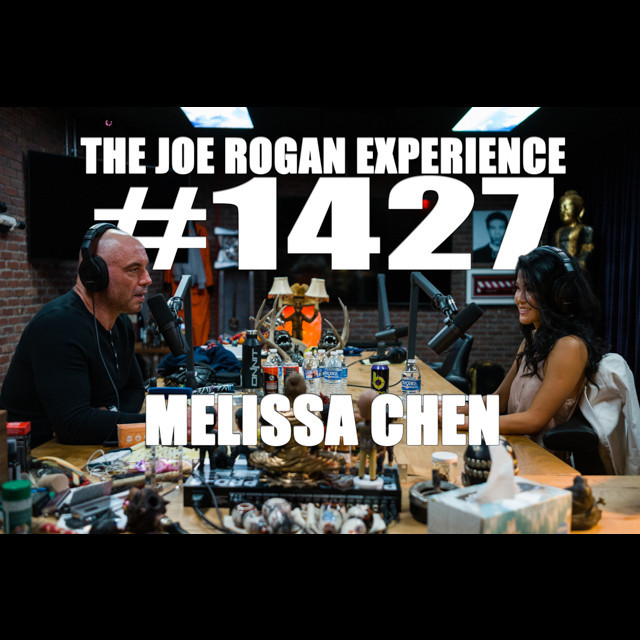
This podcast explores Melissa Chen’s insightful observations on Singapore’s rapid development, the challenges of censorship and promoting free thought, the dangers of China’s growing influence, and the complexities of free speech and wokeness in the United States. Provocative discussions include Singapore’s strict drug laws, China’s economic warfare tactics, the NBA’s capitulation to censorship, and the limitations of free speech in a culture obsessed with wokeness. Underlying themes explore the importance of cultural pluralism, the dangers of rigid ideology, the impact of social media on discourse, and the complexities of navigating a world where information and ideas are increasingly controlled.
Podcast Topics
- Singapore’s Unique Model: A Sterile Paradise with a Ruthless Undercurrent
- Melissa describes Singapore as a seemingly perfect, wealthy nation with a “Disneyland with the death penalty” feel, contrasting its advanced infrastructure and aesthetics with its strict laws.
- She shares her personal experience growing up in a society with limited free speech and strict government control, which led her to leave the country.
- Singapore’s rapid transformation from a Third World to First World nation is attributed to the strong leadership of Lee Kuan Yew, who prioritized economic growth, controlled free speech, and implemented a zero-tolerance policy for drugs.
- The podcast delves into Singapore’s drug laws, highlighting the death penalty for drug possession, even for small amounts, and the execution of an Australian citizen in transit. This sparks a discussion about the effectiveness and ethics of such strict policies.
- The Global Struggle for Free Thought: Ideas Beyond Borders
- Melissa describes her work with “Ideas Beyond Borders,” a nonprofit organization dedicated to promoting pluralistic thinking and exporting ideas to regions where free speech is limited, particularly the Middle East.
- The organization acquires and translates books, unavailable in Arabic, for free, providing access to diverse viewpoints and challenging dominant narratives.
- The podcast highlights the scarcity of translated books in Arabic, with a stark statistic: more books are translated between English and Spanish in a year than English and Arabic in a thousand years. This underscores the need to bridge the information gap and expose people to different perspectives.
- Melissa argues that the lack of access to diverse ideas perpetuates indoctrination and limits people’s ability to break free from restrictive mindsets. She emphasizes the importance of making ignorance a choice for everyone.
- China’s Ascent and the Threat of Digital Tyranny
- The podcast explores China’s rapid economic growth and its increasingly authoritarian control over information and discourse. Melissa highlights the challenges of accessing social media platforms like Facebook and Wikipedia in China, due to government censorship.
- She discusses China’s “Socialism with Chinese Characteristics” model, which emphasizes economic progress but within a tightly controlled environment, contrasting it with the American Dream’s bottom-up approach.
- Melissa warns about the dangers of China exporting its digital tyranny tools, which could undermine the freedom of speech and expression worldwide.
- The podcast touches upon China’s “Thousand Talents Program,” a program offering lucrative incentives to academic researchers to move to China, potentially raising concerns about intellectual property theft and the influence of the Chinese government on sensitive research.
- The Huawei Case: The Sputnik Moment of the Digital Age
- Melissa calls Huawei, a Chinese tech giant, the “Sputnik issue of our time,” highlighting the potential threat it poses to global technological dominance and privacy.
- She expresses concerns about Huawei’s close ties to the Chinese government, emphasizing the lack of transparency and the potential for the government to access user data.
- The podcast discusses the United States’ ban on Huawei, citing concerns about security risks, and the impact of this ban on Huawei’s access to Google Play Store and its app ecosystem.
- Melissa advocates for a policy of reciprocity, suggesting that the United States should leverage its own market power to counter China’s influence and protect its interests in the global technological landscape.
- The Hong Kong Protests and the NBA’s Capitulation
- The podcast examines the Hong Kong protests, highlighting the erosion of Hong Kong’s autonomy under Chinese rule and the increasing threat to free speech and individual freedoms.
- Melissa discusses the NBA’s controversial response to Daryl Morey, the Houston Rockets general manager, who tweeted in support of the Hong Kong protesters. The NBA faced immense pressure from China and ultimately forced Morey to apologize.
- This incident exposes the power of China’s market influence and the willingness of corporations to prioritize profits over principles, potentially undermining freedom of expression.
- The podcast suggests that China’s influence on Hollywood and media productions is growing, leading to self-censorship and alterations to content to appease the Chinese government.
- The Dangers of Wokeness: The Political One-Drop Rule and the Suppression of Discourse
- Melissa criticizes the “political one-drop rule,” a phenomenon where individuals are judged and labeled based on their association with the most extreme viewpoints within a group. She cites the example of Daryl Davis, a musician who helped numerous Klansmen leave the organization, being falsely labeled a Neo-Nazi due to his association with a conference.
- The podcast highlights the dangers of shutting down speech and de-platforming individuals with even marginally offensive views. Melissa argues that combating bad ideas with better ideas is more effective than silencing them.
- The discussion delves into the “woke” ideology’s rigid adherence to a set of beliefs and the intolerance towards any dissent or divergence. This is contrasted with the ideal of pluralism and a healthy exchange of ideas.
- Melissa criticizes the hypocrisy of “woke” activists who advocate for free speech on certain issues but readily engage in silencing and de-platforming those with whom they disagree.
- The Impact of Culture and Upbringing on Individual Success: Tiger Parenting, Confidence, and Work Ethic
- Melissa compares the cultural differences in parenting styles between Asian households and American households, highlighting the emphasis on hard work, discipline, and achieving high standards in Asian cultures, which can lead to both advantages and disadvantages for individuals.
- The podcast discusses the potential benefits of confidence and a strong self-image, which can be cultivated in environments where individuals are encouraged to pursue their goals without undue criticism.
- Melissa draws a parallel between the work ethic of Asian cultures and the principles of Republican politics, which emphasize individual responsibility, hard work, and self-reliance.
- The podcast explores the concept of “efficiency wages,” where individuals are paid more to incentivize higher performance, contrasting this with the often lower wages in Singapore, which may not incentivize maximum output.
- The Uncomfortable Truth about Group Outcomes: Affirmative Action and the Asian American Experience
- The podcast addresses the controversial topic of affirmative action, specifically focusing on the challenges faced by Asian Americans in college admissions.
- Melissa highlights the accusations that Asian Americans are often penalized in admissions processes due to their high academic achievements, which can lead to discriminatory practices to manage diversity in college populations.
- She discusses the Harvard lawsuit, where Asian Americans alleged that they were downgraded on personality scores, potentially indicating a biased approach to admissions.
- The podcast explores the complexities of diversity and the potential for unconscious bias in admissions processes, questioning whether attempts to achieve diversity can lead to unintended consequences for certain groups.
- The 2020 Presidential Election: Wokeness, Identity Politics, and the Rise of Andrew Yang
- Melissa discusses the 2020 Democratic primary and the growing influence of “woke” ideology within the party, potentially causing division among candidates and voters.
- She highlights the contrasting views between Bernie Sanders and Pete Buttigieg on identity politics, with Sanders facing criticism for his association with some “woke” activists.
- Melissa expresses her support for Andrew Yang, who she sees as a refreshing alternative to the typical politician, emphasizing his open-mindedness, technological literacy, and non-partisan approach.
- The podcast delves into the complexities of social media and its impact on political discourse, highlighting how easy it is for candidates to cater to specific ideologies and potentially manipulate public perception through targeted messaging.
- The Importance of Communication and the Dangers of Dogpiling: A Call for Open-Minded Dialogue
- Melissa emphasizes the importance of open communication and constructive dialogue as a way to bridge divides and overcome ideological polarization. She advocates for listening to opposing viewpoints, engaging in respectful discourse, and seeking understanding instead of resorting to yelling or silencing.
- The podcast criticizes the “dogpiling” mentality prevalent on social media, where individuals are quickly condemned and ostracized for expressing even slightly dissenting opinions. This, Melissa argues, leads to the suppression of diverse voices and hampers progress towards a more tolerant society.
- The discussion explores the dangers of creating intellectual “false flags” by exaggerating the threat posed by certain groups or individuals, ultimately perpetuating fear and division within society.
- Melissa highlights the crucial role of the media in promoting open-minded discourse, urging them to provide fair and balanced coverage of diverse viewpoints and to avoid perpetuating echo chambers that reinforce existing biases.
- The Power of Humor: Mocking the Absurdity of Wokeness and Challenging Rigid Ideologies
- Melissa explores the role of humor in challenging rigid ideologies and exposing the absurdity of some “woke” beliefs. She argues that humor can be a powerful tool for dismantling harmful narratives and fostering a more tolerant society.
- The podcast examines the evolution of comedy in a world increasingly sensitive to social issues, highlighting how some comedians are now seen as dangerous for challenging prevailing norms and pushing boundaries.
- Melissa emphasizes the importance of context and understanding the nuances of humor, suggesting that judging a joke solely on its content without considering the intention, personality, and cultural context can lead to misinterpretations and unnecessary outrage.
- The discussion explores the power of satire and how it can be used to expose hypocrisy and challenge dominant narratives. Melissa cites the example of Titani McGrath, a satirical account that often satirizes woke ideology, demonstrating how comedy can challenge rigid thinking.
- The Importance of Perspective: The Value of Travel, Experiencing Different Cultures, and Stepping Outside One’s Bubble
- Melissa stresses the importance of stepping outside one’s bubble and experiencing different cultures to gain a wider perspective on the world. She highlights how living in Singapore and then moving to the United States broadened her understanding of different societal norms and values.
- The podcast underscores the potential for “America-centric” biases in the “woke” movement, suggesting that a wider perspective might reveal that certain issues are not as pressing or universal as they may seem.
- Melissa encourages journalists to engage in international reporting, to gain firsthand experience of different realities and to provide a more balanced understanding of global issues.
- The discussion highlights the value of diverse perspectives in shaping informed opinions and challenging the tendency to view the world through a narrow lens.
5 Memorable Quotes
- “Singapore is kind of like, you know, the snow globes, the perfect snow globes, but yeah. Yeah. When you, like, turn it over and, like, everything kinda sprinkles, that’s what it feels like living in Singapore. for me at least. I I had to get out. It’s just it’s a bit sterile. It’s perfect, but it’s too perfect.” – Melissa Chen reflects on the paradoxical nature of Singapore’s “perfect” society, highlighting its limitations.
- “I just wanna live in a world where being ignorant is a choice. for everyone. because because there’s a choice for us.” – Melissa Chen emphasizes the importance of access to information and the right to choose knowledge, contrasting it with enforced ignorance in some cultures.
- “The way they just, like, control information and now exporting those same tools to other authoritarian countries around the world. That part to me is dangerous.” – Melissa Chen expresses her concern about China’s growing influence and the spread of digital tyranny tools.
- “It’s always hard when someone does side on the woke…If you do it, it’s such a contrived thing today. It’s so difficult to figure out why people are acting the way they’re acting.” – Melissa Chen critiques the performative nature of wokeness, highlighting the difficulty in discerning genuine conviction from social pressure.
- “It’s not offering any path to redemption and lumping all… digressions and all mistakes into the same sort of pile. Right. It’s just it’s a childish way of treating human beings.” – Melissa Chen criticizes the lack of forgiveness and the unforgiving nature of “cancel culture,” arguing for a more nuanced approach to human error and the possibility of redemption.