26-Nov-19
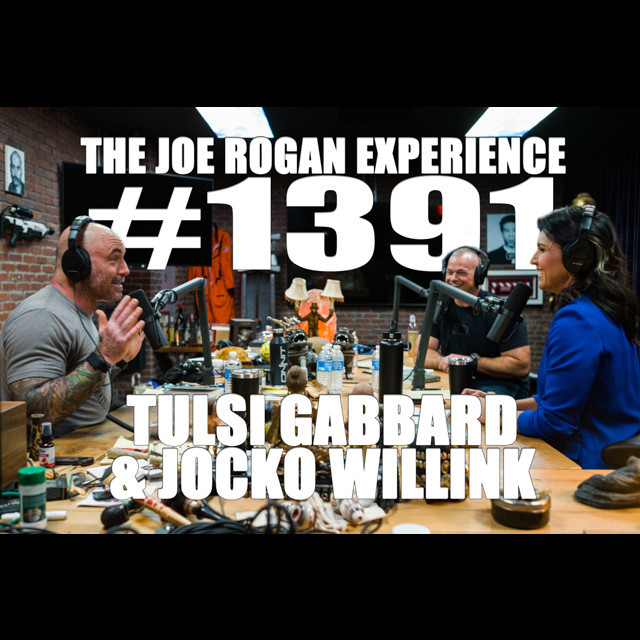
This Joe Rogan Experience podcast features Tulsi Gabbard, a 2020 Democratic presidential candidate, and Jocko Willink, a decorated retired Navy SEAL officer. The conversation delves into a wide range of topics, from Gabbard’s experiences as a presidential candidate and her political beliefs, to Willink’s insights on leadership and their shared perspectives on foreign policy. It also examines the current political climate, the role of social media in shaping public opinion, and the challenges facing both political parties.
Major Topics:
- Tulsi Gabbard’s Presidential Campaign and Attacks from the Establishment:
- Gabbard describes the intense attacks she has faced from the Democratic establishment, fueled by her challenge to the status quo and her focus on foreign policy reform.
- She highlights her campaign’s reliance on individual contributions and its refusal to accept funds from PACs or lobbyists, highlighting the power dynamics at play in Washington.
- Gabbard emphasizes the importance of bypassing mainstream media and communicating directly with voters to counter the establishment’s narrative.
- She also discusses the “chilling effect” of these attacks on free speech and the message they send to other Americans who may challenge the establishment.
- The Nature of Political Discourse and the 24-Hour News Cycle:
- The podcast explores the limitations of the current political debate format, with its reliance on short sound bites and a focus on conflict and confrontation.
- It highlights the pervasive “us vs. them” mentality that dominates political discourse, where disagreement is often framed as hatred.
- Rogan and Willink emphasize the importance of seeking balance and understanding different perspectives, while acknowledging the impact of ego and the desire for validation in shaping opinions.
- They also critique the 24-hour news cycle and the constant bombardment of information, which can lead to snap judgments and a lack of nuanced understanding of complex issues.
- Tulsi Gabbard’s Foreign Policy Views and the “Bush-Clinton Doctrine”:
- Gabbard critiques the interventionist foreign policy approach often pursued by the U.S., known as the “Bush-Clinton Doctrine,” which she believes has led to regime change wars and destabilized regions.
- She argues for a more diplomatic approach, emphasizing the importance of maximizing diplomacy and seeing war as a last resort.
- The discussion touches upon Gabbard’s meetings with Syrian President Bashar al-Assad, which have been used by her opponents to portray her as a “Russian asset.” Gabbard rejects these accusations as baseless and attacks on her character.
- Gabbard further connects her stance on foreign policy to issues like the Iran nuclear deal and the conflict in North Korea, arguing that the U.S. has undermined its credibility and made itself less safe by its actions.
- The Role of the Media in Promoting War and Conflict:
- The podcast explores the media’s tendency to act as cheerleaders for wars and military actions, often driven by a desire for higher ratings and profits.
- It discusses the influence of the media in shaping public opinion and how the narrative it presents can impact how people view international events and conflicts.
- The discussion also touches upon the media’s tendency to focus on conflict and confrontation, which can exacerbate political divides and create a more polarized environment.
- Rogan and Willink highlight the importance of seeking truth and accuracy, rather than prioritizing speed and sensationalism, and allowing people to form their own opinions based on facts.
- The Importance of Understanding the Long Game and Strategic Decision-Making:
- Willink emphasizes the military’s approach to decision-making, which involves understanding the problem, defining the objective, and assessing the potential consequences before taking action.
- He critiques the tendency in politics and the media to make snap judgments and react to events without fully understanding the context or considering long-term implications.
- The discussion highlights the need for leaders to be willing to adapt their plans as situations evolve and to acknowledge when their initial assessments may be wrong.
- This theme connects to the broader debate on foreign policy, as it highlights the importance of carefully considering the costs and consequences of military interventions.
- The Impact of Social Media and the Rise of “Cancel Culture”:
- The podcast examines the influence of social media platforms like Twitter, Facebook, and Google in shaping political discourse and public opinion.
- It raises concerns about the extraordinary power these companies wield and the potential for manipulation and censorship.
- The discussion highlights the phenomenon of “cancel culture,” where individuals can be ostracized or even have their careers destroyed for expressing controversial views, regardless of their accuracy or intent.
- Rogan and Gabbard discuss potential solutions, including antitrust legislation to break up tech monopolies and laws to protect freedom of speech and access to information.
- The Role of Economic Policy in Shaping the Global Landscape:
- The podcast touches upon the importance of economic policy in addressing various global challenges, such as poverty, inequality, and conflict.
- It highlights the impact of trade wars and the need for a more balanced approach to global economic relations, focused on shared prosperity rather than zero-sum competition.
- The discussion also explores the importance of supporting American manufacturing and bringing jobs back to the U.S., which can have a positive impact on the economy and local communities.
- Rogan and Gabbard emphasize the need for leaders to prioritize the interests of the people, particularly those who have been disadvantaged by the current system, and to ensure that economic policies benefit the majority, rather than a select few.
- The Nature of Leadership and the Challenges of the Presidency:
- The podcast explores the qualities of effective leadership, emphasizing the importance of honesty, integrity, and a willingness to make difficult decisions.
- It discusses the challenges faced by presidents, including the pressures of public opinion, the need to navigate a complex political system, and the responsibility for making decisions that impact millions of people.
- The discussion highlights the importance of balance, seeking different perspectives, and being willing to adapt to changing circumstances.
- Rogan and Gabbard both argue that effective leadership requires a commitment to serving the interests of the people and upholding the principles of democracy.
- Tulsi Gabbard’s Political Beliefs and Her Approach to Leadership:
- Gabbard emphasizes the importance of approaching issues based on their merits, rather than relying on partisan labels or ideologies.
- She highlights her focus on pragmatic solutions and common-sense approaches to address the issues facing the country.
- Gabbard emphasizes the importance of listening to different perspectives and finding common ground, even with those who may hold different political views.
- She describes her approach to leadership as one that prioritizes the interests of the people, promotes dialogue and cooperation, and seeks to build a more united and inclusive society.
- The Role of the Democratic Party and the Potential for Change:
- Gabbard expresses a desire for reform within the Democratic Party, making it more democratic, transparent, and inclusive.
- She acknowledges the challenges of confronting the party establishment and the power dynamics that favor those who align with the status quo.
- The discussion highlights the potential for a shift in the Democratic Party, as more people demand change and a more progressive approach to policy.
- Gabbard’s campaign represents a challenge to the traditional power structures within the party, showcasing the growing desire for fresh leadership and a different approach to governance.
- The Importance of Finding Community and Shared Values:
- The podcast touches upon the importance of finding community and shared values in a time of political polarization.
- Willink emphasizes the unifying power of activities like jujitsu, which can build camaraderie and understanding beyond political differences.
- The discussion highlights the need for Americans to rediscover their sense of shared identity and common purpose, recognizing that they are part of a larger community.
- Gabbard’s message of unity and her focus on putting the interests of the country first resonate with this theme, suggesting a potential path towards a more cohesive society.
- The Impact of the “Trump Phenomenon” on American Politics:
- The podcast examines the factors that contributed to Donald Trump’s election and the enduring impact he has had on American politics.
- It highlights Trump’s ability to connect with voters who felt disenfranchised and ignored by the political establishment.
- The discussion explores the role of social media, economic anxieties, and cultural divisions in fueling Trump’s rise and the continued polarization of American politics.
- Gabbard and Willink discuss the challenges of responding to Trump’s unconventional approach, his tendency to disregard norms, and his ability to use divisive rhetoric to galvanize his supporters.
- The Importance of Authenticity and Speaking Truth to Power:
- The podcast highlights the value of authenticity and speaking truth to power in a political landscape often dominated by spin, manipulation, and calculated messaging.
- Both Gabbard and Willink emphasize the importance of being true to oneself and one’s values, even when it means facing criticism or backlash.
- They argue that people are tired of politicians who say one thing and do another, and are seeking leaders who are genuine, transparent, and willing to stand up for what they believe in.
- This theme underscores the need for leaders to be accountable to the people they serve and to prioritize the common good over personal gain or political expediency.
5 Memorable Quotes:
- “Our challenge is, we are battling the political establishment in Washington, and it’s because I’m telling the truth. It’s because I’m challenging the status quo that they represent and that they’ve profited off for a very long time.”
- “The Democratic party’s always been like, ‘We want a woman.’ Okay, got you a woman. How about a woman that’s a veteran? Check. How about a woman that’s a congresswoman? How about that? Congresswoman, veteran, minority. Minority from Hawaii. All these positives trying to dig up dirt on you. They don’t have anything. They should be behind you.”
- “America is stronger than one man. One man is not going to take down this country. That’s the way it is.”
- “The danger here of what she did and how the media responded and how almost every single other candidate for president refused to comment, refused to denounce what she said, I think has a chilling effect on our freedom of speech in this country.”
- “It’s really easy to say, ‘Oh, this is we’re America. This is what we do. This is we’re gonna win.’ It’s like, ‘No. Actually, we made a bad decision, and we’re actually leaving right now because we think the expenditure from here on out is gonna be too high.'”