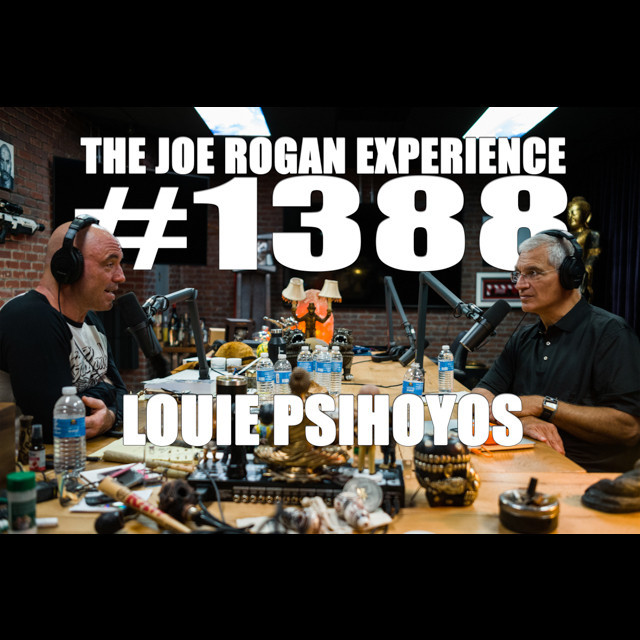
19-Nov-19
Joe Rogan Podcast #1388 – Louie Psihoyos
This podcast features Louie Psihoyos, a photographer and documentary film director known for his contributions to National Geographic and his Academy Award-winning film “The Cove.” Rogan and Psihoyos embark on a captivating journey exploring the interconnectedness of humanity’s impact on marine life, the intelligence of dolphins and whales, the looming threat of extinction, the environmental devastation caused by pollution, and the potential solutions that lie in innovative technology and a shift in consciousness.
Topics:
- The Genesis of “The Cove”:
- Psihoyos’s collaboration with Jim Clark, tech entrepreneur, and their shared underwater photography adventures.
- Their observation of dwindling fish populations and the realization of the ocean’s decline.
- Clark’s call to action and their decision to use their resources to make impactful films.
- Stephen Spielberg’s advice to never make a movie involving boats or animals, ironically setting the stage for “The Cove.”
- The Intelligence and Sentience of Dolphins:
- Dolphins possess a highly complex communication system, surpassing human capabilities.
- They exhibit remarkable intelligence and social behavior, forming intricate communities and displaying complex emotions.
- The comparison of their brain complexity to humans, with dolphins having a larger neocortex.
- Their ability to adapt and thrive in their environment, challenging human-centric notions of intelligence.
- The Global Crisis of Overfishing:
- The rapid depletion of fish stocks, exemplified by the decline of bluefin tuna to 4% of historical levels.
- The lack of effective regulation and the financial incentives that drive overfishing despite the ecological consequences.
- The shifting baseline, where each generation becomes accustomed to a less abundant ocean.
- The increasing rarity of fish leading to higher prices and further incentivizing unsustainable practices.
- The Devastation of the Great Barrier Reef:
- The devastating impact of climate change, agricultural runoff, and ocean acidification on the Great Barrier Reef.
- The irreversible damage caused by coral bleaching, resulting in the loss of over half the reef in just two years.
- The alarming decline of coral reefs worldwide, including the last coral reef in America facing pollution from sewage outfalls.
- The urgent need for action to protect these vital ecosystems before they disappear completely.
- The Dark Reality of Dolphin Captivity:
- The disturbing practice of capturing and training dolphins for entertainment, exposing the exploitation and suffering behind dolphin shows.
- The revelations from emails at SeaWorld, showing the use of caloric deprivation to force dolphins to perform tricks.
- The parallels drawn to abusive training programs like the Cuban Olympic wrestling program, highlighting the parallels in exploiting animals and humans for performance.
- The lingering legal loopholes that allow dolphin captivity despite overwhelming evidence of their sentience and the negative impacts on their well-being.
- The Sixth Mass Extinction:
- The alarming rate of species extinction driven by human activity, marking the sixth mass extinction event in Earth’s history.
- The primary drivers of extinction identified as habitat destruction, pollution, invasive species, and overconsumption.
- The devastating consequences of deforestation, especially in the Amazon rainforest, for biodiversity and potential medicinal discoveries.
- The urgency to address these issues before the planet loses countless species before we even understand their roles in the ecosystem.
- Climate Change Denial and the Role of Ideology:
- The stark reality of climate change, evidenced by extreme wildfires in California and the widespread denial of the issue in the United States.
- The influence of right-wing ideology in promoting climate change denial, aligning with a broader set of beliefs about environmental regulation.
- The dangerous consequences of ignoring scientific evidence and the need for immediate action to address the escalating crisis.
- The contrasting awareness and urgency in Europe and Asia, where climate change is acknowledged and addressed more readily.
- The Ocean’s Invisible Crisis:
- The pervasive pollution of the ocean, with sewage outfalls in Florida serving as a stark example of human disregard for marine life.
- The difficulty of addressing this issue due to its seemingly distant and invisible nature, often overlooked compared to land-based pollution.
- The urgent need for accountability and action to address the ocean’s pollution, a critical factor in its health and the survival of countless species.
- The challenges in creating compelling narratives and visual representations of this issue to engage audiences and spark action.
- The Power of Film and Awareness:
- The transformative impact of films like “The Cove” in raising awareness and driving change, illustrated by the significant decrease in dolphin slaughter in Japan.
- The importance of exposing the truth about animal cruelty and exploitation in industries like dolphin captivity and factory farming.
- The role of filmmakers in providing a platform for scientists, activists, and researchers to share their knowledge and inspire action.
- The potential for films to challenge ingrained beliefs and inspire empathy for non-human life, paving the way for a more sustainable future.
- The Potential of Lab-Grown Meat:
- The ethical and environmental implications of lab-grown meat as a potential solution to the problems of factory farming.
- The technological advancements in replicating meat from cells, creating a more sustainable and humane alternative.
- The ongoing challenges in scaling up production and ensuring the affordability and accessibility of lab-grown meat.
- The potential for lab-grown meat to address ethical concerns about animal cruelty and environmental damage associated with traditional meat production.
- The Importance of Hemp:
- The remarkable versatility of hemp, offering sustainable solutions for building materials, textiles, food, and biofuels.
- The historical suppression of hemp due to its potential threat to industries like paper manufacturing and the resulting prohibition of marijuana.
- The potential for hemp to address environmental challenges and create a more sustainable society, reducing dependence on fossil fuels and harmful agricultural practices.
- The ongoing efforts to decriminalize marijuana and promote the widespread use of hemp, a resource with significant potential for a healthier future.
- The Future of Food and Sustainability:
- The need for a fundamental shift in food consumption to address the growing global population and environmental challenges.
- The potential of plant-based diets and innovative food technologies like lab-grown meat to provide sustainable and ethical food sources.
- The importance of promoting healthy eating habits and understanding the environmental impact of our food choices.
- The challenge of transitioning to more sustainable food systems while addressing the concerns of affordability and cultural preferences.
- The Role of Consciousness and Empathy:
- The importance of expanding our consciousness and empathy to embrace the interconnectedness of all living beings.
- The need to challenge our anthropocentric views and recognize the value of non-human life.
- The potential for a shift in consciousness to drive positive change, fostering a deeper respect for the environment and all its inhabitants.
- The power of personal action and collective responsibility in creating a more sustainable and compassionate world.
Memorable Quotes:
- “It’s like we’re burning down the Library of Congress before we have a chance to know what the books read.”
- “I think when all is said and done, we’re gonna look at this as some insane slaughter of like what’s basically like water people.”
- “I think films could be really powerful, you know, to change the game.”
- “If we knew what they were saying, I think that changes the game.”
- “It’s not just to create awareness and, you know, to try to get something done about it. It’s to make people want to do something about it.”