30-Oct-19
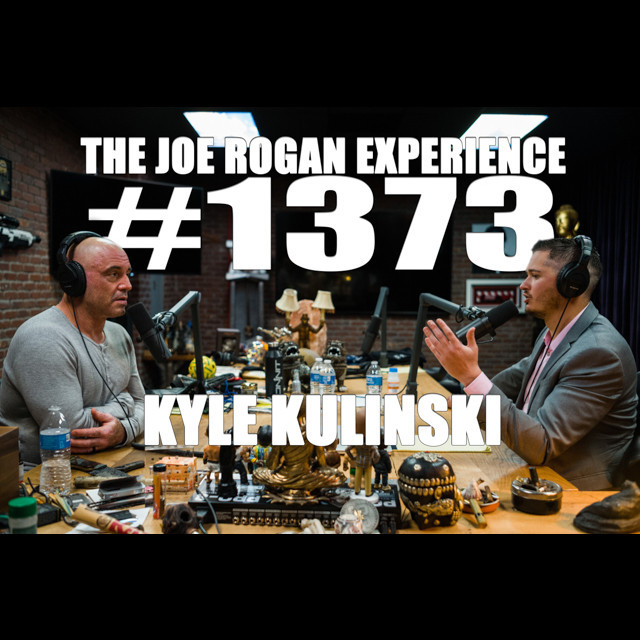
This Joe Rogan podcast with Kyle Kulinski delves deep into the complexities of US foreign policy, dissecting the Trump administration’s approach and contrasting it with previous presidents. Provocative topics include drone strikes, the shadow war in Africa, China’s rise as a global power, and the controversial figure of Julian Assange. Underlying themes explore the role of the deep state, the interplay of corporations and government, the motivations behind US military interventions, and the impact of misinformation in the digital age.
1. US Drone Strikes and Civilian Casualties:
- The podcast highlights the high civilian death rates associated with drone strikes under both Obama and Trump administrations.
- Kulinski argues that the “soft power” justification for drone warfare violates US law, the constitution, and international law.
- He criticizes the partisan nature of the debate, where drone strikes are often ignored when conducted by Democratic presidents.
- The podcast emphasizes the disturbing lack of accountability for the high civilian death toll and the lack of a public outcry against the practice.
2. The Deep State and the Shadow War in Africa:
- The podcast explores the concept of a “deep state” within the US government, particularly in the CIA, NSA, and FBI.
- Kulinski argues that the deep state exerts significant influence on US foreign policy, often acting independently of the elected president.
- The discussion focuses on the shadow war being waged in Africa, where the US is building military bases and increasing special operations forces deployments.
- He suggests that the shadow war is driven by power and control, seeking to maintain US dominance and prevent rivals like China from gaining influence in the region.
3. The Rise of China and the “Empire through Debt” Strategy:
- The podcast examines China’s expanding influence in Africa through its “belt and road initiative,” a strategy of infrastructure investment funded by loans.
- Kulinski argues that China’s approach is a form of “empire through debt,” where it uses economic leverage to gain control over resources and influence.
- He contrasts China’s strategic approach with the US’s historical reliance on indirect control through local dictators.
- The discussion explores the potential strategic advantages and disadvantages of authoritarian versus democratic systems in the context of global power competition.
4. The Intertwined Relationship of Corporations and Government:
- Kulinski argues that the distinction between corporations and the state is largely a facade, particularly in the US.
- He points to examples like the “banana wars” of the late 1800s, where the US toppled governments to protect the interests of corporations.
- The discussion highlights the influence of corporate money in politics and its impact on foreign policy decisions.
- Kulinski suggests that the revolving door between government and corporations further blurs the lines and creates a system where special interests dominate.
5. The Case of Julian Assange and US War Crimes:
- The podcast delves into the case of Julian Assange and his role in exposing US war crimes through WikiLeaks.
- Kulinski criticizes the US government’s relentless pursuit of Assange, arguing that it reflects a fear of transparency and accountability.
- He highlights the hypocrisy of the US government in condemning Assange while simultaneously engaging in covert actions that violate international law.
- The discussion emphasizes the importance of whistleblowers in exposing government wrongdoing and the chilling effect that prosecutions like Assange’s can have on future disclosures.
6. The Trump Administration and the Oil in Syria:
- The podcast analyzes Trump’s decision to withdraw US troops from Northern Syria, arguing that it was driven by a desire to control oil resources in the region.
- Kulinski criticizes Trump’s disregard for international law and his willingness to prioritize US interests over the concerns of allies like the Kurds.
- He highlights the hypocrisy of Trump’s rhetoric on war and intervention, contrasting his statements with his actions.
- The discussion raises concerns about the implications of Trump’s approach for the future of US foreign policy and the potential for further instability in the Middle East.
7. Trump’s Political Strategy: Relentless Offense and the “Giant Hustle”:
- Kulinski argues that Trump is a master of political strategy, utilizing relentless offense and a “giant hustle” to maintain his position.
- He describes Trump’s approach as a combination of anti-establishment rhetoric and deeply pro-establishment actions, creating a contradictory persona.
- The discussion highlights Trump’s ability to exploit media attention and his willingness to break political norms to achieve his goals.
- Kulinski suggests that Trump’s success is due in part to his ability to outmaneuver his opponents, who often fall into defensive traps.
8. The Ukraine Scandal and the Impeachment Inquiry:
- The podcast examines the Ukraine scandal, where Trump pressured Ukraine to investigate his political opponent, Joe Biden.
- Kulinski criticizes Trump’s actions as a blatant abuse of power and a violation of US political norms.
- He argues that the impeachment inquiry is focusing too narrowly on the Ukraine call, ignoring other potential grounds for impeachment.
- The discussion highlights the challenges faced by Democrats in impeaching Trump, particularly the need to secure Republican support in the Senate.
9. Trump’s Alleged Drug Use and its Impact on his Presidency:
- The podcast discusses allegations of Trump’s drug use, specifically Sudafed, and its potential impact on his behavior and decision-making.
- Kulinski compares Trump’s public persona and his alleged drug use, highlighting the contrast between his energetic rallies and his seemingly tired demeanor in other settings.
- The discussion raises concerns about the potential for Trump’s drug use to impair his judgment and compromise his ability to effectively lead.
- Kulinski suggests that Trump’s alleged drug use is another example of his contradictory nature and his willingness to push boundaries.
10. The Role of Misinformation in the Digital Age:
- The podcast examines the role of the Internet Research Agency (IRA), a Russian government-backed organization that spreads misinformation online.
- Kulinski argues that the IRA’s activities, including the creation of fake social media accounts and the dissemination of memes, have a significant impact on public discourse.
- He emphasizes the challenge of combating misinformation in a digital age, where information spreads rapidly and the distinction between fact and fiction can be blurred.
- The discussion highlights the need for media literacy and critical thinking skills to navigate the increasingly complex information landscape.
11. The Case for a National Direct Ballot Initiative Law:
- Kulinski proposes a national direct ballot initiative law, allowing voters to directly decide on key issues facing the country.
- He argues that this system would circumvent corruption in Washington DC and allow for greater citizen participation in policy-making.
- The podcast highlights the potential for this system to address issues such as marijuana legalization, healthcare reform, and foreign policy.
- Kulinski emphasizes the need for politicians to champion this idea and to consider alternative forms of democracy beyond the traditional two-party system.
12. The Impact of Corporate Welfare and the Military Industrial Complex:
- The podcast criticizes the system of corporate welfare, where companies like ExxonMobil receive billions of dollars in subsidies.
- Kulinski argues that these subsidies distort the market and prevent the growth of more sustainable industries.
- He also highlights the influence of the military industrial complex, where corporations profit from perpetual war.
- The discussion emphasizes the need for greater transparency and accountability in government spending and for policies that prioritize the public good over special interests.
13. The Importance of Social Democracy and its Misrepresentation:
- Kulinski advocates for social democracy, a political ideology that emphasizes social welfare programs and economic equality.
- He challenges the common misrepresentation of social democracy as authoritarian communism, arguing that it is a distinct ideology based on democratic principles.
- The podcast highlights the success of social democracy in Scandinavian countries, where it has provided universal healthcare, free college, and strong social safety nets.
- Kulinski emphasizes that social democracy is a reasonable and achievable goal for the US, arguing that it is necessary to address the country’s economic and social inequalities.
14. The Democratic Primary and the Rise of Bernie Sanders:
- The podcast analyzes the Democratic primary race, highlighting the significant support for Bernie Sanders.
- Kulinski argues that Sanders is a strong candidate with a record of fighting for progressive policies.
- He suggests that Sanders’s support is growing because he is seen as a genuine populist who is committed to representing the needs of working-class Americans.
- The discussion explores the challenges faced by Sanders, including his age and the potential for his policies to be misrepresented as too radical.
15. The Importance of Political Reform and the Need to Fight Corruption:
- The podcast emphasizes the need for political reform, particularly the need to get money out of politics.
- Kulinski argues that the current system is deeply corrupt and that it allows special interests to dictate policy.
- He suggests that clean elections, where campaigns are publicly financed, are essential to creating a more democratic system.
- The discussion highlights the importance of fighting for a system where policy is based on the needs of the people rather than the demands of corporations and special interests.
16. The Rise of Populism and the Populist vs. Elitist Divide:
- The podcast examines the rise of populism, arguing that it represents a growing sense of dissatisfaction with the political establishment.
- Kulinski argues that the populist vs. elitist divide is more significant than the traditional right vs. left divide.
- He suggests that there is a strong degree of agreement among the public on key issues, such as the minimum wage, healthcare, and foreign policy.
- The discussion highlights the potential for populism to be a force for positive change, provided that it is not hijacked by corrupt or authoritarian figures.
17. Climate Change and the Need for Technological Innovation:
- The podcast addresses the pressing issue of climate change and its potential consequences.
- Kulinski argues that technological innovation is crucial to mitigating climate change, emphasizing the need for investment in renewable energy sources.
- He highlights the potential of technologies like solar, thorium, and battery storage to address the challenges posed by climate change.
- The discussion emphasizes the need for a shift in focus from individual actions to systemic change, particularly in the realm of corporate emissions and government policy.
18. The Media’s Role in Perpetuating Misinformation and Polarization:
- The podcast critiques the role of the media in perpetuating misinformation and polarization.
- Kulinski argues that the media often focuses on sensational stories and personality-driven narratives, neglecting substantive policy discussions.
- He criticizes the media’s tendency to adopt the narratives of political elites, often ignoring alternative viewpoints.
- The discussion emphasizes the need for a more objective and balanced approach to reporting, one that prioritizes truth and informed discourse.
19. The Importance of Authenticity and Transparency in Politics:
- The podcast emphasizes the importance of authenticity and transparency in politics.
- Kulinski criticizes politicians who engage in hypocrisy and double-talk, arguing that voters are increasingly aware of their true intentions.
- He suggests that politicians who are willing to be honest and forthright with the public are more likely to gain trust and support.
- The discussion highlights the need for a political system where authenticity is valued and where voters are empowered to hold their representatives accountable.
20. The Importance of Critical Thinking and Media Literacy in a Post-Truth Era:
- The podcast underscores the importance of critical thinking and media literacy in a post-truth era.
- Kulinski argues that the rise of misinformation and propaganda necessitates a more discerning approach to consuming information.
- He encourages listeners to question sources, to verify information, and to be aware of biases and agendas.
- The discussion emphasizes the need for a more informed and engaged citizenry, capable of navigating the complex information landscape and making sound judgments about political issues.
5 Memorable Quotes:
- “They do not mess around when they feel like you’re uncovering their BS.” – Kulinski highlights the US government’s willingness to silence those who expose wrongdoing.
- “Trump has increased drone strikes by 432 percent over Obama.” – This statistic underscores the extent of Trump’s escalation of drone warfare.
- “He’s acting like the most anti-establishment president of all time when he’s on the campaign trail. He’s also the most deeply pro-establishment candidate in terms or or president in terms of what he’s actually doing.” – Kulinski captures the contradictory nature of Trump’s presidency.
- “It would be so much better if we had a law where every time we had to to vote in the presidential election, the people got to vote directly on the top 3 issues impacting the country.” – Kulinski proposes a system of direct democracy that could address corruption and empower voters.
- “The strongest divide in the country is not right versus left. The strongest divide in the country I’ve called it populist versus elitist.” – Kulinski highlights the growing divide between the political establishment and the public.