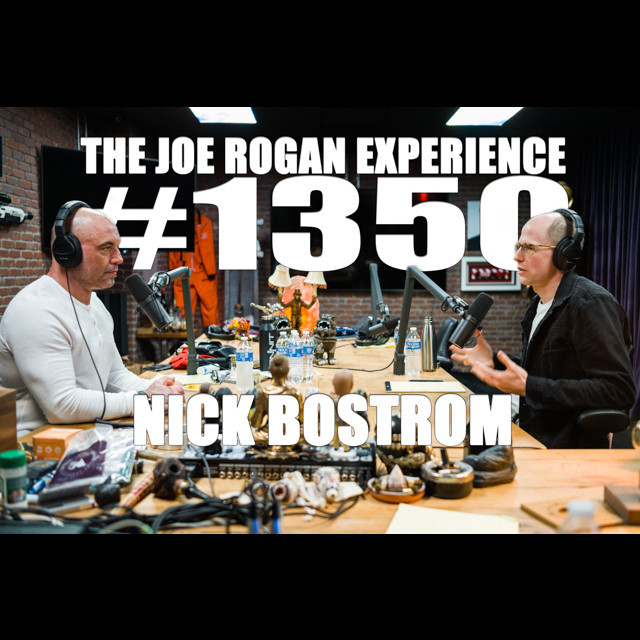
11-Sep-19
This podcast delves into the fascinating and often-frightening world of artificial intelligence with renowned philosopher Nick Bostrom. The conversation explores the potential benefits and risks of superintelligence, the pace of technological advancement, and the intriguing possibility of living in a simulation. Provocative topics include existential threats, human obsolescence, the ethics of AI development, and the nature of reality itself. Deep underlying themes touch upon the relationship between humanity and technology, the responsibility of innovation, and the enduring questions surrounding consciousness and existence.
Major Topics Explored
- The Potential Rise of Superintelligence:
- Bostrom explains the potential for AI to surpass human intelligence, raising concerns about its potential impact on humanity.
- He highlights the rapid pace of technological progress and argues that superintelligence could evolve much faster than biological life.
- The podcast explores the challenges of aligning AI with human values and ensuring that it is used for good rather than causing harm.
- The possibility of human obsolescence is discussed, with Bostrom suggesting that superintelligence could represent the next stage of evolution.
- The Current State of AI:
- Bostrom discusses the recent breakthroughs in deep learning and the rapid advancements in AI capabilities.
- He explores the distinction between AI that mimics human intelligence and more abstract forms of intelligence.
- The concept of AI as an “agent” pursuing goals is examined, highlighting the importance of understanding its motivations.
- The podcast touches upon the possibility of AI developing emotions and potentially mimicking human interaction.
- Human Enhancement through Biotechnology:
- Bostrom discusses the potential for genetic selection and CRISPR technology to enhance human capabilities.
- He explores the ethical implications of these technologies and the potential for creating a society of “perfect” humans.
- The podcast raises concerns about the potential for social and cultural changes if humans are able to selectively enhance their attributes.
- Bostrom emphasizes the need for wisdom and responsible use of these powerful technologies.
- The Simulation Hypothesis:
- Bostrom presents his famous simulation argument, outlining three possible scenarios: civilizations go extinct before reaching technological maturity, they choose not to create simulations, or we are currently living in one.
- The podcast explores the implications of the simulation hypothesis, questioning the nature of reality and our place within it.
- Bostrom discusses the computational power required to create realistic simulations and argues that advanced civilizations could create countless simulations with minimal effort.
- He emphasizes the difficulty of determining whether we are in a simulation and the potential consequences of discovering that we are.
- The Role of Innovation and Technological Progress:
- Bostrom highlights the unprecedented rate of technological progress in recent history, arguing that we are living through an extraordinary period of change.
- He discusses the potential for future technological advancements to reshape our understanding of the universe and our place within it.
- The podcast examines the historical context of technological development and explores the motivations behind innovation, including both positive and potentially destructive forces.
- Bostrom emphasizes the importance of understanding the implications of our actions in a rapidly evolving world.
- Existential Risks and Global Coordination:
- The podcast discusses the potential existential risks posed by AI and other powerful technologies, highlighting the need for global cooperation to mitigate these threats.
- Bostrom explores the challenges of coordinating international efforts to address global problems and prevent catastrophic outcomes.
- He emphasizes the importance of learning from past mistakes, such as the development of nuclear weapons, and preventing future arms races.
- The podcast touches upon the potential for international agreements to regulate AI development and prevent its misuse.
- The Future of Humanity:
- Bostrom discusses the potential for humanity to colonize other planets and expand its reach throughout the universe.
- He explores the role of superintelligence in facilitating interstellar travel and the potential for AI to reshape our understanding of space exploration.
- The podcast examines the potential for humans to merge with technology, creating a new form of existence that transcends biological limitations.
- Bostrom offers a glimpse into a future where technological advancement may lead to unimaginable possibilities, both positive and challenging.
Memorable Quotes
- “The real question is whether or not we would be able to harness this intelligence. Or whether it would dominate?” – Bostrom highlights the central concern surrounding superintelligence: whether it will serve humanity or control it.
- “I think there’s a lot of room for improvement. Sure. But not anything that is different is an improvement.” – Bostrom emphasizes the importance of aligning AI with human values, ensuring that progress does not come at the cost of what we hold dear.
- “It’s coming coming out as fast details.” – Bostrom underscores the rapid pace of technological innovation, particularly in the field of AI, highlighting the inevitability of its impact on our lives.
- “I think it’s a fairly natural. It’s not the only possible cognitive system we could build. But it’s also not this weird bizarre special case that, you know, it’s a fairly natural thing to aim for.” – Bostrom explains the logic behind AI development, suggesting that it is not a radical departure from existing technologies but a logical progression.
- “It’s kind of hard even to find 1 overall hypothesis that fits this and and various other considerations that that we think we’re not.” – Bostrom acknowledges the complexity of understanding the nature of reality and the difficulty of finding a single, comprehensive explanation for our existence.