5-Sep-19
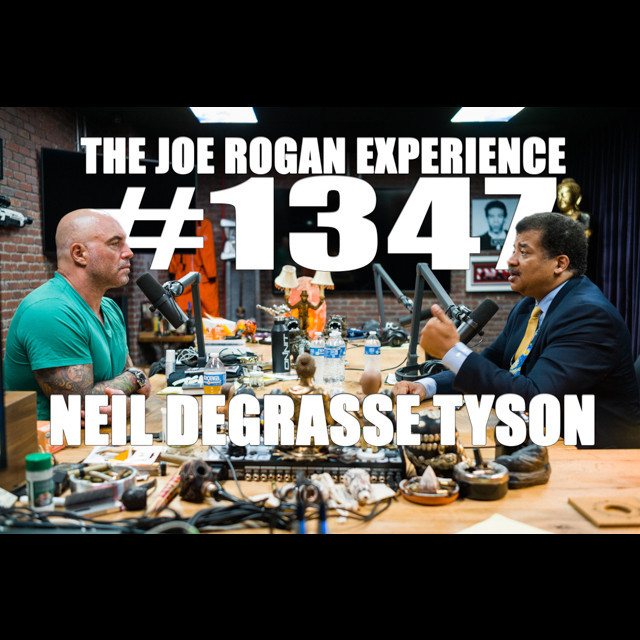
This episode of the Joe Rogan Experience features a fascinating conversation with Neil deGrasse Tyson, an astrophysicist, cosmologist, author, and science communicator. The discussion delves into a range of topics, from the nuances of art to the complexities of scientific denial and the future of space exploration.
Here are some of the major topics discussed in the podcast:
Art and its Connection to Emotion
- Tyson’s appreciation for Van Gogh’s Starry Night stems from its emotional depiction, not just a realistic portrayal.
- He argues that art, at its highest form, filters reality through the artist’s emotions, making it more impactful than a photograph.
- He emphasizes the power of art to elevate the mundane, forcing us to contemplate ordinary elements of the world in a new light.
- Tyson highlights the importance of artists in society as individuals who express emotions and insights differently than the rest of us.
The Rise of Science Denial and Its Consequences
- Tyson addresses the growing trend of science denial in modern society, pointing to issues like climate change, vaccines, and GMOs.
- He cautions that while freedom of thought is essential, science denial can have detrimental consequences on policy decisions, economic health, and public health.
- He emphasizes the importance of scientifically literate officials, even if they aren’t scientists themselves, to make informed decisions.
- Tyson argues that in a free society, it’s crucial to elect officials who are scientifically literate or willing to consult with those who are.
The Importance of Mountaintop Observatories
- Tyson passionately defends the use of mountaintops for astronomical observation, emphasizing their scientific importance and unique connection to the cosmos.
- He argues that while the TMT (Thirty Meter Telescope) is controversial, it represents a significant advancement in our understanding of the universe and should be built somewhere.
- He acknowledges the cultural significance of Mauna Kea for Native Hawaiians, but also emphasizes the profound spiritual connection that scientists have with mountaintops, viewing them as pathways to knowledge.
- Tyson stresses the importance of fully informing Native Hawaiians about the scientific value of the TMT before they vote on its construction.
The Enigma of Water and Its Crucial Role in Life
- Tyson explores the unique properties of water, particularly its expansion upon freezing, which is essential for the survival of aquatic life.
- He discusses the intriguing concept of the “triple point” of water, where ice, water, and steam can coexist, which is relevant to Mars’s environment.
- He explains how the pressure of ice skates can melt a thin layer of ice, allowing us to glide on water rather than ice itself.
- Tyson emphasizes the importance of water, both on Earth and in space, highlighting its value as a vital resource for life and a crucial element in the future of space exploration.
The Future of Energy and Transportation
- Tyson acknowledges the limitations of current battery technology, but expresses optimism for advancements, citing Porsche’s new fast-charging electric vehicle.
- He considers battery swapping as a potential solution for the slow charging times of electric vehicles, highlighting its potential as a fast and efficient method.
- He advocates for the adoption of solar energy, particularly in areas with abundant sunshine like California, highlighting the need for full-cost accounting of fossil fuels to make a true comparison.
- Tyson concludes that the future of energy and transportation will likely involve a combination of innovation and policy changes, but emphasizes the importance of investing in sustainable solutions.
The Mystery of Gravity and the Limits of Scientific Knowledge
- Tyson discusses the ongoing mystery of gravity, acknowledging that while we understand its effects, we don’t fully comprehend its nature.
- He highlights Einstein’s revolutionary concept of gravity as the curvature of space and time, a paradigm shift from Newton’s idea of action at a distance.
- He emphasizes that while science can explain “how” things work, the “why” questions can lead us to the frontiers of our knowledge, where new discoveries await.
- Tyson suggests that understanding the “how” of gravity, through its measurable effects and practical applications, can be sufficient for practical purposes, even if the ultimate “why” remains elusive.
The Ongoing Quest to Understand Black Holes
- Tyson describes the different types of black holes, from those formed by the death of stars to supermassive black holes found at the center of galaxies.
- He discusses the recent discovery of a black hole that doesn’t fit into the known categories, challenging our current understanding of black hole formation.
- He highlights the importance of serendipity in scientific discovery, emphasizing the need for observation and exploration even when we don’t know exactly what we’re looking for.
- Tyson concludes that the universe is constantly revealing new mysteries, and the discovery of this unusual black hole is just one example of how our knowledge is constantly expanding.
The Importance of Religion and Faith
- Tyson acknowledges that some people view dark matter and dark energy as evidence for a divine creator, but argues that these phenomena are more likely to be scientifically explainable.
- He emphasizes the importance of protecting the free expression of faith-based systems, even those that are unconventional, while respecting the rights of others.
- He highlights the variety of perspectives on the age of the Earth within different religious groups, pointing to the diversity of beliefs even within Christianity.
- Tyson emphasizes the role of religion in providing purpose to life and argues that while science can address how things work, it doesn’t necessarily provide answers to existential questions about meaning and purpose.
The Evolving Landscape of Digital Privacy
- Tyson expresses concern about the increasing intrusion of digital technology into our lives, pointing to the constant collection of data by social media companies and search engines.
- He compares the current situation to the pervasive surveillance of the Cold War era, highlighting the increasing potential for monitoring and control by technology companies.
- He argues that regulation is necessary to address potential abuses of personal data, citing the airline industry as an example of successful regulation for safety.
- Tyson concludes that while digital privacy is increasingly threatened, he remains optimistic that society will find ways to balance security with freedom.
5 Memorable Quotes from the Podcast
- “Anything that deviates from reality, is reality that has filtered through your senses. And I think art at its highest is exactly that.”
- “If you’re around running you don’t have them on your show, but if you’re around saying, ‘I don’t like science, science is bad, science is evil,’ okay. Well, then you will die in poverty if you elect officials who believe that as well.”
- “The stronger the pipe is, the lower the temperature has to be outside, for the freezing water to break it. So theoretically, if you had a pipe that was made of a stronger material than copper, you can get even lower than copper. You can get even lower temperatures.”
- “So, yeah, don’t you know him, God? What is he? Come on. I’m dark matter. Yeah. We Oh, by the way, it just did in in letters from an astrophysicist, which isn’t out yet. But again, I don’t know how the hell you got the book. But it’s there’s an entire chapter where I am conversing with people who are strongly religious.”
- “We’ve all accepted that — we’ve all accepted that — historically handful. — historically handful. — Not even a handful in this moment, just historically, a handful of people. We all said yes, take my luggage, x-ray my luggage, take away my liquids, pat me down, and I’m okay with that.”