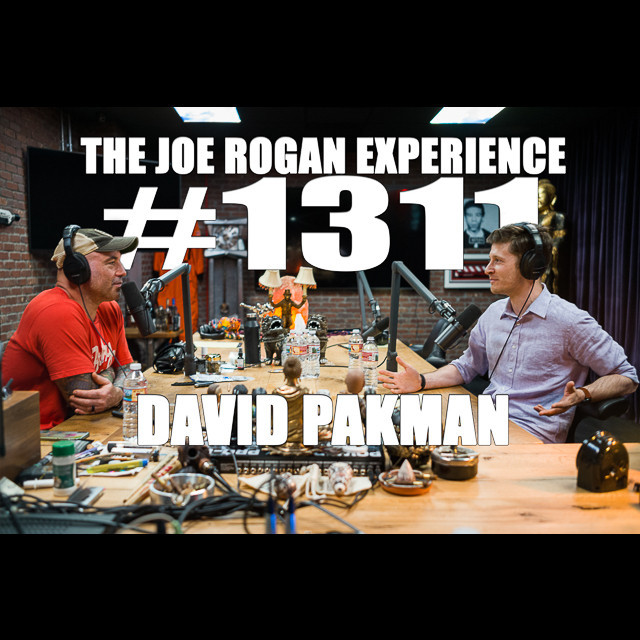
5-Jun-19
This podcast features a conversation with David Pakman, a political commentator and host of “The David Pakman Show.” The discussion revolves around topics like online political discourse, the dangers of social media algorithms, the challenges of interviewing controversial figures, the complexities of healthcare and education in the United States, and the implications of technology on society. Underlying themes highlight the perils of echo chambers, the need for nuanced and respectful dialogue, and the evolving landscape of communication in the digital age.
1. The Toxicity of Online Political Discourse:
- Pakman expresses concern about the prevalence of negativity, “dunking,” and ad hominem attacks in online political discourse.
- He argues that while some mockery can be effective in exposing flawed positions, constant negativity can be counterproductive.
- Pakman believes in the importance of distinguishing between genuine bad faith arguments and individuals influenced by external factors like audience capture.
- He underscores the role of social media algorithms in encouraging conflict and negativity, as these platforms prioritize engagement, often through disagreement and outrage.
2. The Adpocalypse and the Rise of Direct Audience Engagement:
- Pakman recounts the “adpocalypse” of 2017, when YouTube’s demonetization policies significantly impacted many creators, including himself.
- He describes the challenges faced by creators who relied heavily on YouTube for revenue and the difficulty of navigating YouTube’s algorithms, which sometimes struggle to distinguish between legitimate content and harmful material.
- Pakman emphasizes the importance of direct audience engagement, fostering a more independent model less reliant on platform algorithms and advertisers.
- He encourages his audience to support his work directly through his website and membership program, giving him greater control over his content and income stream.
3. The Challenges of Interviewing Controversial Figures:
- Pakman shares his experience interviewing Richard Spencer, a white nationalist figure, and the criticism he received from both the left and the right.
- He defends his decision to engage with Spencer, arguing that it was important to provide a platform for challenging his ideas and demonstrating that there are opposing viewpoints.
- Pakman explains his approach to interviewing such figures, prioritizing giving them a voice to expose their reasoning and expose the flaws in their arguments.
- He acknowledges that allowing a platform for such views can be controversial, but believes that the potential for constructive debate outweighs the risks.
4. The Need for Nuanced Conversations on Healthcare and Education:
- Pakman emphasizes the need for a universal healthcare system in the United States, arguing that the current employer-based system is fundamentally flawed.
- He advocates for a social democratic approach, balancing market forces with government investment to ensure access to healthcare for all, while rejecting a complete socialist system.
- Pakman acknowledges that there are various potential solutions to the healthcare problem, but criticizes the tendency of some on the left to rigidly support Medicare for All, excluding other options.
- He expresses frustration with the “strict father morality” that permeates certain segments of the political spectrum, preventing open conversations about healthcare and education based on merit and need.
5. The Problem of Political Tribalism and Echo Chambers:
- Pakman criticizes the “us versus them” mentality that often dominates political discourse, leading to a lack of open-mindedness and a tendency to silence dissenting voices.
- He warns against the dangers of unchecked political tribalism, particularly on college campuses, where it can stifle intellectual inquiry and create hostile environments.
- Pakman highlights the importance of recognizing individual viewpoints and the complexities of political issues, rejecting the notion that certain groups have a monopoly on truth or morality.
- He argues for a more nuanced approach to political engagement, where diverse perspectives are welcomed and debated in good faith, rather than simply reinforcing existing ideologies.
6. The Complexities of Free Speech and Social Media Regulation:
- Pakman discusses the case of Steven Crowder, a conservative commentator who was demonetized by YouTube for making homophobic remarks about Carlos Maza, a writer for Vox.
- He acknowledges that Crowder’s comments violated YouTube’s terms of service, but raises concerns about the inconsistency and potential for bias in the platform’s enforcement of these rules.
- Pakman highlights the difficulty of balancing free speech with the need to protect individuals from harassment and abuse, particularly on platforms that have become virtual town squares.
- He expresses skepticism about government regulation of social media platforms, arguing that it could have unintended consequences and lead to a slippery slope of censorship and authoritarianism.
7. The Dangers of Identity Politics and the Importance of Individuality:
- Pakman critiques the use of identity politics as a tool for silencing opposing voices, arguing that it can be destructive and undermine the pursuit of common goals.
- He acknowledges the importance of understanding how identity shapes perspectives, but emphasizes the need to evaluate arguments based on their merits, not solely on the identity of the speaker.
- Pakman champions the importance of individual agency and responsibility, rejecting the idea that individuals should be defined or limited by group classifications.
- He expresses concern that the rise of identity politics can create a climate of fear and self-censorship, inhibiting open and productive conversations.
8. The Evolving Landscape of Communication and the Potential for Immersive Technology:
- Pakman reflects on the impact of social media on political discourse, acknowledging the increased opportunities for communication but also the potential for conflict and polarization.
- He expresses concern about the growing dominance of social media algorithms and their tendency to prioritize extreme and divisive content, creating echo chambers and further exacerbating polarization.
- Pakman speculates about the future of communication, imagining a world where immersive technologies like augmented reality and thought-based communication become commonplace.
- He questions the potential impact of such technologies on human agency and warns about the potential for unforeseen consequences, echoing the cautionary lessons of past technological advancements.
9. The Importance of Transparency and Honesty in Online Discourse:
- Pakman discusses the growing practice of companies offering financial incentives to creators in exchange for product placement or endorsements within their content.
- He emphasizes the importance of maintaining transparency and honesty with his audience, disclosing any sponsored content and maintaining editorial independence.
- Pakman believes that genuine connection with his audience is paramount and that prioritizing honesty and authenticity is essential for building trust and credibility.
- He rejects the temptation to compromise his principles for financial gain, recognizing the potential for harm in blurring the lines between genuine recommendations and paid endorsements.
10. Antisemitism and the Rise of Hate Speech in the Digital Age:
- Pakman expresses concern about the recent resurgence of antisemitism, particularly in online spaces.
- He believes that the rise of antisemitic rhetoric is partly fueled by the emboldening effect of figures like Donald Trump, who utilize language and rhetoric that can be interpreted as dog whistles by those with preexisting biases.
- Pakman acknowledges that while Trump may not explicitly promote antisemitic views, his rhetoric can create a climate where such views are more acceptable and prevalent.
- He emphasizes the importance of combating antisemitism and other forms of hate speech, recognizing the dangers of allowing such views to go unchecked and the potential for real-world harm.
11. The Challenges of Defining and Addressing Online Harassment:
- Pakman explores the complexities of online harassment, acknowledging that while individuals are responsible for their own actions, there are also broader societal factors at play.
- He discusses the concept of “stochastic terrorism,” where repeated calls for violence against individuals, even if not explicitly stated, can lead to real-world harm.
- Pakman grapples with the difficulty of defining and addressing online harassment, recognizing the gray areas between offensive language, personal attacks, and direct calls for violence.
- He questions the responsibility of platforms in responding to harassment, weighing the importance of free speech against the need to protect individuals from abuse.
12. The Perils of Online Conflict and the Need for Constructive Dialogue:
- Pakman acknowledges the tendency for online conversations to devolve into conflict and escalation, often amplified by social media algorithms and the anonymity of online interactions.
- He advocates for a more measured and respectful approach to online discourse, emphasizing the importance of understanding diverse perspectives and engaging in good faith discussions.
- Pakman suggests strategies for fostering productive conversations, such as asking how someone arrived at their position or exploring what evidence might shift their perspective.
- He highlights the importance of prioritizing empathy and understanding in online interactions, recognizing that even in the face of strong disagreements, common ground and shared goals can often be found.
13. The Role of Comedy and the Blurred Lines of Humor:
- Pakman discusses the use of comedy as a tool for political commentary and the challenges of navigating the line between humor and offensive language.
- He acknowledges that while some comedians utilize humor to critique societal norms and challenge power structures, there is a risk of crossing lines and perpetuating harmful stereotypes.
- Pakman grapples with the question of whether comedy can ever be truly harmless, especially when it involves targeting individuals based on their identity or beliefs.
- He suggests that while humor can be a powerful tool for social commentary, it must be exercised with care and sensitivity, avoiding the perpetuation of stereotypes and the potential for real-world harm.
14. The Impact of Political Commentary on Personal Life and Safety:
- Pakman shares his personal experiences with the challenges of navigating the public sphere, acknowledging the anxiety and concerns that come with being a public figure.
- He expresses concern about safety and security, particularly in light of the increasingly polarized and heated nature of political discourse.
- Pakman acknowledges the potential for harassment and threats, recognizing the risks that come with engaging in public debate.
- He highlights the importance of maintaining a sense of perspective and grounding in the face of such challenges, focusing on the positive impact his work has on others.
15. The Future of Communication and the Need for Hope:
- Pakman concludes the podcast with a sense of hope and optimism, acknowledging the challenges of the present but expressing faith in the capacity for human beings to adapt and navigate the evolving landscape of communication.
- He emphasizes the importance of finding common ground and engaging in meaningful conversations, even in the face of deep divisions.
- Pakman believes that while the future is uncertain, the potential for progress and understanding remains, fueled by the power of human connection and the desire for a better world.
- He encourages his listeners to remain hopeful and to continue striving for a more just and equitable future, despite the challenges of the present.
5 Memorable Quotes:
- “I just hate all this conflict. The unnecessary conflict, I think, is when you watch television today and you see Antifa fighting with, you know, Trump supporters and all this all this weird conflict I don’t I don’t necessarily think that most of it is is necessary.”
- “The devil’s in the details. Yeah. So, like, as an example, if you want to bring together, I don’t know, people who are on opposite opposite sides of the climate debate, for example. Good luck.”
- “I just don’t think dunking on people always like constantly shitting on people is necessarily the way to do it.”
- “I think that there’s a difference between just straight up ad homonyms — Mhmm. — where someone is wrong and bad because I think they’re a bad person or they’re an idiot or whatever — Mhmm. — to recognizing when somebody is a participant in bad faith and a conversation — Yeah. — to when someone has maybe fallen prey to audience capture or whatever else might be kind of influencing what what and how they’re doing.”
- “The the YouTube algorithm you know, as far as comments go. I mean, it’ll it’ll actually kind of encourages it. And so does Facebook’s so does, you know, anytime there’s a social media platform that is ad dependent, 1 of the best ways to get people to engage is to have something they disagree with so they can get angry.”