30-Nov-18
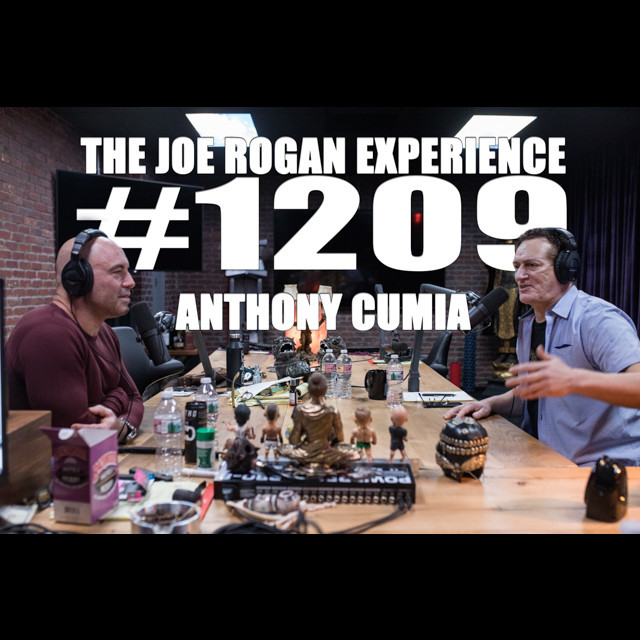
This podcast features a conversation between Joe Rogan and Anthony Cumia, a radio personality known for his work on "The O&A Show." The discussion ranges widely, touching on topics from personal experiences with marriage and social media to the nature of comedy, the current political climate, and the ever-evolving world of technology.
Provocative and controversial subjects explored in the podcast include Cumia’s perspective on social media censorship, his views on the Proud Boys, and his reflections on the cultural landscape that has become increasingly focused on identity politics and sensitivity. Underlying themes throughout the podcast include a sense of disillusionment with traditional institutions, an appreciation for the power of comedy and satire, and a growing cynicism about the future of societal discourse.
Here are some key topics and 4-point summaries:
-
The Allure and Misery of Marriage:
- Cumia shares his own experience with a 9-year marriage, which he describes as a "nightmare."
- He believes that many men live lives of "silent desperation," potentially stemming from the pressures of traditional marriage.
- The podcast suggests that a certain level of suffering can be a catalyst for creativity, citing the example of Howard Stern.
- Cumia’s personal experience underscores the importance of finding fulfillment outside of traditional relationships and societal expectations.
-
Social Media’s Impact:
- Cumia expresses frustration with social media censorship and the arbitrary nature of platform rules.
- He sees Twitter as a powerful tool for disseminating information, but also criticizes its role in amplifying outrage and promoting a culture of cancelation.
- Cumia believes that social media has contributed to his own growing cynicism.
- He argues that the power of social media platforms to shape public discourse and control access to information warrants further consideration and potentially even regulation.
-
The Rise of Donald Trump:
- Cumia supports Trump, viewing his presidency as a necessary disruption to the status quo.
- He believes that Trump’s use of Twitter, while often reckless, has exposed the true personalities of politicians.
- Cumia argues that Trump’s rise reflects a public desire for a change from the traditional political establishment.
- He remains fascinated by Trump’s Teflon-like ability to withstand scandal and criticism.
-
The Diminishing Influence of Traditional Media:
- Cumia criticizes the hypocrisy and lack of objectivity in mainstream media, particularly with regard to coverage of Trump.
- He highlights the dominance of left-leaning media outlets, suggesting a bias in the reporting of certain events.
- Cumia notes the declining influence of local news and the rise of online information sources, questioning the credibility and accuracy of information shared online.
- He suggests that the media landscape is becoming increasingly fractured and unreliable, with a growing distrust in established institutions.
-
The Evolution of Comedy:
- Cumia highlights the unique qualities of New York and Boston-based comedians, emphasizing their willingness to push boundaries and confront sensitive subjects.
- He contrasts this with the more polished and commercially-driven style of comedy prevalent in Los Angeles.
- The podcast suggests that social media has played a role in shaping the landscape of comedy, influencing both the content and the delivery of humor.
- Cumia believes that comedy has become a powerful force for challenging societal norms and exposing hypocrisy, even if it sometimes leads to controversy.
-
The Evolution of the Mob:
- Cumia reflects on the decline of the Italian Mafia in New York City, attributing it in part to increased informants and internal power struggles.
- He highlights the rise of the Russian mob, known for its brutality and lack of traditional boundaries.
- Cumia suggests that the mystique of organized crime has diminished, largely due to the internet and the proliferation of information.
- The discussion explores the enduring fascination with the darker side of society and the enduring power of criminal narratives.
-
The Rise of VR:
- Cumia is enthusiastic about the potential of VR technology, recognizing its ability to create immersive and transformative experiences.
- He highlights the development of VR games and applications that blur the lines between reality and fantasy, pushing the boundaries of entertainment and interactive storytelling.
- Cumia predicts a future where VR technology will be used in more practical ways, such as training and education.
- The discussion raises concerns about the potential downsides of VR, including its impact on physical health and its ability to create a sense of detachment from reality.
-
The Paradox of Free Speech:
- Cumia champions freedom of speech but expresses concern about the growing power of private companies to censor and silence individuals.
- He highlights the inconsistencies and contradictions in how social media platforms apply their rules, suggesting a lack of transparency and objective criteria.
- Cumia argues that the increasing influence of these platforms in shaping public discourse warrants scrutiny.
- He believes that society should strive for a more nuanced approach to free speech, allowing for diverse perspectives and challenging ideas within a framework of responsible discourse.
-
The Problem with Identity Politics:
- Cumia critiques the growing trend of identity politics, arguing that it creates a culture of victimhood and division.
- He highlights the hypocrisy and selective application of "woke" ideology, particularly when it comes to race and gender.
- Cumia challenges the notion of "white privilege," arguing that it unfairly labels all white people as oppressors.
- He believes that a more productive approach to social issues would focus on addressing specific injustices rather than promoting blanket generalizations about entire groups of people.
-
The Limits of Morality:
- Cumia questions the arbitrary nature of moral judgments, particularly when applied to past actions.
- He argues that the standards of morality and ethics have evolved over time, making it difficult to judge past behavior by current standards.
- Cumia points out the hypocrisy of holding individuals accountable for past transgressions while overlooking current hypocrisies and injustices.
- He suggests that a more nuanced and balanced approach to morality would recognize the complexities of human behavior and the fluidity of ethical norms.
-
The Dangers of a Society Over-Reliant on Technology:
- Cumia expresses concern about the growing reliance on technology, highlighting the potential risks of a society vulnerable to technological failures or disruptions.
- He points to the fragility of power grids and the dangers of a society disconnected from the skills and knowledge necessary for self-sufficiency.
- Cumia advocates for a greater appreciation for traditional skills and a more cautious approach to technological dependence.
- He believes that individuals should strive to be more prepared for potential disruptions and less reliant on technology for basic needs.
-
The Unpredictability of the Future:
- Cumia acknowledges the rapid pace of change and the difficulty of predicting the future in a world shaped by technology, social media, and political upheaval.
- He suggests that society is poised for further disruption and change, making it difficult to plan for the future.
- Cumia emphasizes the importance of adaptability and resilience in a world where the unexpected is the new norm.
- He encourages listeners to stay informed, engage in critical thinking, and be prepared for a future that is likely to be unlike anything we have experienced before.
Memorable Quotes:
-
"Most men live lives of silent desperation."
-
"It was like a hobby. It’s like guys who don’t have kids. Married, not married, don’t have kids. Don’t have anybody telling them what to do, and they also have disposable income. Then you get to see what guys really wanna do. They wanna sing karaoke with a machine gun in front of a green screen."
-
"I think that a person needs a certain amount of suffering in their life."
-
"I’m so cynical, man. I think over the course of the past few years, I’ve just gotten more cynical and I think social media had a big effect on me."
-
"I think he’s pulled the cover off of a lot of stuff. I think people are trying to compete with him on Twitter. Politicians are trying to play his game and it’s kind of fun to watch. As a comic entertainer, it’s gold."