2-Jul-18
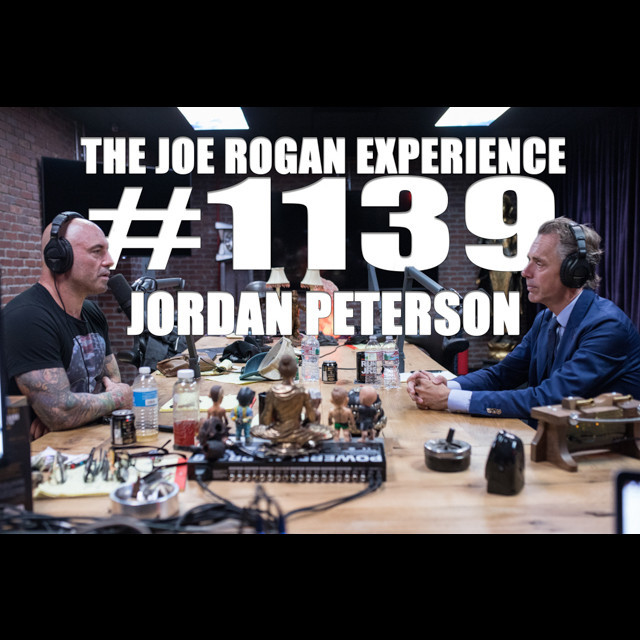
This podcast features a captivating conversation between Joe Rogan and Jordan Peterson, a clinical psychologist and tenured professor of psychology at the University of Toronto. They delve into a wide range of topics, including the rise of long-form discussions, the challenges of free speech in a politically charged environment, the pitfalls of radical left-wing ideology, and the importance of personal responsibility and self-improvement.
Podcast Topics:
Here are some of the major topics covered in this podcast, along with a 4-point summary of each:
1. The Rise of Long-Form Discussions and the Intellectual Dark Web
- Joe Rogan and Jordan Peterson discuss the burgeoning popularity of long-form podcasts and live discussions.
- They see this trend as a response to the limitations of mainstream media, which often oversimplifies complex issues.
- They also attribute this phenomenon to the rise of the “Intellectual Dark Web,” a group of independent thinkers challenging conventional narratives.
- They argue that these discussions allow for a deeper exploration of ideas, fostering critical thinking and intellectual engagement.
2. The Challenges of Free Speech in the Age of Identity Politics
- Peterson argues that the concept of free speech is under attack from radical leftists who embrace identity politics.
- He contends that identity politics restricts free speech by reducing individuals to group memberships, limiting their ability to express independent thoughts.
- He criticizes the tendency to label individuals as “alt-right” or “fascist” simply for challenging left-wing orthodoxy.
- He suggests that the increasing political polarization in mainstream media further exacerbates these challenges.
3. The Pitfalls of Radical Left-Wing Ideology and the Equity Doctrine
- Peterson expresses concern over the influence of activist disciplines in universities, which he argues promote radical left-wing ideologies.
- He criticizes the “equity doctrine,” which seeks to achieve equality of outcome, as a destructive force that leads to victim-victimizer narratives and ultimately fails to address genuine societal issues.
- He points to the dangers of concepts like “white privilege,” “systemic bias,” and implicit bias training, arguing that they lack scientific validity.
- He emphasizes the importance of a healthy dialogue between left and right to address societal problems without resorting to radical solutions.
4. The Necessity of Hierarchies and the Problem of Dispossession
- Peterson argues that hierarchies are inevitable in any society where individuals pursue valuable goals collectively.
- He acknowledges that hierarchies can become corrupt and dispossess certain individuals, leading to social unrest.
- He believes that a balance between left and right-wing perspectives is crucial to maintain a healthy hierarchy.
- He emphasizes the importance of addressing the problem of dispossession and finding ways to help those who are disadvantaged within the system.
5. The Importance of Personal Responsibility and Self-Improvement
- Peterson stresses the importance of personal responsibility as the key to a meaningful life.
- He encourages individuals to focus on self-improvement, competing with their former selves rather than others.
- He believes that self-improvement provides a sense of meaning and purpose, helping individuals to overcome the tragedy and suffering inherent in life.
- He advocates for a mindset of continual self-transcendence, constantly striving to become a better version of oneself.
6. The Ethic of Reciprocity in Games and Life
- Peterson highlights the importance of being a “good sport” in both games and life.
- He argues that true success lies in developing character and pursuing excellence across a series of challenges rather than focusing solely on winning.
- He emphasizes the value of resilience and the ability to accept defeat with grace, using it as an opportunity for growth and improvement.
- He suggests that this ethic of reciprocity, where individuals strive for personal excellence while fostering the growth of others, is essential for a fulfilling life.
7. The Dangers of Equality of Outcome and the Infantilization of Society
- Peterson critiques the concept of equality of outcome, arguing that it leads to a destructive victim-victimizer narrative and ultimately undermines human potential.
- He warns against the infantilization of society, where individuals are shielded from failure and competition, hindering their development.
- He uses the example of participation trophies in children’s sports to illustrate the dangers of avoiding the natural process of competition and achieving excellence.
- He believes that embracing the reality of inequality and encouraging individuals to compete with themselves is essential for personal growth.
8. The Role of Envy and Resentment in Left-Wing Extremism
- Peterson explores the psychological motivations behind left-wing extremism, arguing that it is often driven by envy and resentment towards the successful.
- He suggests that compassion can be used as a mask for these destructive emotions, leading to the persecution of those who have more than others.
- He points to historical examples like the Russian and Chinese revolutions to illustrate the devastating consequences of unchecked envy and resentment.
- He emphasizes the importance of recognizing and addressing these negative emotions within oneself before attempting to reshape society.
9. The Importance of Honest Self-Assessment and Incremental Improvement
- Peterson advocates for honest self-assessment as a crucial step in personal growth.
- He encourages individuals to confront their flaws and imperfections, recognizing that they are not defined by their problems but by their ability to overcome them.
- He emphasizes the power of incremental improvement, setting achievable goals and celebrating small victories as a path to self-transcendence.
- He suggests that this process of self-discovery and growth is the antidote to the tragedy and suffering inherent in life.
10. The Impact of the Carnivore Diet on Peterson’s Health and Well-being
- Peterson shares his personal experience with the carnivore diet, which he adopted to address his own autoimmune issues and support his daughter’s health journey.
- He describes significant improvements in his health, including weight loss, increased energy levels, reduced anxiety, and the disappearance of psoriasis.
- He acknowledges the potential downsides of the diet, including sensitivity to certain foods, and emphasizes the need for caution and personal experimentation.
- He raises questions about the role of carbohydrates and the potential benefits of a carnivore diet, encouraging further research and open discussion.
11. The Misrepresentation of Jordan Peterson in the Media
- Rogan expresses his frustration over the way Peterson has been misrepresented in the media, often being labeled as “alt-right” or “misogynistic.”
- Peterson acknowledges that he has been taken out of context and misquoted, leading to a distorted understanding of his views.
- He attributes this misrepresentation to the increasing political polarization in media and the tendency to simplify complex ideas.
- He advocates for a more nuanced and thoughtful approach to public discourse, emphasizing the importance of listening to and understanding opposing viewpoints.
12. The Importance of Long-Form Conversations in Shaping Public Discourse
- Peterson and Rogan discuss the role of long-form podcasts and discussions in promoting a more informed and nuanced public discourse.
- They argue that the traditional media landscape, with its limited time slots and focus on clickbait, hinders meaningful conversations.
- They believe that long-form discussions allow for a deeper exploration of ideas, fostering critical thinking and understanding.
- They see this trend as a positive development in an increasingly polarized world.
13. The Power of Technology in Revolutionizing Public Discourse
- Peterson and Rogan reflect on the profound impact of technology on public discourse.
- They see platforms like YouTube and podcasts as democratizing forces, giving individuals a platform to share their ideas without relying on traditional gatekeepers.
- They argue that this technology has enabled a Gutenberg-like revolution in the spoken word, making complex information readily accessible to a wider audience.
- They believe that this shift has opened new possibilities for intellectual engagement and a more informed public sphere.
14. The Importance of Trust and Open Dialogue in a Post-Truth World
- Peterson and Rogan grapple with the challenges of navigating a world where truth is increasingly contested and manipulated.
- They emphasize the importance of fostering trust and open dialogue, encouraging individuals to engage with diverse perspectives and critically evaluate information.
- They believe that long-form conversations, free from the pressures of clickbait and ideological bias, can help to bridge divides and promote understanding.
- They see this as a necessary step in combating the spread of misinformation and disinformation.
15. The Role of Honesty and Humility in Personal Growth and Public Discourse
- Peterson and Rogan discuss the importance of honesty and humility in both personal growth and public discourse.
- They emphasize the need for individuals to confront their own biases and limitations, recognizing that no one is perfect.
- They advocate for a willingness to listen to opposing viewpoints, engaging in respectful dialogue even when disagreements exist.
- They believe that embracing these values is essential for a more open and productive public sphere.
16. The “Intellectual Dark Web” as a Phenomenon of Technological Change
- Peterson frames the “Intellectual Dark Web” as a group of early adopters of a revolutionary technology.
- He suggests that they share a commitment to honesty, intellectual curiosity, and long-form discussions.
- He argues that the “Intellectual Dark Web” is not a movement or ideology but a loose collection of individuals united by their engagement with new technologies.
- He believes that this phenomenon is driven by a desire for intellectual freedom and a rejection of the constraints of traditional media.
5 Memorable Quotes:
- “If you’re surfing, you don’t confuse yourself with the wave.” – Peterson uses this analogy to explain that individuals should not be defined by the movements or trends they are part of.
- “The whole notion of free speech among individuals is not only anathema, but also something that isn’t possible within their framework of reference.” – Peterson critiques the radical left’s embrace of identity politics, arguing that it undermines free speech.
- “As soon as you start talking about equality of outcome, you should be putting a box and put off the shelf.” – Peterson expresses strong opposition to the equity doctrine, arguing that it is a destructive force.
- “It isn’t obvious how many people can read, but lots of people can listen.” – Peterson highlights the power of audio and video technology in making complex information accessible to a wider audience.
- “The meaning in life is to be found in that pursuit.” – Peterson emphasizes the importance of continually striving for self-improvement as a source of meaning and purpose.