2/26/2018
Major Topics and Underlying Themes
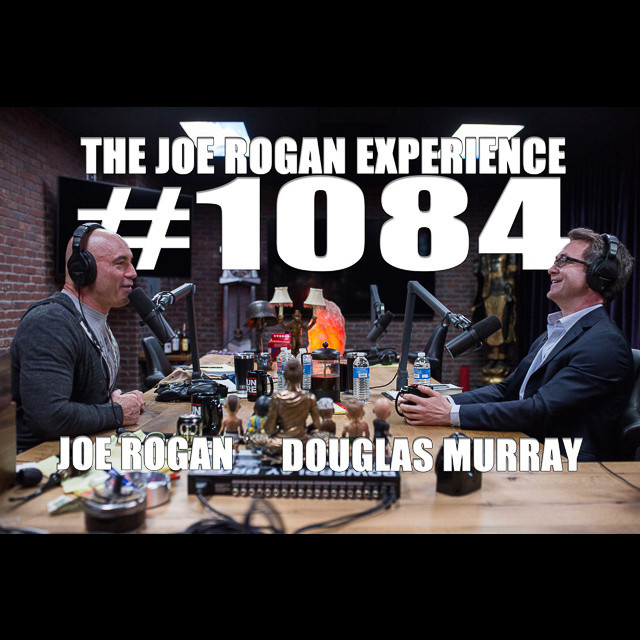
This Joe Rogan podcast with Douglas Murray, a prominent author, journalist, and political commentator, delves into the chilling effects of censorship and the erosion of free speech in the digital age. It explores the dangers of “idea sport,” where truth is sacrificed for political gain, and the chilling consequences of living in a world where any dissenting voice can be labeled as “hate speech.” Murray’s insightful observations expose the fragility of free speech and the urgent need for critical thinking in an increasingly polarized world.
1. The Rise of Censorship and the Suppression of Free Speech:
- The podcast highlights instances where conversations between prominent figures like Sam Harris and Douglas Murray were flagged as hate speech, demonstrating how easily dissenting views are being censored.
- Murray argues that this trend is driven by a “comfort zone” mentality, where individuals are quick to silence anything they disagree with, even legitimate debates about ideas, and resort to labeling such conversations as hate speech.
- This suppression of free speech, Murray warns, leads to a dangerous cynicism towards claims of hate speech, ultimately allowing genuine hate speech to proliferate under the guise of the eroded term.
- The podcast urges listeners to be vigilant against this dangerous trend and to uphold the value of free speech, even when confronted with uncomfortable or dissenting views.
2. “Idea Sport” and the Distortion of Truth:
- Murray uses the term “idea sport” to describe the increasingly prevalent tendency to engage in political debates not for the pursuit of truth, but for the sake of scoring points for one’s “team.”
- This approach prioritizes winning over understanding and fosters a culture of intellectual dishonesty, where individuals are willing to distort or manipulate facts to achieve a desired outcome.
- The podcast cautions against the dangers of “idea sport,” emphasizing the importance of seeking truth and engaging in intellectual debate with genuine curiosity and a willingness to listen to opposing viewpoints.
- Murray argues that this “idea sport” mentality fuels extremism, as those who perceive themselves as being on the “losing side” feel increasingly justified in resorting to more radical tactics.
3. The Perils of Online Culture and the “Forgiveness” Dilemma:
- The podcast discusses the unique challenges of online communication, particularly the difficulty of achieving forgiveness for past mistakes or controversial statements.
- Murray highlights the dystopian reality of being forever haunted by our past actions, even if they are taken out of context or represent youthful indiscretions.
- He argues that this lack of forgiveness creates a climate of fear and self-censorship, where individuals are hesitant to express their true thoughts and opinions for fear of potential repercussions.
- The podcast encourages viewers to consider the broader context and intentions behind online statements and to exercise caution before jumping to conclusions and condemning individuals based on isolated incidents.
4. The Internalization of the “Fatwa” and the Chilling Effect:
- The podcast explores the impact of the “fatwa” – a religious edict that calls for punishment, often death, for blasphemy against Islam – and its chilling effects on free speech.
- Murray argues that the fear of retaliation, even in countries with strong free speech protections, has created an atmosphere of self-censorship, where individuals are reluctant to criticize Islam or engage in open dialogue about the religion for fear of potential violence.
- This fear, he argues, is often exaggerated and disproportionate to the actual threat, but it nevertheless has a profound impact on public discourse.
- The podcast calls for a more nuanced understanding of Islam and its various interpretations, while also urging individuals to stand up for the right to free speech, even when it comes to potentially controversial topics.
5. The “Mockery” as a Tool for Countering Ideological Dogmatism:
- The podcast discusses the potential power of “mockery” as a tool for combating ideological dogmatism and promoting critical thinking.
- Murray argues that by ridiculing extreme or absurd ideologies, individuals can expose their flaws and encourage others to question their own beliefs.
- He points out that “mockery” can be particularly effective in situations where individuals have a vested interest in maintaining a façade of moral superiority.
- The podcast suggests that “mockery,” while often controversial, can be a valuable tool for promoting intellectual honesty and challenging dogmatic beliefs.
6. The Dangers of “Get in Your Lane” Mentality:
- The podcast criticizes the “get in your lane” mentality, which encourages individuals to restrict their opinions and perspectives based on their identity or social group.
- Murray argues that this mentality stifles open dialogue, prevents individuals from challenging harmful stereotypes, and undermines the pursuit of truth.
- He suggests that this mentality is often driven by a desire for social acceptance or a fear of being labeled as “offensive.”
- The podcast urges listeners to embrace intellectual curiosity and to challenge the “get in your lane” mentality by engaging in honest and respectful conversations with those who hold different perspectives.
7. The Role of “New Gods” and Ideological Purity:
- The podcast proposes that the current trend of ideological rigidity and intolerance could be a manifestation of a search for “new gods” in a world where traditional religious beliefs have lost their hold.
- Murray suggests that individuals who are struggling with the complexities of modern life, including economic insecurity and social upheaval, may seek solace in rigid ideologies and a sense of belonging.
- This search for ideological purity, he argues, can lead to a dangerous intolerance for dissent and a willingness to silence opposing viewpoints.
- The podcast urges listeners to be aware of this phenomenon and to resist the temptation to embrace ideological dogmatism, instead seeking out diverse perspectives and engaging in open dialogue.
8. The “New Normal” and the Challenge of Defining Family:
- The podcast explores the evolving definition of family, particularly the challenges of navigating the “new normal” of same-sex relationships and non-traditional family structures.
- Murray highlights the absurdity of a society that is increasingly reluctant to acknowledge the biological realities of human reproduction, emphasizing the importance of honest and respectful dialogue on these issues.
- He points out that the desire to avoid “offending” individuals can lead to the suppression of basic truths and create a culture of fear and self-censorship.
- The podcast encourages listeners to embrace open discussion and to challenge the prevailing narrative that any questioning of the “new normal” is inherently discriminatory or harmful.
9. The Importance of Honesty and Truth-Telling:
- Throughout the podcast, Murray emphasizes the importance of honesty and truth-telling, even when it comes to sensitive or controversial topics.
- He argues that silence in the face of falsehood or distortion only serves to strengthen those who seek to manipulate or control information.
- He suggests that while it is essential to be respectful of others, it is equally important to stand up for what you believe in, even when it means challenging prevailing narratives or challenging powerful institutions.
- The podcast encourages listeners to be courageous in their pursuit of truth and to engage in open dialogue, even when it leads to uncomfortable or challenging conversations.
10. The Fragility of Free Speech and the Urgency for Critical Thinking:
- The podcast underscores the fragility of free speech in the digital age and the urgent need for critical thinking.
- Murray highlights the dangers of living in an echo chamber where dissenting voices are silenced and individuals are encouraged to conform to a narrow set of acceptable opinions.
- He urges listeners to be wary of “information silos” and to actively seek out diverse perspectives, even those that challenge their own beliefs.
- The podcast emphasizes the importance of engaging in reasoned debate, listening to opposing viewpoints, and striving to understand the complexities of the issues at hand.
11. The Impact of Terrorist Attacks on Society and the Media:
- The podcast examines the complex and challenging response to terrorist attacks in the wake of the 2017 London Bridge attacks.
- Murray discusses the difficult dilemma faced by journalists and media outlets in reporting on such events without contributing to further fear or prejudice.
- He critiques the tendency to focus on the “cover-up” rather than the truth, suggesting that a more transparent and honest approach to reporting is necessary.
- The podcast emphasizes the importance of understanding the psychological impact of terrorism on society, while also highlighting the need for rational and nuanced responses that avoid scapegoating or fostering prejudice.
12. The Gun Debate in the United States:
- The podcast touches on the contentious gun debate in the United States, examining the arguments from both sides.
- Murray criticizes the tendency to frame the debate as a battle over “rights” rather than addressing the underlying issues of gun violence.
- He questions the logic of arming teachers as a solution to school shootings, highlighting the absurdity of such a proposition.
- The podcast emphasizes the need for a more nuanced and comprehensive approach to addressing gun violence, one that includes both legislative solutions and addressing the underlying social and psychological factors that contribute to the problem.
13. Mental Health Issues and the Rise of Psychiatric Medications:
- The podcast raises concerns about the increasing prevalence of psychiatric medications and their potential impact on society.
- Murray expresses skepticism about the common assumption that mental illness is not a significant factor in mass shootings, arguing that individuals who commit such acts are undoubtedly suffering from some form of mental distress.
- He also questions the casual acceptance of psychiatric medications, suggesting that their widespread use warrants further scrutiny and debate.
- The podcast calls for a more holistic approach to mental health that acknowledges the complexity of the issues and recognizes the limitations of solely relying on pharmaceutical solutions.
14. The Paradox of “Free Thinkers” and Ideological Conformity:
- The podcast examines the paradox of “free thinkers” who often embrace rigid ideologies and conformity.
- Murray suggests that this phenomenon could be driven by a desire to impose order on a chaotic and uncertain world, leading individuals to seek solace in dogmatic beliefs.
- He argues that “free thinkers” may be particularly susceptible to this tendency, as they may be more likely to feel the need to define themselves in opposition to others.
- The podcast urges listeners to question the notion of “free thinking” as a synonym for ideological purity and to embrace intellectual curiosity and open-mindedness as essential qualities.
15. The Need for Empathy and Understanding in a Divided World:
- The podcast concludes with a call for empathy and understanding in a world increasingly characterized by division and polarization.
- Murray emphasizes the importance of recognizing the humanity of those who hold differing viewpoints, even when those views are deeply challenging or offensive.
- He urges listeners to resist the temptation to demonize those who disagree with them, instead seeking to understand their perspectives and to engage in dialogue with a genuine desire for common ground.
- The podcast concludes with a hopeful message about the possibility of finding common ground and bridging divides through honest dialogue and a willingness to engage with those who hold different perspectives.
Memorable Quotes
- “This is what’s being created all the time at the moment. It seems to me this this idea that you You police the discussion along incredibly narrow lines that happened to surround your own comfort zone. And call everything outside it. Not just stuff I don’t agree with or things that I would argue with or debate with, but hate speech. Is just I think very, very dangerous down the road.”
- “You can see exactly the trail that bit of gunpowder goes to.”
- “It seems to me the only the only way through it is to say, first of all, I I mean, I don’t I I read the American press time. I think that it’s it’s worse than the British press in in in that self appointed role of believing its task is to stand between the public and the facts. You know? And sort of negotiate between the 2.”
- “It’s only by treating us as if we can’t deal with ugly things that go on that you could see the situations where we began to see the situation in which that all goes wrong in that different way.”
- “And honestly express all the issues that arrive while you’re trying to do that. Absent it, and and and trying to tell the truth where you see it and and giving voice to it and trying to I mean, you know, this is just it just seems so clear to me that that if people if people could realize this is a central problem of the thing that you and and I and others all faces the the desire to claim that that that somebody who disagrees on an issue isn’t just of a disagreeing mind but evil.”