9/5/2017
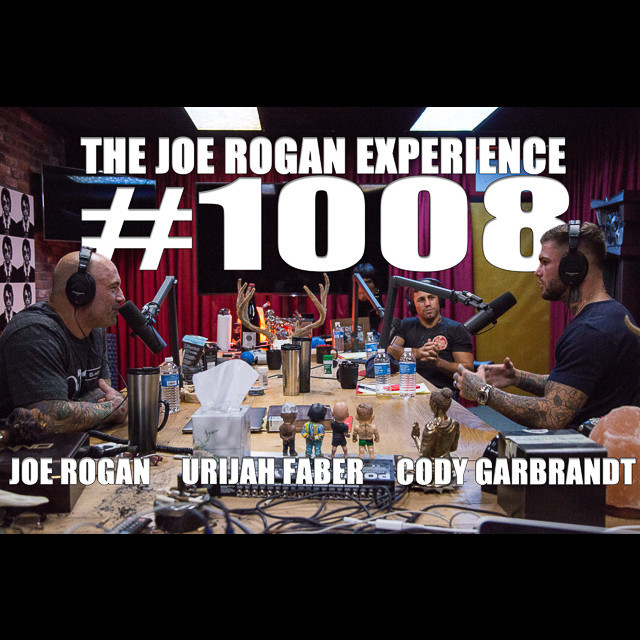
This podcast features a captivating conversation between Joe Rogan, UFC Bantamweight World Champion Cody Garbrandt, and retired mixed martial artist Urijah Faber. The episode dives into a range of topics, delving into the lives of these two fighters, their perspectives on the sport, and their unique experiences within the world of MMA.
The discussion sparks insightful conversation on the intense physical and mental demands of fighting, the importance of finding a team and training environment that fits you, and the ethical considerations surrounding the sport.
Provocative topics include the use of performance-enhancing drugs in the sport, the controversial nature of pay-per-view events, and the ethical considerations of fighting until you’re too injured to continue.
The conversation reveals the deep bonds formed between fighters and their coaches and the unique pressure that comes from being a successful MMA athlete.
Podcast Topics
1. Urijah Faber’s Retirement and Life After Fighting:
- Faber discusses his decision to retire from fighting after a long and successful career.
- He emphasizes the importance of making the decision to retire at the right time to avoid getting too banged up.
- He reflects on how his retirement allows him to enjoy the simple things in life, like eating healthy and being able to train without worrying about weight cutting.
- He shares his hope that other fighters will learn from his example and prioritize their long-term health.
2. Team Alpha Male:
- Faber talks about the origins and evolution of Team Alpha Male, a renowned MMA training gym in Sacramento, California.
- He describes the unique culture and camaraderie of the team, fostering a supportive environment for fighters of all levels.
- He emphasizes the importance of building a strong team dynamic to support fighters through the challenges of training and competition.
- He highlights the success of the team in producing world-class fighters and their commitment to developing talent.
3. Cody Garbrandt’s Journey to UFC Champion:
- Garbrandt discusses his decision to join Team Alpha Male and his rapid rise to UFC Bantamweight Champion.
- He recounts the challenges he faced, including injuries and overcoming a year-long layoff.
- He reveals the impact of training with renowned fighters like TJ Dillashaw, Chad Mendes, and Urijah Faber.
- He expresses his dedication to the sport and his desire to build a legacy as UFC champion.
4. The Ethics of MMA:
- The conversation touches on the controversial subject of performance-enhancing drug use in MMA.
- Garbrandt and Faber discuss the impact of steroid use on the sport and the importance of fair competition.
- The podcast delves into the ethical implications of fighting until you’re too injured to continue.
- They explore the financial pressure that can lead fighters to continue fighting even when it’s detrimental to their health.
5. The Controversial Nature of Pay-Per-View Events:
- The podcast touches on the win-lose pay structure in MMA, where fighters earn less if they lose.
- Garbrandt and Faber express their belief that fighters deserve a fixed contractual amount, regardless of the outcome of a fight.
- They discuss the inconsistency of judging in MMA and the potential for judges to make calls that can drastically affect a fighter’s career.
- They argue that MMA has evolved into a professional sport and deserves more consistent and equitable pay.
6. Training Regimen:
- Garbrandt and Faber discuss their approach to training, including the importance of strength and conditioning, recovery, and nutrition.
- Garbrandt describes his commitment to meal prepping and working with a nutritionist to ensure optimal performance.
- They delve into the importance of hyperbaric chambers and other recovery methods.
- Faber emphasizes the importance of finding a training regimen that works best for individual fighters and their body types.
7. The Dynamics of Team Alpha Male and The T.J. Dillashaw Split:
- Faber reveals the details of T.J. Dillashaw’s departure from Team Alpha Male, including the role of financial incentives from Muscle Farm.
- He explains the conflicting emotions of loyalty and understanding when a teammate chooses to pursue a different opportunity.
- He recounts Dillashaw’s persistent attempts to train with the team even after leaving for Muscle Farm.
- He addresses the ongoing tensions between Dillashaw and Team Alpha Male, highlighting the complexities of relationships within the MMA community.
8. The Conor McGregor and Floyd Mayweather Fight:
- Garbrandt and Faber analyze the Conor McGregor-Floyd Mayweather fight, discussing the different strategies and strengths of each fighter.
- They examine the importance of composure and endurance in the late rounds of a fight, highlighting how fatigue can affect performance.
- They speculate on how McGregor might have performed if he had more time to prepare for the fight.
- They discuss the significance of Mayweather’s boxing expertise and his ability to outmaneuver and outbox McGregor.
9. The Impact of the UFC Performance Center:
- Garbrandt and Faber discuss the UFC Performance Center, a state-of-the-art training facility for UFC fighters.
- They explore the benefits of the facility, including its access to advanced training equipment and expert coaches.
- They touch on the differences between the UFC Performance Center and Team Alpha Male, highlighting the benefits of both approaches to training.
- They express their gratitude for the UFC’s commitment to supporting the development of fighters.
10. The Upcoming Canelo Alvarez vs. Gennady Golovkin Fight:
- Garbrandt and Faber preview the highly anticipated Canelo Alvarez vs. Gennady Golovkin fight, analyzing the strengths and weaknesses of each fighter.
- They discuss the significance of the fight, highlighting the clash of styles and the potential for a knockout.
- They delve into the contrasting personalities of the fighters, contrasting Alvarez’s pressure and body punching with Golovkin’s power and durability.
- They express their excitement for the fight and its implications for the future of boxing.
11. The Importance of Mentality:
- Garbrandt and Faber emphasize the importance of mental toughness and focus in MMA.
- They discuss the need for fighters to develop a strong mental game to handle the pressure of competition and overcome adversity.
- They highlight the role of self-belief and confidence in achieving success in the sport.
- They emphasize the importance of finding a training environment that fosters a positive and supportive mental attitude.
12. The Intensities of Sparring:
- Garbrandt and Faber discuss the different approaches to sparring, from technical drills to intense rock-and-sock sessions.
- They highlight the importance of finding a balance between technical sparring and full-contact sparring to simulate the pressure of a fight.
- They share their personal experiences with sparring, including the importance of safe sparring partners and the need to avoid excessive damage before a fight.
- They acknowledge the unique pressures of sparring with teammates and the importance of maintaining respect and communication within the training environment.
13. The Impact of Training Injuries:
- Garbrandt details his experience with back injuries, highlighting the challenges of training and competing with pain.
- He discusses his decision to undergo a Virginia King procedure in Germany to address his back issues.
- He expresses his commitment to rehab and recovery, highlighting his determination to return to fighting at his peak performance.
- He shares his perspective on the importance of managing injuries and the complexities of balancing training and recovery.
14. The Role of Coaches and Mentors:
- Garbrandt and Faber discuss the importance of coaches and mentors in their careers.
- They highlight the impact of coaches like Urijah Faber, Justin Buckles, and Master Tong on their development as fighters.
- They emphasize the need for coaches to provide guidance, support, and a clear vision for fighters.
- They reflect on the unique challenges of coaching fighters with diverse personalities and skill sets.
15. The Future of MMA:
- Garbrandt and Faber discuss the future of MMA, speculating on the rise of Bellator and other organizations.
- They highlight the importance of building a strong foundation for the sport, emphasizing the need for fair competition and equitable pay.
- They express their desire to see the sport continue to grow and evolve, attracting more talented fighters and fans.
- They discuss the importance of promoting the sport responsibly, balancing the excitement of competition with the need to protect the fighters’ health.
Memorable Quotes:
- “You gotta eat time to good. You gotta eat time to good. You gotta eat time to good. You know, it’s nice. It’s nice to see someone do it the right way. And I hope other guys coming up can can learn from you in that regard.” – Faber emphasizes the importance of prioritizing long-term health and making smart choices.
- “It doesn’t matter what kind of shape you’re in. Being in shape only means you can do more until you get tired.” – Garbrandt highlights the importance of mental toughness and the ability to push through fatigue.
- “Fatigue makes cowards of us all.” – A common adage in the wrestling world, used by Garbrandt to illustrate the challenges of fighting through fatigue.
- “Being in shape only means you can do more until you get tired. I think the better shape you’re in, he would have kept doing more, doing more, doing more. And if he wasn’t able to finish him, you know what I mean? Like, because Floyd was letting him do more.” – Faber explains how being in better shape can extend a fighter’s ability to perform, but fatigue eventually catches up to everyone.
- “It’s like teaching an old dog new tricks.” – Faber describes the challenges of coaching fighters who are set in their ways and may be resistant to change.