10/13/2016
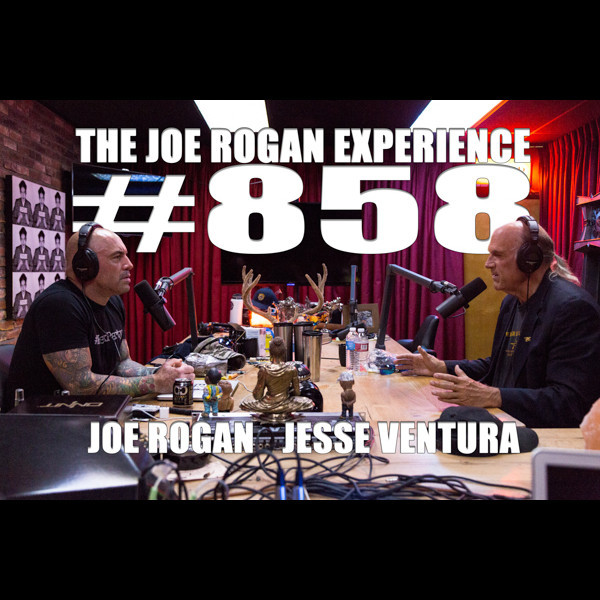
This Joe Rogan podcast features Jesse Ventura, a multifaceted figure known for his career as a Navy SEAL, professional wrestler, actor, political commentator, author, and politician. The conversation delves into various topics, from Ventura’s personal experiences and perspectives to controversial issues and his stance on societal structures. Provocative themes emerge, including the potential for tyranny, the role of government, and the complexities of gun control and the drug war.
Here are some of the major topics explored in the podcast:
1. The Advocacy of Fanny Packs:
- Ventura is a self-proclaimed “fanny pack advocate” who has used them for over 20 years.
- He carries essential travel items in his fanny pack, including his passport, reading glasses, and sunglasses.
- In Minnesota, where he has a conceal and carry permit, he uses a specially designed fanny pack for discreetly carrying a weapon.
- His advocacy for fanny packs highlights his preference for practical and functional items over traditional fashion norms.
2. The Politics of Gun Control:
- Ventura played a key role in passing a “shall issue” gun control law in Minnesota during his time as governor.
- He emphasizes the need for strict background checks, gun safety training, and a zero-tolerance policy for carrying weapons while under the influence of alcohol.
- His stance on gun control reflects a nuanced perspective that balances individual rights with public safety measures.
- He draws a parallel between the right to bear arms and the potential for tyranny, drawing upon historical examples of dictators disarming the public.
3. The Marijuana Manifesto:
- Ventura passionately advocates for the legalization of marijuana, citing his own experience with its medicinal benefits for epilepsy.
- He argues that marijuana has been unfairly demonized, highlighting its historical role in American agriculture and the propaganda campaign that led to its prohibition.
- He criticizes the double standards surrounding marijuana and its perceived negative effects, contrasting it with legal substances like alcohol and tobacco.
- Ventura’s advocacy for marijuana legalization highlights his belief in individual freedom and the need for reform of drug policies.
4. The Experience of Living Off-Grid in Mexico:
- Ventura describes his lifestyle in Mexico, living off-grid and escaping the pressures of modern life.
- He appreciates the simplicity and relaxed pace of life in Mexico, contrasting it with the hectic environment in the United States.
- He finds the Mexican property tax system more beneficial than the American system, praising its emphasis on rewarding good citizenship.
- Ventura’s choice to live in Mexico reflects his desire for a life of freedom and self-sufficiency, outside the constraints of American society.
5. The Chris Kyle Controversy:
- Ventura details his legal battle with the family of Chris Kyle, the subject of the popular book and movie “American Sniper.”
- He claims that Kyle fabricated a story about punching him in a bar, alleging defamation and slander.
- Ventura’s lawsuit against Kyle’s estate highlights the complexities of public figures, media narratives, and the power of celebrity status.
- He criticizes the media’s tendency to convict him based on Kyle’s claims, highlighting the potential for bias and the dangers of unchecked narratives.
6. The Power of Government and the Second Amendment:
- Ventura believes that the Second Amendment exists to empower citizens to defend themselves against government overreach.
- He questions the motives of those who oppose gun rights, suggesting that they fail to recognize the potential for tyranny.
- Ventura draws parallels between modern American society and the rise of fascism in 1930s Germany, highlighting concerns about social marginalization and the erosion of freedoms.
- This discussion explores the complex relationship between individual liberties, government authority, and the historical lessons learned from totalitarian regimes.
7. Ventura’s Atheism and Critique of Religion:
- Ventura openly identifies as an atheist, expressing skepticism towards religious doctrines and the concept of a higher power.
- He challenges the validity of religious beliefs, particularly those rooted in ancient texts and narratives.
- He highlights the historical parallels between the stories of Jesus and Horus, arguing that religious narratives often mirror each other.
- Ventura’s atheism reflects his preference for evidence-based reasoning and his critical approach to traditional authority.
8. The Conspiracy of Fluoride in Drinking Water:
- Ventura raises concerns about the presence of fluoride in public water systems, suggesting a potential conspiracy to control the population.
- He cites the origins of fluoridation in Nazi Germany and its connection to Prozac, suggesting that fluoride may have a tranquilizing effect.
- He criticizes the government’s role in mandating fluoridation despite potential health risks.
- Ventura’s exploration of fluoride in water highlights his skepticism towards government authority and his belief in the importance of questioning established narratives.
9. The Bottled Water Scam:
- Ventura denounces the bottled water industry as a scam, highlighting the environmental damage caused by its practices.
- He cites the example of Nestlé’s water extraction operations in Michigan, which have depleted local waterways and contributed to the decline of the Great Lakes.
- Ventura argues that bottled water is a manufactured need, promoting a sense of artificial scarcity and driving up prices for a product that is readily available in nature.
- This discussion highlights Ventura’s concern for environmental issues and his skepticism towards corporations that profit from exploiting natural resources.
10. Ventura’s Military Experience and the Vietnam War:
- Ventura shares insights into his time as a Navy SEAL, describing the rigorous training and the camaraderie fostered within the unit.
- He discusses the evolution of the SEALs, from underwater demolition teams to the elite special forces they are today.
- He reflects upon the different treatment of Vietnam veterans compared to veterans of subsequent wars, highlighting the historical and societal shifts in public perception.
- Ventura’s military experience provides a personal context for discussions about patriotism, the complexities of war, and the changing role of the armed forces in American society.
11. The Mongol Motorcycle Club:
- Ventura reveals his past as a sergeant-at-arms for the Mongol Motorcycle Club, sharing anecdotes about his experiences with the group.
- He clarifies the Mongols’ history and composition, emphasizing that they are not a white supremacist organization, as often portrayed in media.
- He discusses the allure of biker culture for veterans, particularly those who seek camaraderie and a sense of brotherhood after returning from combat.
- Ventura’s involvement with the Mongols provides a glimpse into a subculture often misunderstood and stereotyped, shedding light on the motivations and experiences of its members.
12. The Importance of Asking Questions and Challenging Narratives:
- Ventura emphasizes the importance of critical thinking, urging listeners to question established narratives and seek out alternative perspectives.
- He points to conspiracy theories, like the assassination of John F. Kennedy, as examples of events where official explanations may be flawed or deliberately misleading.
- He argues that conspiracy theorists are often more intelligent than those who blindly accept information without scrutiny.
- Ventura’s encouragement for skepticism and independent research reflects his belief in the power of individual inquiry and the need to challenge authority.
13. The Potential for Corruption in Government:
- Ventura expresses deep skepticism towards career politicians, suggesting that they are often corrupt and beholden to special interest groups.
- He criticizes the role of lobbyists and the system of bribery that permeates government institutions.
- Ventura’s analysis of political corruption highlights his belief that the system is inherently flawed and requires fundamental change.
- His critique of political structures emphasizes the need for reform and the importance of holding elected officials accountable.
14. The Political Landscape of 2016:
- Ventura offers his perspective on the 2016 presidential election, analyzing the rise of Donald Trump and Hillary Clinton as candidates.
- He compares the two candidates, highlighting their strengths and weaknesses and their respective appeal to different factions of the electorate.
- He expresses concern about the influence of globalist interests and the potential for war under a Clinton presidency.
- Ventura’s commentary on the 2016 election reflects his concern for the direction of American politics and his belief in the need for alternative political voices.
15. The Importance of Physical Health and Well-Being:
- Ventura shares his personal experiences with maintaining physical fitness, discussing his use of the Olympic machine and his recovery from hip replacement surgery.
- He promotes the benefits of a ketogenic diet and the importance of exercise, highlighting the connection between physical and mental well-being.
- He advocates for the use of inversion therapy, such as hanging upside down, to alleviate back pain and decompress the spine.
- Ventura’s discussion of health and fitness reflects his commitment to personal well-being and his belief in the importance of taking care of one’s body.
16. Ventura’s Views on the Future of Politics:
- Ventura contemplates a potential presidential run in 2020, suggesting that he could be a viable alternative to the established political parties.
- He believes that the current political system is broken and that a true outsider could bring about meaningful change.
- He reflects upon the challenges of campaigning for president, emphasizing the sacrifices required and the potential for political assassination.
- Ventura’s consideration of a presidential run highlights his desire to influence public policy and his belief in his ability to lead.
17. The Impact of Technology and Media:
- Ventura discusses his aversion to cell phones and his preference for face-to-face interaction.
- He expresses concern about the increasing reliance on technology and the potential for social isolation.
- He acknowledges the role of media in shaping public perception and the potential for bias and manipulation.
- Ventura’s comments on technology and media reflect his concerns about the impact of these forces on society and the importance of maintaining human connection.
18. The Need for Reform in Drug Policy:
- Ventura believes that the war on drugs has been a failure, resulting in mass incarceration and the enrichment of criminal enterprises.
- He advocates for a more humane and evidence-based approach to drug policy, focusing on treatment and harm reduction rather than punishment.
- He criticizes the DEA’s focus on marijuana enforcement, arguing that they should prioritize more serious crimes like child molestation.
- Ventura’s stance on drug policy reflects his belief in individual freedom, compassion, and the need for reform of outdated laws.
19. The Importance of Standing Up for Truth:
- Ventura emphasizes the importance of speaking truth to power, even when it comes at a personal cost.
- He shares his experiences with being vilified by the media and facing public backlash for challenging narratives.
- He encourages others to follow their convictions and to fight for what they believe in, regardless of the consequences.
- Ventura’s commitment to truth and justice reflects his belief in the power of individuals to make a difference in the world.
20. The Importance of Maintaining a Sense of Humor:
- Ventura demonstrates a playful and self-deprecating sense of humor throughout the podcast, finding humor in his own experiences and in the absurdity of the world.
- He uses humor as a coping mechanism for dealing with adversity and as a way to connect with listeners on a personal level.
- He highlights the importance of laughter and lightness in navigating the complexities of life.
- Ventura’s humor reflects his resilience and his ability to find joy amidst the chaos.
Memorable Quotes:
- “Life experiences. I was physically in the Philippines, Philippine Islands. I was physically in the Philippines the day for Nan Marcos became a dictator. I was there. Now I was in the US military on a US military base so it didn’t really affect us I mean, we’d go into town and all that, but there was a then you had a a soldier on every corner with a machine gun when he did it. Well, here’s what I’m getting to. He became a dictator and gave himself the power of the president, the congress, and the supreme court, complete dictatorship. The first thing he did as a dictator, he gave the people of the Philippines a 10 to 12 day grace period to turn in all guns or it was the death penalty. Now my question to the people who opposed gun rights or or our anti guns, why would a dictator make his first thing of business to disarm the public. Why would he make that his number 1 priority?”
- “And people fail to realize our second amendment is there for us to be able to defend ourself against our own government. That’s a touchy certainty. It’s not there for hunting and fishing. When they wrote the bill of rights, if you didn’t hunt and fish, you didn’t eat. That was irrelevant. It was there because the British used to come and occupy our homes, steal our stuff, so the British caused the second amendment to happen to where our forefather says no. We’re gonna allow the people to be able to defend themselves against oppressive government.”
- “You know what works down there? No. Here, at least in Minnesota, which is pretty much universal, If you buy a home and you’re a good citizen and you fix the home up and improve it, how do they reward you? You pay more. Right. Your taxes go up for being a good citizen. So using their analogy You should buy the house, let it become the shit hole on the block, and they’ll reward you. You’ll pay less. Here’s how it works in Mexico. Mexico, your taxes are due in March, property taxes. If I pay them in January early, they knock off 20 percent. If I pay them in February, they knock off 10 percent. I go down January 20 eighth. February is a short month. So in 30 days, I get 20 percent on my money legally. Tell me where I can do that. That’s pretty 20 percent in 30 days. Now granted, it’s only a couple hundred bucks because property taxes are cheap there anyway. But that’s a couple tanks, a gas for my pickup truck.”
- “I don’t even know the language. You don’t know Spanish? Nah. Why don’t you know this? Because because I’ve never taken time to bother. I get you down there. You just basically talk to people between what they know of English and what I know of Spanish and pam to mining. We figure it out.”
- “So you’re saying us. Like, you’re still with them. They’re Is it like a marine? You’re a marine for life? That’s something. You got a card on you? Yep. What are he just gonna pull out his goddamn mongo card? I don’t believe this. What do you got in there? He’s got a wallet? He’s gonna pull out a mongo card. Let’s see. Right next to his Disneyland Year Pass, Let me see here. I gotta I gotta find it. No. Because I I tuck it away. No. I actually You have a mongo card. I would think that you would need a tattoo. I would say a cartilage and bitch. If you really wanna be down for life, We gotta get you a tattoo. I already have a tattoo. Of the Mongols? No. What is it? Like, a unique tattoo? She also have the the Budweiser tried and and You’ll try and find your mongo card. How many of those cards you actually There’s mine. Look at that. And there’s the card from GEO, the Hollywood proud gave me his last time I saw him. Bam motherfuckers. Legit. Too legit to quit.”