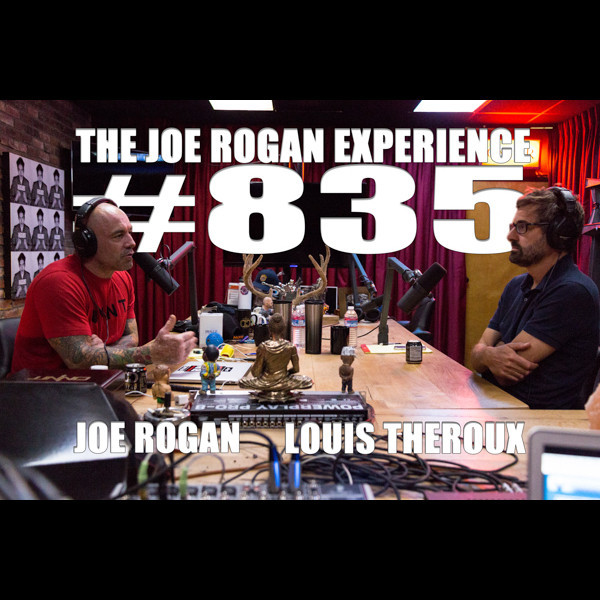
8/22/2016
This podcast dives into the fascinating and often controversial world of Scientology, exploring its origins, beliefs, and the impact it has had on individuals and society. Joe Rogan and Louis Theroux unpack the complexities of this organization, revealing its alluring promises, its demanding structure, and its darker side. Underlying themes revolve around the power of belief systems, the allure of control, and the struggles of those who seek to break free from a rigid ideology.
1. The Origins and Personality of L. Ron Hubbard:
- L. Ron Hubbard, the founder of Scientology, was a science fiction writer who sought to address his own personal struggles through his writings.
- Hubbard’s experiences in the Navy during World War II significantly influenced his ideas and practices, incorporating military structure and language into Scientology.
- Hubbard’s personal life was marked by turmoil, including multiple marriages, physical abuse, and a tendency towards narcissism, which may have contributed to the controlling nature of Scientology.
- Hubbard’s writings are a blend of science fiction, psychology, and philosophy, creating a unique and often bizarre blend of ideas.
2. The Allure and Appeal of Scientology:
- Scientology offers a structured system for personal growth and self-improvement, appealing to those seeking purpose and meaning.
- The organization’s use of a “lie detector” known as an E-meter, combined with auditing sessions, can create a sense of psychological validation and empowerment.
- Scientology’s focus on communication and assertiveness, often delivered through rigorous training and drills, can be attractive to those seeking confidence and control.
- The organization’s grand narratives, including the concept of past lives, immortal spirits, and a “Bridge to Total Freedom,” appeal to individuals seeking a greater sense of meaning and purpose in life.
3. Scientology’s Controversial Practices:
- Scientology has been criticized for its high financial costs, demanding commitment, and control over its members’ lives.
- The organization’s “disconnection” policy, which encourages members to sever ties with family and friends who leave Scientology, has been a source of significant controversy.
- Allegations of physical and emotional abuse, as well as the suppression of critical thinking and dissent, have emerged from former members and journalists.
- Scientology’s use of legal tactics, such as harassment lawsuits and aggressive PR campaigns, to silence critics and protect its image has been extensively documented.
4. The Role of Celebrity in Scientology:
- Scientology has been successful in attracting high-profile celebrities, leveraging their influence to increase its visibility and credibility.
- Tom Cruise is a prominent example, having publicly championed Scientology and reportedly received significant preferential treatment within the organization.
- The organization has reportedly used celebrities as tools for recruitment, offering special treatment and creating a sense of exclusiveness.
- The allure of fame and power within Scientology, combined with its promise of personal transformation, can be particularly enticing for individuals seeking success and validation in Hollywood.
5. The Challenges of Making a Documentary about Scientology:
- Scientology’s aggressive tactics, including legal threats and pressure campaigns, make it difficult for journalists and filmmakers to obtain access and information.
- The organization’s control over its members, coupled with its insistence on secrecy regarding its upper-level teachings, pose further challenges for independent investigation.
- The abundance of information and conflicting narratives about Scientology can make it challenging to present a balanced and objective account.
- The potential for backlash and harassment from Scientology makes documentary filmmaking about the organization a risky and potentially dangerous undertaking.
6. The Role of the Internet and Social Media in Scientology’s Future:
- The internet and social media have made it easier for information about Scientology to spread, potentially challenging the organization’s control over its narrative.
- Former members and critics have used online platforms to share their experiences, expose Scientology’s practices, and mobilize support for their cause.
- Scientology’s reliance on secrecy and its efforts to control information are increasingly vulnerable to the transparency and accessibility offered by online platforms.
- While Scientology has attempted to counter negative information online, its efforts to silence critics and control the narrative may prove increasingly difficult in the age of online activism.
7. The Similarities Between Scientology and Other Belief Systems:
- Scientology shares common elements with other belief systems, including rigid ideologies, hierarchical structures, and the use of language to control and manipulate members.
- The appeal of these systems often lies in the promise of order, certainty, and belonging, appealing to individuals seeking a sense of purpose and community.
- The potential for harm and abuse arises when these systems become inflexible, suppress dissent, and prioritize loyalty over critical thinking.
- Understanding the similarities between Scientology and other belief systems can help us better recognize and address the dangers of rigid ideologies and the potential for manipulation.
8. The Political Landscape and the Rise of Donald Trump:
- Joe Rogan and Louis Theroux explore the current political landscape, examining the rise of Donald Trump and the implications for American democracy.
- They discuss Trump’s populist rhetoric, his willingness to challenge norms, and the appeal he holds for certain segments of the population.
- They also analyze the failings of the American political system, including the two-party system, the influence of money, and the lack of public trust.
- The podcast delves into the complexities of political discourse, highlighting the need for open dialogue, critical thinking, and a greater understanding of the issues facing society.
9. The Importance of Open Dialogue and Critical Thinking:
- The podcast underscores the importance of open dialogue and critical thinking in navigating a complex world.
- Joe Rogan and Louis Theroux emphasize the need for skepticism, questioning authority, and examining different perspectives.
- They advocate for a more nuanced understanding of human behavior and the complexities of belief systems.
- The podcast encourages listeners to engage with diverse viewpoints, avoid echo chambers, and cultivate a more open and critical approach to information.
5 Memorable Quotes:
- “The trouble is, because they’re saying it’s a religion, it’s been enshrined as scripture. And so there are there are there is Elrond Habid scripture that takes that homosexuals are perverts.” – Louis Theroux highlights the problematic aspects of Scientology’s beliefs, revealing how they can be used to justify discrimination and prejudice.
- “You know, we the one of the appeals of, I think, whether it’s Scientology or Islam or Christian extreme Christianity of, you know, whatever the form that takes. They can say, like, we have all our answers.” – Louis Theroux underscores the allure of rigid belief systems, particularly for individuals seeking comfort and certainty in a complex world.
- “It’s a very dangerous slippery road to go down because you’re then by definition saying, There’s good guys and bad guys. And if you’re not on my team, you’re a bad guy.” – Joe Rogan comments on the dangers of binary thinking, particularly in political discourse, where those who disagree are often demonized and excluded.
- “One of the things that religions do by creating these rigid ideologies is they make things so that you don’t have to question stuff, and that gives some people comfort.” – Louis Theroux emphasizes the role of ideology in providing a sense of security and belonging, even at the cost of intellectual exploration and personal growth.
- “I think that we’re more advanced and more safe now than ever before. I think if you look back on 2000 years ago and you look today, which is a blink in the eye when terms of the age of the earth. Well, it’s infinitely better to live today than it is then.” – Joe Rogan offers a hopeful perspective, acknowledging the progress humanity has made, while cautioning against complacency.