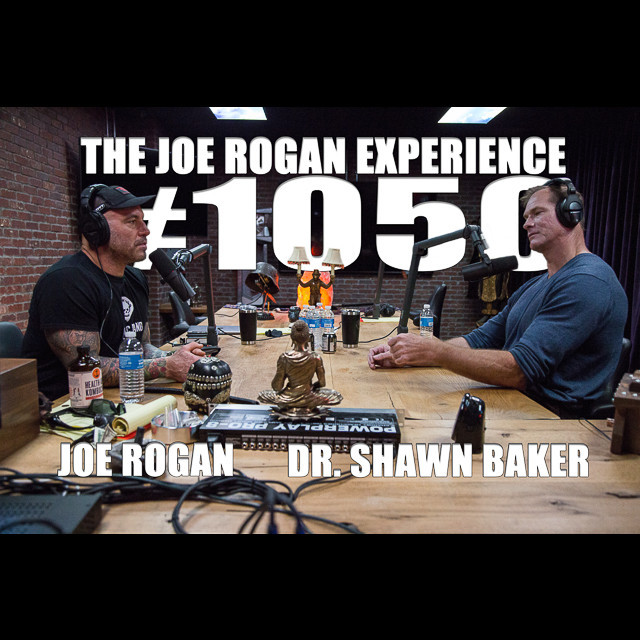
12/7/2017
This podcast delves deep into the carnivore diet, exploring the benefits, challenges, and controversies associated with this extreme eating regimen. Featuring Dr. Shawn Baker, a prominent advocate for the carnivore lifestyle, the episode raises provocative questions about the role of carbohydrates in human health and challenges conventional dietary wisdom. Underlying themes explore the power of personal experience in shaping belief systems, the importance of objective scientific data in evaluating dietary claims, and the ethical considerations surrounding meat consumption.
Major Topics Explored in Podcast #1050:
1. Dr. Shawn Baker’s Personal Carnivore Journey:
- Dr. Baker’s initial skepticism towards the carnivore diet, gradually transitioning from low-fat and paleo diets to embracing meat-only consumption.
- His inspiration from individuals who have successfully adopted the carnivore diet for years, exhibiting remarkable health improvements.
- His personal experience with improved health markers, increased energy levels, and enhanced athletic performance after adopting the carnivore diet.
- His belief that the carnivore diet addresses underlying health issues that conventional dietary approaches often fail to address.
2. Challenging Dietary Guidelines and Conventional Wisdom:
- Dr. Baker’s critique of the standard American diet, highlighting its role in contributing to chronic diseases.
- His argument against the concept of a “balanced diet,” suggesting it’s a cop-out and often ineffective.
- His assertion that the focus on cholesterol as a health marker is misleading and overemphasized.
- His perspective on the sugar industry’s influence on dietary guidelines and the subsequent misrepresentation of saturated fat and cholesterol.
3. The Carnivore Diet and Nutrient Deficiency:
- Dr. Baker’s exploration of nutrient deficiencies often cited as potential risks associated with the carnivore diet.
- His examination of the historical dietary patterns of populations like the Inuit, who thrived on meat-heavy diets, despite limited access to vegetables.
- His perspective on the limitations of RDA (Recommended Dietary Allowances) and their origins in wartime food rationing rather than optimal health.
- His explanation of how the body’s need for certain vitamins and minerals can be influenced by carbohydrate intake, suggesting a lower requirement for some nutrients on a meat-only diet.
4. Meat Consumption and Health Benefits:
- Dr. Baker’s emphasis on meat’s high bioavailability and its ability to provide both energy and building blocks for animal tissue.
- His explanation of meat’s efficient absorption by the body, contrasting it with the less digestible nature of plant-based fibers.
- His observations of improved health outcomes in individuals on the carnivore diet, including reduced inflammation, normalized blood sugar levels, and enhanced athletic performance.
- His perspective on the role of meat in supporting muscle growth and maintaining strength, particularly important for aging individuals.
5. The Role of the Microbiome and Probiotics:
- Dr. Baker’s exploration of the microbiome and its role in digestion and overall health.
- His argument that a healthy microbiome is a consequence of a healthy lifestyle rather than a specific diet.
- His skepticism towards the effectiveness of probiotics, suggesting they may be more beneficial for individuals consuming a varied diet with a higher carbohydrate intake.
- His belief that the microbiome adapts to the food sources it is consistently exposed to, supporting the idea of a meat-adapted microbiome.
6. Ethical Considerations of Meat Consumption:
- Dr. Baker’s acknowledgement of the ethical concerns surrounding factory farming practices and the need for humane treatment of animals.
- His perspective on the natural cycle of predator-prey relationships, highlighting the inevitable suffering involved in the process.
- His emphasis on choosing ethically sourced meat, advocating for grass-fed, pasture-raised animals.
- His belief that consumers have a responsibility to ensure humane treatment of animals raised for meat.
7. Dr. Baker’s Personal Story and Medical License Issues:
- Dr. Baker’s diverse professional background, ranging from nuclear bomb launch officer to orthopedic surgeon.
- His personal experience in war-torn Afghanistan, providing medical care in a chaotic and challenging environment.
- His career trajectory in the medical field, including the establishment of a successful orthopedic practice.
- The controversial events that led to the suspension of his medical license, highlighting potential conflicts of interest and questionable practices within the healthcare system.
8. The Impact of Diet on Orthopedic Health:
- Dr. Baker’s observation of improved joint health in patients who adopted a ketogenic diet, suggesting a link between carbohydrate consumption and joint pain.
- His advocacy for lifestyle changes, including diet and exercise, as a preventative measure for orthopedic conditions.
- His frustration with the limited focus on nutrition in the orthopedic field, emphasizing the need for a more holistic approach to patient care.
- His belief that a healthy lifestyle can significantly reduce the need for surgery and improve long-term health outcomes.
9. The Business Side of Healthcare:
- Dr. Baker’s critical perspective on the financial pressures within the healthcare industry and their potential impact on patient care.
- His experience with hospital administrators prioritizing financial gains over patient well-being, discouraging lifestyle counseling in favor of surgical procedures.
- His concerns about the influence of corporate interests on medical practices, including the imposition of specific surgical equipment and protocols.
- His belief that the current healthcare system prioritizes treatment over prevention, creating an unsustainable cycle of chronic disease.
10. The Importance of Personal Health and Longevity:
- Dr. Baker’s advocacy for individual empowerment in taking control of one’s health.
- His emphasis on the importance of exercise and strength training as crucial components of a healthy lifestyle.
- His perspective on the “frailty epidemic” alongside the obesity epidemic, highlighting the decline in physical function among modern populations.
- His belief that individuals can significantly impact their longevity and quality of life through lifestyle choices, including diet and exercise.
11. The Role of Scientific Evidence and Personal Experience:
- Dr. Baker’s recognition of the limitations of scientific studies, particularly epidemiological studies, and the need for objective evaluation of data.
- His emphasis on the value of personal experience in shaping individual health choices, acknowledging the limitations of traditional medical advice.
- His use of anecdotal evidence and self-experimentation to inform his approach to health and nutrition.
- His call for increased data collection and analysis, particularly through initiatives like “n equals many,” to explore the effectiveness of the carnivore diet.
12. The Carnivore Diet and Athletic Performance:
- Dr. Baker’s own athletic achievements, including world records in weightlifting and Highland Games, as evidence of the carnivore diet’s potential to support peak performance.
- His explanation of how the carnivore diet can fuel intense, glycolytic activities, demonstrating its ability to support high-energy demands.
- His observations of improved exercise capacity, muscle growth, and recovery rates among individuals adopting the carnivore diet.
- His belief that the carnivore diet can optimize athletic performance, promoting a natural and sustainable approach to training.
13. The Carnivore Diet and Testosterone Levels:
- Dr. Baker’s anecdotal evidence of increased testosterone levels in individuals who adopt the carnivore diet.
- His understanding of the link between cholesterol and testosterone production, suggesting a potential role for meat in supporting testosterone levels.
- His observation of the decline in red meat consumption and corresponding decline in testosterone levels in the US population.
- His belief that a meat-rich diet may contribute to healthy testosterone levels, particularly relevant for athletic performance and overall well-being.
14. The Carnivore Diet vs. Veganism:
- Dr. Baker’s discussion of the vegan lifestyle, acknowledging its potential for improving health but emphasizing its limitations for many individuals.
- His critique of the vegan movement’s emphasis on restrictive diets and the lack of conclusive evidence supporting long-term health benefits.
- His analysis of scientific studies that show no significant difference in longevity or health outcomes between vegetarians and meat eaters.
- His belief that the carnivore diet offers a viable alternative to the restrictive nature of veganism, providing a complete source of nutrients and supporting overall health.
15. The Importance of High-Intensity Interval Training (HIIT):
- Dr. Baker’s advocacy for HIIT as an effective and efficient approach to exercise, emphasizing its metabolic demands.
- His explanation of the importance of proper rest intervals and the need for high-intensity effort during HIIT workouts.
- His emphasis on choosing exercises that minimize risk of injury when fatigue sets in, suggesting alternatives like medicine ball slams over box jumps.
- His belief that HIIT, combined with a meat-rich diet, can contribute to optimal health and longevity.
16. The “World Carnivore Month” Initiative:
- Dr. Baker’s proposal for a “World Carnivore Month” to encourage individuals to try the carnivore diet for a month and collect data.
- His goal to gather real-world evidence through initiatives like “n equals many,” demonstrating the potential impact of the carnivore diet on health.
- His invitation to listeners to participate in “World Carnivore Month,” encouraging them to document their experiences and contribute to the growing body of knowledge.
- His belief that collective data collection can provide valuable insights into the long-term effects of the carnivore diet.
Memorable Quotes from Podcast #1050:
- “If you would have asked me 2 years ago, I would have said, that’s fucking crazy. I mean, I I mean, that’s what I would have said.” – Dr. Baker reflecting on his initial skepticism towards the carnivore diet.
- “You know, it’s like, you know, you you trade. Am I gonna have cancer? Am I gonna trade? Do I have heart disease? Know which which 1 to pick your voice?” – Dr. Baker emphasizing the difficult choices individuals often face when presented with conflicting health information.
- “I think people that eat meat should be concerned about, and we’re the ones that primarily need to make sure that’s not happening.” – Dr. Baker acknowledging the responsibility of meat eaters to advocate for ethical animal treatment.
- “I think it’s just like this is satisfaction. I mean, it really is.” – Dr. Baker describing the primal satisfaction associated with eating meat.
- “We are going over a cliff and and we’re not fixing it by keeping putting, you know, band aids. You’re not gonna Right. The technology is not going to fix diabetes, nutritionists. You know, this is You’re essentially dealing with the problem when it’s already gotten to a point where you’re in the hospital.” – Dr. Baker highlighting the need for preventative healthcare and the limitations of current medical practices.