4/26/2018
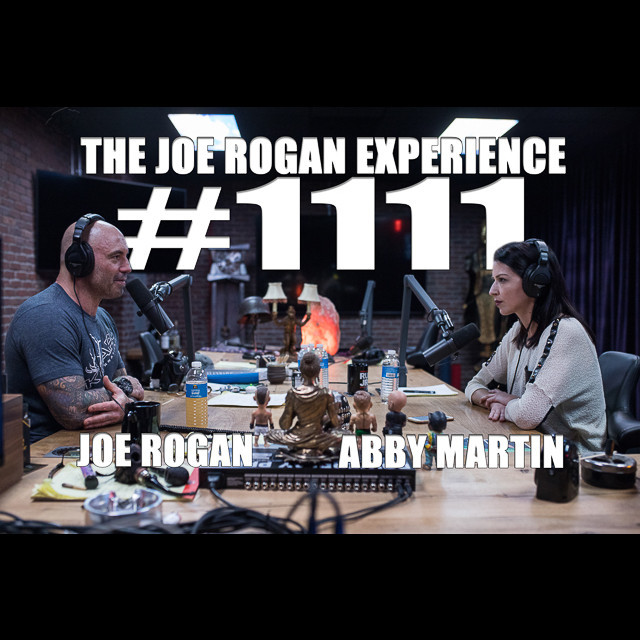
This Joe Rogan podcast episode features journalist and host of “The Empire Files” Abby Martin, known for her critical analysis of US foreign policy. The conversation explores a wide range of topics, delving into controversial issues and examining the undercurrents of political power, media manipulation, and cultural shifts.
Major Topics
-
Bill Cosby’s Conviction and Sexual Assault in the 1960s
- Discusses Bill Cosby’s recent conviction for sexual assault, highlighting the gravity of the charges and the potential for a lengthy prison sentence.
- Speculates on the prevalence of drugging and sexual assault during the 1960s, arguing that societal norms and a lack of internet scrutiny enabled such behavior to remain hidden.
- Draws parallels between Cosby’s case and the changing cultural landscape, where consequences for bad behavior are increasingly visible and unavoidable.
- Contrasts Cosby’s public image as a moral authority with his alleged actions, illustrating the potential disconnect between perception and reality.
-
The Trump Presidency and Controversies
- Analyzes Trump’s unconventional political style and its impact on the public discourse, focusing on his disregard for traditional norms and his ability to deflect criticism.
- Compares Trump’s behavior to past presidents like JFK, noting the stark difference in societal tolerance for personal scandals and the role of media in shaping public opinion.
- Examines the Stormy Daniels controversy and the implications of Trump’s alleged attempts to silence her, highlighting the potential for legal and political repercussions.
- Discusses the ongoing investigations into Russian interference and Trump’s relationship with Michael Cohen, emphasizing the potential for political fallout.
-
Kanye West’s Political Aspirations and Public Behavior
- Explores Kanye West’s recent pronouncements about his presidential ambitions, questioning the motivations behind his sudden political awakening and the potential impact on his career.
- Examines Kanye’s erratic behavior and controversial statements, highlighting the potential for a publicity stunt tied to his upcoming album release.
- Debates the implications of celebrity endorsements and the potential for blurring the lines between entertainment and politics.
- Speculates on the changing landscape of American politics, where fame and personality often supersede traditional qualifications.
-
The Deep State, Military-Industrial Complex, and Neoliberalism
- Delves into the concept of the “deep state,” arguing that it represents a powerful, entrenched network of military and industrial interests that transcends political administrations.
- Explains the motivations of the deep state, highlighting its focus on maintaining global dominance and promoting American interests, even at the expense of other nations.
- Critiques the mainstream media’s portrayal of the “left,” arguing that the true power lies with a neoliberal establishment that masks its true intentions behind a facade of liberalism.
- Explains the lack of real leftist influence in American politics and media, highlighting the challenges of counteracting powerful narratives.
-
The Israel-Palestine Conflict and the Role of the Media
- Examines the ongoing conflict in Israel and Palestine, emphasizing the complexities of the situation and the injustices faced by Palestinians.
- Highlights the role of the Israeli lobby in shaping American public opinion and influencing policy decisions, highlighting the significant financial and political power it wields.
- Criticizes the mainstream media’s coverage of the conflict, accusing them of bias and failing to adequately report on the atrocities committed against Palestinians.
- Discusses the Great March of Return protests in Gaza, emphasizing the nonviolent nature of the demonstrations and the disproportionate response from Israeli forces.
-
The Nature of Conflict and Human Psychology
- Explores the underlying psychological dynamics of conflict, highlighting the tendency to dehumanize and demonize the enemy, leading to violence and atrocities.
- Draws parallels between historical conflicts like the British occupation of Ireland and the Israel-Palestine conflict, highlighting the enduring patterns of oppression and violence.
- Argues that understanding the experiences and perspectives of those caught in conflict is crucial for achieving peace and reconciliation.
- Emphasizes the importance of recognizing the human cost of conflict and challenging narratives that promote violence and dehumanization.
-
The North Korea-US Relationship and Historical Context
- Examines the complex relationship between North Korea and the United States, emphasizing the historical context of US aggression and military intervention in North Korea.
- Discusses the recent peace talks between North Korea and South Korea, highlighting the potential for a breakthrough but also the challenges of bridging decades of mistrust.
- Critiques the American public’s limited understanding of North Korea’s motivations, emphasizing the role of propaganda and the historical legacy of US actions.
- Draws parallels between the North Korean and South Korean societies, highlighting the shared cultural heritage and the societal differences that emerged as a result of the Korean War.
-
Plastic Surgery in South Korea and Cultural Influences
- Discusses the prevalence of plastic surgery in South Korea, examining the cultural pressures and societal influences that contribute to this phenomenon.
- Explores the specific procedures that are popular in South Korea, such as eye surgeries to achieve a more Westernized appearance.
- Analyzes the motivations behind these procedures, ranging from personal desire to conform to societal beauty standards to career advancement.
- Raises questions about the impact of Western beauty standards on global cultures and the implications for self-identity.
-
Race as a Social Construct and Genetic Adaptation
- Debunks the notion of race as a fixed and inherent biological category, arguing that it is primarily a social construct that has been used to justify oppression and inequality.
- Acknowledges the existence of observable genetic differences between populations, highlighting the role of adaptation to specific environments and lifestyles.
- Emphasizes the dangers of reducing human diversity to simplistic racial categories, arguing that it promotes prejudice and tribalism.
- Advocates for a more nuanced understanding of human diversity, recognizing the interconnectedness and shared humanity of all people.
-
The YETI Coolers-NRA Controversy and Cultural Tribalism
- Examines the recent controversy surrounding YETI Coolers’ decision to distance itself from the NRA, highlighting the backlash from gun rights advocates and the intense polarization of American politics.
- Explores the phenomenon of cultural tribalism, where people identify strongly with specific groups and ideologies, often leading to hostility and conflict.
- Critiques the NRA’s tactics of demonizing and attacking companies that do not align with their agenda, highlighting the use of fear and intimidation.
- Discusses the broader implications of this conflict, emphasizing the dangers of escalating political divisions and the need for constructive dialogue.
-
The Rise of “Insult Tears” and Online Subcultures
- Discusses the emergence of online subcultures like “Insult Tears,” highlighting the potential for these communities to foster negativity and violence.
- Examines the motivations behind these online behaviors, ranging from frustration and alienation to a desire to troll and provoke.
- Explores the dangers of online echo chambers, where individuals are exposed only to information that reinforces their existing beliefs and biases.
- Emphasizes the importance of fostering healthy online communities that promote respectful dialogue and critical thinking.
-
The DNC Lawsuit and Press Freedom
- Discusses the recent lawsuit filed by the DNC against WikiLeaks, highlighting the potential implications for press freedom and the right to publish leaked information.
- Examines the motivations behind the lawsuit, arguing that it is a desperate attempt by the DNC to suppress criticism and control the narrative surrounding the 2016 election.
- Critiques the DNC’s arguments about economic espionage and national security, emphasizing the importance of transparency and accountability in government.
- Discusses the broader implications for investigative journalism and the need to protect the public’s right to access information.
-
The Role of the CIA in the Drug Trade
- Examines the historical involvement of the CIA in the drug trade, highlighting the controversial “Operation Mockingbird” and the use of drug smuggling as a means of political control.
- Discusses the “American Made” movie about Barry Seals, a CIA drug runner, highlighting the real-life events and the potential for corruption and cover-ups within the government.
- Explores the complexities of the drug war and the impact of US policies on countries like Colombia.
- Raises questions about the ethical implications of US involvement in the drug trade and the consequences for communities both domestically and internationally.
-
The Waco Siege and the Evolution of the Militia Movement
- Revisits the tragic events of the Waco Siege, emphasizing the government’s brutal response to the Branch Davidian community and the loss of life.
- Discusses the evolution of the militia movement, highlighting the shift from a fringe group to a more mainstream force within American politics.
- Examines the role of government overreach and the potential for violence when confronted with perceived threats.
- Explores the dangers of political extremism and the need for responsible governance that respects individual rights and liberties.
-
The Confederate Statues Controversy and Historical Context
- Discusses the ongoing controversy surrounding Confederate statues, highlighting the symbolism of these monuments and their connection to the history of slavery and racism.
- Explains the historical context of Confederate statue construction, emphasizing the fact that many were erected during the Jim Crow era, reflecting a desire to perpetuate white supremacy.
- Debates the appropriate treatment of these statues, considering the potential for historical preservation versus the need to address the pain and trauma they represent for marginalized communities.
- Advocates for a more inclusive and honest understanding of American history, acknowledging the complexities and injustices of the past.
-
The Trump-Russia Collusion Investigation and the Media
- Examines the ongoing investigation into potential collusion between the Trump campaign and Russia, highlighting the lack of conclusive evidence and the political maneuvering that surrounds the investigation.
- Critiques the media’s reliance on think tanks like the Churchill Group and Hamilton 68 for information about Russian interference, highlighting the potential for bias and manipulation.
- Discusses the broader implications of the investigation, emphasizing the dangers of political polarization and the importance of independent and accurate reporting.
- Explores the motivations behind the focus on Russia, arguing that it serves to deflect attention from other potential sources of foreign interference and to promote a narrative of American exceptionalism.
-
The Huawei Controversy and the Tech Industry
- Examines the recent controversy surrounding Huawei, a Chinese tech company, highlighting the allegations of spying and the US government’s efforts to restrict its access to American markets.
- Explores the potential motivations behind the US government’s actions, suggesting that it might be an attempt to protect American tech giants like Samsung and Apple.
- Discusses the broader implications for global trade and the relationship between technology and national security.
- Raises questions about the extent of surveillance in the tech industry and the implications for individual privacy and freedom.
-
The Cambridge Analytica Scandal and Data Mining
- Revisits the Cambridge Analytica scandal, emphasizing the role of data mining in manipulating public opinion and influencing elections.
- Discusses the capabilities of companies like Cambridge Analytica, highlighting their ability to create targeted propaganda and to exploit personal data for political gain.
- Examines the potential for widespread misuse of data and the need for greater regulation and transparency in the tech industry.
- Raises concerns about the impact of data mining on democratic processes and the need for individuals to be aware of how their data is being collected and used.
-
The 2018 Midterm Elections and the Future of American Politics
- Analyzes the 2018 midterm elections, highlighting the potential for a shift in political power and the challenges facing the Democratic Party.
- Discusses the potential for a resurgence of Bernie Sanders’ progressive movement, emphasizing the need for a clear alternative to the neoliberal establishment.
- Examines the implications of Trump’s continued popularity and the potential for him to win re-election in 2020.
- Explores the broader questions about the future of American democracy, the role of media and technology, and the challenges of navigating an increasingly polarized and chaotic political landscape.
Memorable Quotes
- “I just think we’re very childlike in what we do with and, you know, how we treat our leaders and how we choose our leaders and I’m really fascinated by the cult of personality that goes behind really any big time leader… whether it’s Trump or Obama, there’s people that think that person can do no wrong.”
- “He removes the mask. He’s making it less palatable to sell imperialism around the world. And I think that’s that’s the crux of why you see kind of these stink tankers and the liberals on on TV…”
- “The deep state is a military and industrial complex. They’re winning at the end of the day no matter what. Defense contractor stocks are skyrocketing Trump is basically the de facto arms salesman…”
- “I don’t think we’re gonna bomb them. I don’t think they’re gonna bomb us. And I think as cliches, it sounds, mutually assured destruction is probably a really good incentive to not launch missiles into the air? I think that’s still real.”
- “I think that a a good way to look at the world is, you know, there’s the colonizers and colonizers. The the the states that are basically remaining that we know that the establishment or empire wants to take down Iran, Syria, Venezuela, North Korea. Right? What what are they all in common? They’re all independent of our economic in Germany.”