25-Sep-18
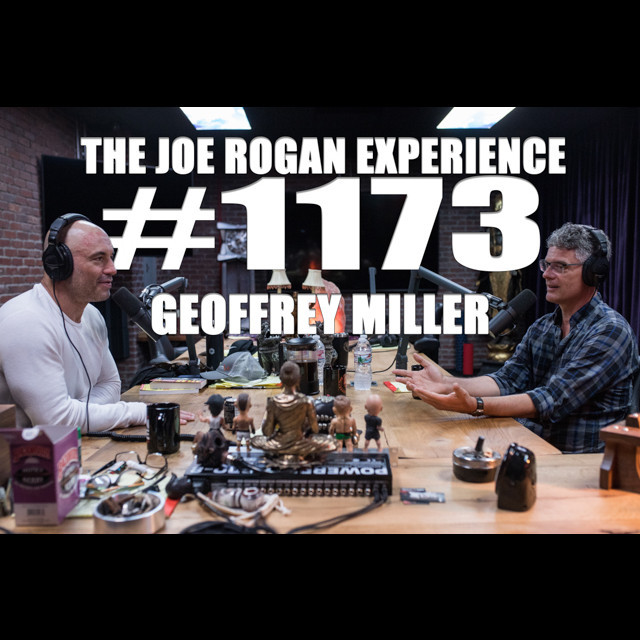
Joe Rogan Experience #1173 – Geoffrey Miller: Topics and Summary
This episode of the Joe Rogan Experience features evolutionary psychologist Geoffrey Miller, delving into topics ranging from the dark side of success to the potential future of human evolution. Provocative discussions on sexual selection, societal hypocrisy, and the impact of technology on human behavior are woven throughout, inviting listeners to challenge their own assumptions and consider the complexities of the human condition.
Topics:
1. The Dark Streak in Successful People:
- Miller argues that many successful individuals possess a degree of sociopathy, allowing them to transcend conventional social norms.
- This “dark streak” can be channeled constructively, leading to innovation and social progress, or destructively, resulting in abuse and exploitation.
- He suggests that recognizing and taming this dark side is crucial for achieving both personal success and positive societal impact.
- The Bill Cosby case exemplifies the potential consequences of unchecked sociopathic tendencies.
2. The Compulsion of Transgression and the Dangers of Moral Idolization:
- Rogan and Miller explore the paradox of public figures who project squeaky-clean images while engaging in immoral behavior.
- They hypothesize that the pressure to maintain a moral facade can lead to a thrill of transgression, potentially becoming addictive.
- The example of televangelists highlights the potential for hypocrisy and the danger of idolizing individuals to an excessive degree.
- The discussion emphasizes the importance of avoiding blind worship and recognizing the fallibility of even seemingly virtuous individuals.
3. Homophobia and Repressed Sexuality:
- Rogan and Miller explore the link between homophobia and repressed sexuality, citing research suggesting that individuals who are hostile towards homosexuality may exhibit underlying homosexual attractions.
- They discuss the psychological tension and internal conflict that can arise from repressing one’s true nature.
- The podcast highlights the importance of self-acceptance and authenticity, suggesting that failing to acknowledge one’s true self can contribute to destructive behaviors.
- The conversation underscores the shift in social attitudes toward homosexuality and the ongoing challenge of reconciling personal beliefs with societal norms.
4. The Paradox of Pornography:
- Rogan and Miller discuss the societal contradiction surrounding pornography: while readily accessible, it remains a taboo subject.
- They explore the implications of unlimited access to pornography, highlighting the surprisingly unperturbed state of civilization despite widespread consumption.
- They touch upon the psychology of porn addiction, noting that individuals differ in their ability to resist temptation and control impulses.
- The discussion highlights the tension between technological advancement, societal values, and the complexities of human behavior.
5. The Design of Addiction:
- Miller argues that the design of modern video games, engineered to be addictive, exploits human psychology.
- The podcast acknowledges the power of capitalism and technology to manipulate our brains, questioning the ethical implications of intentionally creating addictive experiences.
- Rogan and Miller debate whether game designers are consciously aiming to create addiction or simply pursuing entertaining and immersive experiences.
- The discussion raises questions about the balance between individual freedom, commercial interests, and the potential for harmful addiction.
6. The Bratty Kids Trope in Television:
- Rogan criticizes the frequent portrayal of children as “bratty” in TV shows, suggesting that screenwriters rely on a lazy trope.
- Miller, as a father, challenges Rogan’s perspective, arguing that children often demonstrate remarkable resilience and strength in difficult circumstances.
- The conversation highlights the potential for stereotypes and assumptions to shape how we perceive and interact with others, particularly in the context of entertainment media.
- The podcast underscores the importance of avoiding simplistic characterizations and recognizing the complexity of human behavior in various situations.
7. The Value of Unscripted Dialogue:
- Rogan highlights the unique value of podcasts, providing an extended, uninterrupted platform for in-depth discussions.
- He contrasts this with traditional media formats that often feature curated, censored, and rushed interactions.
- The podcast emphasizes the importance of allowing ideas to breathe and evolve through open, unfiltered conversation.
- The discussion acknowledges the growing popularity of podcasts, reflecting a societal yearning for more nuanced and meaningful dialogue.
8. The Dangers of Online Communication:
- Rogan and Miller express concern about the negative effects of platforms like Twitter, where anonymity and limited character constraints can foster cruelty and polarization.
- They argue that online communication lacks the nuanced social cues and accountability present in face-to-face interactions.
- The podcast highlights the potential for online spaces to exacerbate tribalism and extreme ideologies, undermining civil discourse.
- They suggest that the limitations of online communication may contribute to the rise of polarized political views and the erosion of empathy.
9. The Importance of Epistemic Humility:
- Miller advocates for epistemic humility, recognizing the inherent limitations of our knowledge and being willing to admit when we don’t know something.
- He encourages open-minded exploration and a willingness to learn, contrasting this with the pressure to maintain a facade of expertise.
- The podcast highlights the value of admitting ignorance, viewing it as a starting point for intellectual growth and genuine engagement.
- The conversation challenges the prevailing culture of assumed knowledge and promotes the importance of curiosity and continuous learning.
10. The Cognitive Demands of Modern Life:
- Rogan and Miller discuss the cognitive demands of modern work and life, noting that individuals may lack the time and energy for intellectual exploration and deep engagement.
- They suggest that the pressures of work and family life can lead to a preference for escapist entertainment over intellectually stimulating pursuits.
- The podcast highlights the need for greater societal support for intellectual exploration and the importance of balancing work, personal life, and intellectual pursuits.
- The conversation raises questions about the role of technology and societal structures in shaping our cognitive capacity and intellectual engagement.
11. The Future of Education and the Rise of Gamification:
- Rogan and Miller discuss the potential for technological advancements to radically transform education, with virtual reality and gamification playing key roles.
- They express skepticism about the long-term viability of traditional universities, suggesting that alternative models offering more engaging and immersive learning experiences are emerging.
- The podcast highlights the importance of making learning fun and captivating, contrasting this with the often dry and uninspiring nature of traditional education.
- They anticipate a future where gamified learning platforms may offer more effective and accessible educational experiences.
12. The Ethical Implications of Neuralink and Artificial Intelligence:
- Rogan and Miller explore the potential of Neuralink, a brain-computer interface developed by Elon Musk, to dramatically enhance human communication and cognitive abilities.
- They discuss the implications of a global telepathy system, raising questions about privacy, social norms, and the potential for manipulation.
- The podcast delves into the ethical dilemmas surrounding the development and deployment of artificial intelligence, highlighting the need for careful consideration and regulation.
- They explore the potential for AI to accelerate both positive and negative societal transformations, prompting a conversation about the future of human evolution and the role of technology in shaping our destiny.
13. The Moral Quandaries of Technology:
- Rogan and Miller discuss the emerging ethical dilemmas surrounding the development and use of technology, specifically in areas like sex robots, deep fakes, and genetic engineering.
- They explore the blurring lines between reality and simulation, posing questions about the nature of intimacy, authenticity, and consent in a world of increasingly sophisticated technology.
- The podcast highlights the challenge of navigating moral complexities in a rapidly evolving technological landscape.
- They emphasize the need for open discourse, ethical considerations, and careful regulation as technology continues to shape our lives.
14. The Limits of Scientific Knowledge and the Role of Bias:
- Miller critiques the prevalence of biases in social psychology and political science, arguing that these fields are often dominated by left-leaning perspectives.
- He suggests that this bias can impede objective research and lead to flawed conclusions, undermining the credibility of these disciplines.
- The podcast highlights the importance of intellectual diversity and the need for critical self-reflection within academic disciplines.
- Miller emphasizes the importance of challenging assumptions and maintaining a commitment to objectivity in pursuit of genuine scientific understanding.
15. The Future of Human Evolution:
- Miller predicts a future where genetic engineering and technological advancements will lead to a radical diversification of the human form, potentially creating a vast spectrum of human variations.
- He speculates that parents will have the ability to select for specific traits in their offspring, raising questions about the ethics of designer babies and the implications for societal diversity.
- The podcast explores the potential for human evolution to accelerate dramatically, prompting a conversation about the future of the human species.
- They discuss the challenges and opportunities presented by these advancements, prompting listeners to consider the long-term implications for human society and the nature of being human.
16. The Importance of Discourse and Open Dialogue:
- Rogan and Miller emphasize the importance of open, honest dialogue as a means of fostering understanding, resolving conflict, and advancing knowledge.
- They criticize the increasing trend of silencing dissenting voices, highlighting the danger of stifling critical thinking and intellectual exploration.
- The podcast advocates for a more tolerant and inclusive environment for intellectual discourse, valuing diverse perspectives and encouraging respectful debate.
- They suggest that the future of society depends on our ability to engage in productive dialogue, even on challenging and controversial topics.
17. The Role of Technology in Shaping Social Norms:
- Rogan and Miller discuss how technology, particularly social media platforms, has rapidly shaped social norms and expectations.
- They acknowledge the influence of these platforms on communication, relationships, and our understanding of the world.
- The podcast explores the need for a new set of social norms that adapt to the evolving technological landscape and acknowledge the complexities of human interaction in the digital age.
- They emphasize the need for critical reflection and thoughtful adaptation as technology continues to shape our lives and relationships.
18. The Allure and Dangers of Belief Systems:
- The podcast explores the seductive power of rigid belief systems, particularly in the context of Scientology and other controversial organizations.
- They discuss the psychological mechanisms that contribute to indoctrination, highlighting the importance of critical thinking and skepticism.
- Rogan and Miller explore the challenge of deprogramming individuals who have been deeply immersed in a belief system, acknowledging the emotional and social complexities involved.
- The conversation prompts listeners to consider the fragility of belief systems and the need for open-mindedness and critical assessment.
19. The Importance of Family and Long-Term Relationships:
- Miller expresses a strong belief in the value of long-term relationships and family stability, advocating for societal policies that support families and encourage healthy relationships.
- He challenges the assumption that traditional family structures are outdated or inherently oppressive, arguing for their enduring importance in a rapidly changing world.
- The podcast highlights the need for a nuanced approach to family dynamics, recognizing the diverse forms that healthy relationships can take.
- They discuss the challenges and opportunities presented by modern family structures, encouraging a thoughtful and compassionate approach to relationships and parenting.
20. The Future of Human Connection:
- Rogan and Miller discuss the potential for technological advancements to dramatically transform human connection, blurring the lines between real and virtual interaction.
- They explore the implications of virtual reality, sex robots, and other emerging technologies for intimacy, relationships, and the future of human interaction.
- The podcast raises questions about the potential for technology to enhance or diminish human connection, prompting a conversation about the future of relationships and the role of technology in shaping our social lives.
- They encourage listeners to consider the ethical implications of these advancements and to engage in thoughtful dialogue about the future of human interaction.
Memorable Quotes:
- “If you’ve got this public image as being like squeaky clean family values and you’ve got the burden of kind of being a moral exemplar like that, you know, just like televangelists, right, or anybody who who has a big religious following, like the pressure to be good all the time, I think kinda tip people into the — Right. — the thrill of transgression, I imagine could be quite quite kind of addictive.” – Rogan on the dangers of hypocrisy and moral idolatry.
- “The people who are off done, you know, most hostile to something. Yeah. You have some some little issue inside that — Brent is creating some conflict.” – Rogan on the potential link between homophobia and repressed sexuality.
- “And, you know, if you’re a 20 year old underground, You don’t know what the typical 50 year old knows. You might think, oh, they’ve probably mastered most of the wisdom in the world already. Or you might think, know the there’s, like, gigabytes of stuff and they can’t possibly know at all.” – Rogan on the importance of epistemic humility and recognizing the limits of our knowledge.
- “I think that we’re we’re looking at in terms of like Google and Facebook and Twitter and even YouTube. We’re looking at these enormous organizations that I don’t think they had any idea what they were going to be.” – Rogan on the unforeseen consequences of technological advancements and the need for critical reflection.
- “So I just say you should try to get a classical liberal arts education that equips you as a citizen and as a person and as an ethical being, and that’s the future proof way to do it.” – Miller on the value of a well-rounded education and the importance of critical thinking.