28-Mar-19
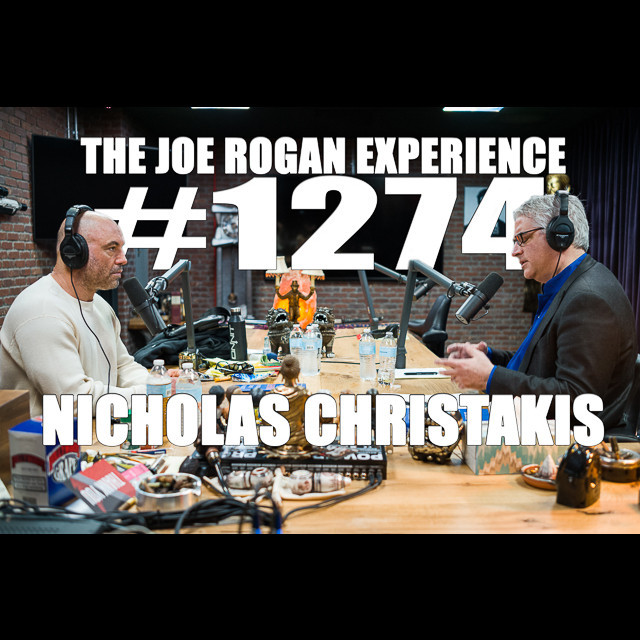
Joe Rogan Podcast #1274 – Nicholas Christakis – Topics and Summary
This episode features a stimulating conversation with Nicholas Christakis, a sociologist and physician known for his work on social networks and human behavior. The conversation tackles a wide range of topics, from the infamous Halloween costume incident at Yale to the evolution of human nature and the potential impact of artificial intelligence. Underlying themes explore the complexities of free speech, the power of social structures, and the enduring nature of human goodness.
1. The Yale Halloween Costume Incident: A Microcosm of Free Speech Debates
- Christakis’ wife, Erica, sent an email advocating for student autonomy in choosing Halloween costumes, prompting outrage and accusations of defending offensive attire.
- The incident highlighted a broader tension between free expression and sensitivity, particularly on college campuses, where students often demand censorship of opinions they deem harmful.
- Christakis argues that universities should not dictate dress codes, emphasizing the importance of open debate and the ability to learn from challenging ideas.
- He emphasizes the value of “granting good faith” in interactions and fostering a “marketplace of ideas” where truth and righteousness can emerge through reasoned discourse.
2. The Evolutionary Origins of a Good Society: Nature’s Blueprint for Cooperation
- Christakis argues that human beings have evolved not only to be selfish and competitive but also to love, befriend, cooperate, and teach each other.
- He posits that the benefits of social interaction, including cooperation and knowledge sharing, have outweighed the costs, allowing humans to spread across the globe and thrive.
- He draws evidence from intentional communities, shipwrecks, and laboratory experiments to demonstrate the innate human drive for connection, cooperation, and knowledge acquisition.
- He suggests that totalitarian regimes and cults attempt to suppress these innate tendencies, highlighting the importance of family and individual relationships in fostering a healthy society.
3. The “Forbidden Experiment” and the Innateness of Human Social Structures
- Christakis discusses the hypothetical “forbidden experiment” of raising children without any cultural influence to determine the innate social structures of human beings.
- While acknowledging the ethical impossibility of such an experiment, he examines real-world approximations, including shipwrecks, communes, and settlements in Antarctica, to explore how isolated groups construct social orders.
- He argues that despite cultural variations, humans exhibit a fundamental commonality in their social structures, such as friendship, love, cooperation, and teaching.
- He suggests that these principles are as innate as basic biological functions and that totalitarian states often exert significant pressure to suppress these tendencies.
4. The Self-Domestication of Humans: A Evolutionary Explanation for Peacefulness
- Christakis examines the theory of self-domestication, arguing that humans have become more peaceful over time through a process of weeding out violent individuals.
- He compares human behavior to domesticated animals, noting similarities in physical traits and behavioral patterns, suggesting that humans have undergone a similar evolutionary process.
- He cites examples like the Tsimane, a group in Amazonia, where individuals who are either physically strong or charismatic and knowledgeable tend to have more offspring, demonstrating the interplay of strength and social skills in reproductive success.
- He highlights the case of baboons who were accidentally exposed to disease, leading to the elimination of the most violent members and a shift toward more peaceful social behavior across generations.
5. The Role of Genes and Environment: A Complex Interplay in Human Traits
- Christakis acknowledges the influence of both genes and environment in shaping human traits, arguing against the false dichotomy of nature versus nurture.
- He posits that approximately half of the variation in traits like religiosity or risk aversion can be attributed to genetics, while the other half is influenced by upbringing and environmental factors.
- He emphasizes that some traits, like musical ability, may be largely innate, while others can be significantly shaped by education and training.
- He highlights the importance of recognizing the complexity of human nature and avoiding simplistic binary categories, particularly in social and political discussions.
6. The Power of Open Dialogue and the Dangers of Silencing Opposing Views
- Christakis vehemently advocates for free speech and open dialogue, arguing that silencing opposing views can actually be harmful, leading to a suppression of dissent and an amplification of extremist ideologies.
- He critiques the growing trend of de-platforming individuals, arguing that it deprives both the speaker and the listener of their right to engage in free exchange of ideas.
- He proposes that the solution to harmful speech is more speech, fostering an environment where diverse perspectives can be debated and challenged.
- He emphasizes the importance of “granting good faith” and recognizing the value of intellectual conflict in promoting progress and understanding.
7. The Evolution of Human Morality: A Complex Interplay of Nature and Culture
- Christakis explores the evolutionary origins of morality, arguing that it is not simply a product of social conditioning but is also rooted in our biological makeup.
- He cites the example of lactase persistence, where human beings evolved the ability to digest milk after the cultural invention of animal domestication, illustrating how culture can shape genetic evolution.
- He suggests that the invention of cities and other cultural innovations have also likely influenced human evolution, selecting for individuals with specific traits that are advantageous in urban environments.
- He highlights the case of the Cinomads, a group in the Philippines, who have evolved unique physiological traits, such as larger spleens, to accommodate their unique seafaring lifestyle.
8. The Ethical Implications of Artificial Intelligence: Shaping a Human-Robot Future
- Christakis examines the ethical implications of artificial intelligence, particularly the potential impact of sex robots on human relationships and social structures.
- He argues that the focus of our concern should not be on individual experiences with robots but on how these interactions might alter our relationships with other humans.
- He uses the example of Alexa, a virtual assistant that encourages rudeness in children, to illustrate how AI can create unintended consequences for human behavior.
- He suggests that future regulations on AI should not simply focus on preventing harm by robots but also on mitigating the unintended effects these technologies might have on human social interactions.
9. The Enduring Nature of Human Goodness: A Counterbalance to Our Flaws
- Christakis emphasizes the enduring nature of human goodness, despite our flaws and tendencies toward violence.
- He argues that natural selection has equipped us with a capacity for love, cooperation, and creativity, which are essential for our success as a species.
- He draws inspiration from the Japanese concept of “wabi sabi,” which celebrates the beauty of imperfection and recognizes the inherent flaws in all things, including humans.
- He suggests that focusing solely on our negative aspects can lead to a “surrender to the dark side” and discourage us from striving for a better world.
10. The Future of Humanity: Navigating Technological Advancements and the Potential of Artificial Life
- Christakis explores the potential for artificial intelligence to transform human society, both for good and for ill.
- He acknowledges the debate over whether AI poses an existential threat to humanity, recognizing that the consequences of our technological creations are difficult to predict over long time scales.
- He suggests that AI may represent a new form of life, challenging our traditional understanding of biological life and its origins.
- He contemplates the possibility that our inherent curiosity and drive for innovation may be an evolutionary imperative, leading us inexorably toward the creation of artificial life, regardless of the consequences.
11. The Mystery of Death: Evolutionary Trade-offs and the Value of Life
- Christakis examines the evolutionary reasons behind human mortality, considering the trade-offs between immortality and the inevitability of accidental death.
- He suggests that natural selection favors the creation of organisms that are not immortal, as it would be inefficient to evolve an organism with the capacity for immortality if it were likely to die from external causes.
- He highlights the importance of appreciating life and embracing the finite nature of our existence, rather than living in constant fear of death.
- He explores the unique experiences of individuals who engage in high-risk activities, such as rock climbing and deep-sea diving, and how their ability to stay calm in the face of danger may be both innate and learned.
12. The Importance of Skill Acquisition: Developing Expertise and Personal Growth
- Christakis emphasizes the importance of skill acquisition, arguing that learning and developing expertise can lead to personal growth and a deeper understanding of oneself and the world.
- He cites the example of London taxi drivers, whose brains have been shown to adapt to the demanding task of navigating the city, illustrating the plasticity of the human brain.
- He acknowledges that both innate talent and training are essential for achieving excellence in any field, emphasizing the need for both natural aptitude and diligent effort.
- He draws on the wisdom of the Japanese martial arts tradition, highlighting the importance of recognizing the value of one’s opponent in the process of learning and improving.
13. The Value of Disagreement: Learning Through Challenge and Conflict
- Christakis advocates for the value of intellectual disagreement, arguing that engaging with opposing viewpoints is essential for learning and personal growth.
- He emphasizes that engaging with individuals we disagree with can lead to deeper understanding and the development of more nuanced and informed perspectives.
- He encourages embracing intellectual conflict as a means of uncovering truth and refining our own ideas, highlighting the importance of being open to challenge and admitting when we are wrong.
- He recognizes that the desire to be right can be a powerful force, but emphasizes the need to cultivate humility and appreciate those who help us to grow by pointing out our errors.
14. The Unjust System of Incarceration: A Call for Reform and Reintegration
- Christakis critiques the high rates of incarceration and the long prison sentences in the United States, arguing that the system is both costly and unjust.
- He advocates for a more nuanced approach to criminal justice, recognizing that not all crimes are equal and that violent offenders may require different treatment than non-violent offenders.
- He emphasizes the importance of reforming the system to prioritize rehabilitation and reintegration into society, arguing that deprivation of the right to vote after serving one’s sentence is unjust.
- He suggests that shorter prison sentences, coupled with a higher certainty of punishment for those who commit crimes, could be a more effective deterrent than long sentences.
15. The Importance of Nuance in a World of Black and White Thinking: Embracing Complexity
- Christakis repeatedly emphasizes the importance of nuance in a world increasingly dominated by simplistic binary thinking.
- He argues that our tendency to categorize the world into black and white, good and evil, us and them, can lead to harmful divisions and a distorted understanding of reality.
- He suggests that embracing complexity and recognizing the shades of gray in human behavior and social issues can lead to a more compassionate and informed perspective.
- He encourages us to move beyond simplistic categories and recognize the multifaceted nature of human experience.
Memorable Quotes:
- “It is the case that many people lost their minds. I mean, lost their senses.” – Christakis reflects on the irrational reactions to his wife’s email about Halloween costumes, highlighting the intensity of the free speech debate.
- “I don’t think that’s a way to truth. It’s a way to some truth. It’s a way to some wisdom.” – Christakis acknowledges the value of religious belief systems but distinguishes them from a pursuit of objective truth, emphasizing the role of reason and inquiry.
- “The benefits of a connected life outweighed the costs. We would not be living socially if my exposure to you harmed me.” – Christakis emphasizes the evolutionary advantage of social interaction, highlighting the importance of cooperation and the risks inherent in isolation.
- “The most famous example of this is something known as lactase persistence. So many people, not about half the world, can adults can drink milk.” – Christakis illustrates the power of gene-culture coevolution through the example of lactase persistence, demonstrating how cultural changes can drive genetic adaptation.
- “I think we are so flawed. We can’t escape the ocean. We do pull the fish out of it. Yeah. We do fuck up the air. We do commit genocide. There’s all these things that are real.” – Christakis acknowledges the flaws of humanity but emphasizes the importance of recognizing our positive qualities and striving for a better world.