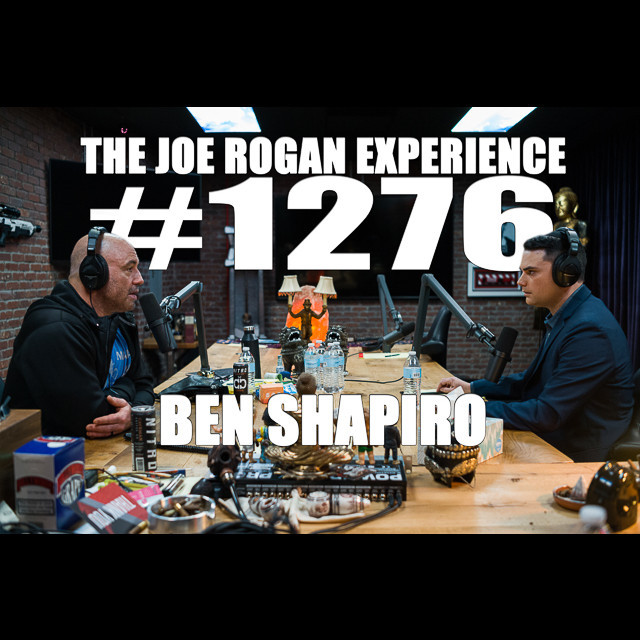
3-Apr-19
This podcast features a lively conversation between Joe Rogan and Ben Shapiro, delving into diverse topics ranging from political ideologies to personal experiences. Provocative discussions revolve around the nature of truth, the impact of social media, the role of government, and the complexities of personal beliefs. Underlying themes explore the dynamics of free speech, the importance of individual responsibility, the power of community, and the enduring influence of tradition.
Topic Breakdown
- Misrepresentation and Demonization: Ben Shapiro addresses the widespread mischaracterization of his views, specifically highlighting the media’s tendency to label him as “alt-right” despite his vocal opposition to such ideologies. He argues for a nuanced understanding of his conservative stance, emphasizing his thoughtful and well-formulated arguments.
- Shapiro challenges the perception that conservatives are inherently hateful or regressive, emphasizing that he engages in debate and offers well-defined philosophical positions.
- He points to the prevalence of anti-Semitic abuse he faced in 2016, contradicting the “alt-right” label, and highlights his consistent opposition to white supremacy.
- Shapiro criticizes the selective use of past statements to demonize individuals, highlighting the practice of taking quotes out of context or focusing on minor mistakes to discredit someone’s entire philosophy.
- He advocates for honesty and self-reflection, acknowledging past mistakes and recognizing that people can evolve their views over time.
- Deplatforming and Censorship: The discussion delves into the growing controversy surrounding deplatforming, specifically addressing instances where individuals or organizations are removed from platforms like YouTube or Twitter. Shapiro argues against censorship based on subjective moral judgments, emphasizing the importance of free speech and open discourse.
- Shapiro expresses concern about the growing power of tech companies to act as arbiters of morality, highlighting the lack of transparency in their decision-making process.
- He criticizes the inconsistency in applying censorship, pointing out that some individuals who hold controversial views remain on platforms while others are banned.
- Shapiro argues that platforms like Facebook and YouTube are ultimately responsible for the content on their platforms, comparing them to publishers rather than neutral intermediaries.
- He emphasizes the dangers of allowing a select group of individuals to dictate what conversations are deemed acceptable, particularly given the concentrated power of Silicon Valley tech giants.
- Marijuana and its Impact: Ben Shapiro and Joe Rogan engage in a nuanced discussion about marijuana use, acknowledging its potential benefits while also expressing concerns about its effects, particularly on young people. Both emphasize the importance of personal responsibility and the need to consider the broader social context.
- Shapiro acknowledges the potential for marijuana use to enhance certain activities, like jiu-jitsu, but emphasizes the risks of overuse, particularly during brain development.
- He discusses the lack of widespread knowledge about marijuana’s effects, often leading to misuse and potential addiction, highlighting the need for open and honest discussions about its impact.
- Both Rogan and Shapiro agree that marijuana use should not be criminalized but advocate for a more nuanced approach that considers the potential risks and encourages responsible consumption.
- Shapiro argues that addressing the potential harm of marijuana use requires a multifaceted approach that involves personal responsibility, strong social fabrics, and thoughtful parenting.
- Psychedelics and Consciousness: The conversation explores the potential for psychedelic experiences to enhance consciousness and promote personal growth, challenging traditional religious perspectives that view such substances as harmful.
- Rogan raises the possibility that psychedelic substances could be seen as tools for spiritual exploration, suggesting that they may have been used in ancient religious rituals.
- Shapiro expresses skepticism about this argument, emphasizing his commitment to rationalism and the importance of using reason to determine the proper use of substances.
- He acknowledges the potential benefits of psychedelics in therapeutic settings, particularly for individuals dealing with terminal illnesses or PTSD.
- The discussion grapples with the complexities of free will, questioning whether psychedelic experiences offer a shortcut to happiness or whether they can enhance individual growth and purpose.
- The Role of Government and Social Fabric: Shapiro argues that a strong social fabric, built on shared values and community, is essential for a healthy society, while expressing skepticism about the government’s ability to effectively solve social problems.
- Shapiro advocates for a more limited role of government, emphasizing personal responsibility and the importance of individuals taking ownership of their lives.
- He highlights the limitations of government intervention, arguing that simply cutting checks or enacting regulations doesn’t address the underlying problems of poverty, crime, or a lack of purpose.
- Shapiro emphasizes the value of community and the importance of building strong social connections, citing the example of religious institutions and their role in providing support and guidance.
- He critiques the tendency to rely solely on government solutions, suggesting that a more holistic approach that emphasizes personal responsibility, community involvement, and shared values is more effective in creating a thriving society.
- Diversity and Shared Values: Ben Shapiro tackles the concept of diversity, highlighting the importance of shared values in creating a cohesive community. He argues that while diversity can be beneficial within a shared framework, it can also lead to fragmentation if there is no common ground.
- Shapiro emphasizes the need for a shared sense of purpose and direction in order for diversity to be truly beneficial, citing the example of the military where individuals from diverse backgrounds work together towards a common goal.
- He expresses concern about the increasing division in society, particularly regarding fundamental values, and highlights the challenges of building a strong social fabric when there is a lack of common ground.
- Shapiro argues that charity should be directed towards those who share core values, emphasizing the importance of aligning on fundamental principles in order to work collaboratively towards a shared future.
- He emphasizes the need for individuals to take responsibility for their lives, making choices that contribute to their own well-being and the betterment of their communities.
- Automation and the Future of Work: Ben Shapiro and Joe Rogan discuss the potential impact of automation on the workforce, expressing different perspectives on the likely challenges and opportunities.
- Shapiro acknowledges the potential for automation to disrupt certain industries and displace jobs but expresses optimism that individuals will be able to adapt and find new opportunities.
- He critiques the idea of a universal basic income as a solution to job displacement, arguing that it could create dependency and stifle innovation.
- Shapiro highlights the importance of fostering a culture of adaptability and entrepreneurialism, encouraging individuals to embrace new skills and pursue opportunities in emerging fields.
- The conversation grapples with the broader implications of automation on societal structure, questioning whether it will lead to increased inequality or create new opportunities for human flourishing.
- The Role of Religion in Society: Ben Shapiro, as an orthodox Jew, shares his perspective on the role of religion in shaping personal values and societal norms. He argues that religion provides an ethical framework and promotes self-discipline while emphasizing the importance of individual freedom and the separation of church and state.
- Shapiro defends his religious beliefs, emphasizing that he does not seek to impose them on others and recognizes the right of individuals to practice their own faiths or lack thereof.
- He discusses the importance of personal responsibility within religious frameworks, acknowledging that all people sin and emphasizing the need to strive for self-improvement rather than judging others.
- Shapiro highlights the benefits of religious practices in fostering community, promoting charity, and providing a sense of purpose.
- He advocates for a society that respects religious freedom while upholding the separation of church and state, allowing for diverse beliefs to coexist within a shared framework of individual rights.
- Same-Sex Marriage and Religious Beliefs: Ben Shapiro shares his perspective on same-sex marriage, outlining his opposition based on his religious beliefs while advocating for a separation of church and state.
- Shapiro clarifies that his personal beliefs about the sanctity of traditional marriage do not equate to a desire to legislate against same-sex relationships.
- He emphasizes the importance of freedom of association and the right of individuals to choose who they marry, regardless of their sexual orientation.
- Shapiro acknowledges the potential for societal changes to impact religious institutions, such as synagogues or religious schools, but argues that the government should not interfere with the internal practices of such organizations.
- He advocates for a society where religious and secular viewpoints can coexist peacefully, recognizing that different beliefs can coexist within a shared framework of individual rights and freedom.
- The Nature of Truth and Meaning: The conversation explores the nature of truth, examining differing perspectives on the role of reason, scientific materialism, and religious beliefs in defining our understanding of the universe.
- Shapiro challenges the notion of a purely rational approach to truth, highlighting the potential limitations of scientific materialism in explaining the complexities of human existence and the meaning of life.
- He argues that religious beliefs can provide a foundation for understanding human value and purpose, offering a framework for morality and ethics that transcends purely material explanations.
- The discussion grapples with the concept of free will, questioning whether our actions are predetermined or whether we have the capacity to make choices that shape our lives.
- Shapiro emphasizes the importance of acknowledging the assumptions that underlie our beliefs and engaging in open and respectful dialogue to explore differing perspectives on the nature of truth, meaning, and purpose.
- The Impact of Misinformation and the Media: The podcast examines the prevalence of misinformation in the media and the challenges of navigating a landscape where ideological bias can often overshadow objective reporting.
- Shapiro criticizes the tendency of some media outlets to promote a particular narrative, even at the expense of accuracy, highlighting the dangers of jumping to conclusions and perpetuating false information.
- He argues for transparency in journalism, encouraging reporters to disclose their biases and allowing readers to make informed judgments about the information they consume.
- Shapiro expresses concern about the impact of misinformation on public discourse, highlighting the challenges of engaging in meaningful conversations when people are operating from a basis of flawed or biased information.
- He emphasizes the importance of critical thinking and the need to question information sources, particularly when dealing with complex issues that are often presented in a polarized or sensationalized manner.
5 Memorable Quotes
- “This is what bothers me so much about you being so misrepresented. When I read things about you, there was the the article that we were just talking about, the outright sage without the rage they called you. You’re not even remotely outright. In fact, you were the leading target of anti semitic abuse for all of 2016. Were you Yeah. According to the anti defamation league, which is no ally in mind. So Yeah. I mean, I’m not only am I not alright? I’ve spent the last 4 years, like, legitimately battling me outright talking about how evil I think their ideology is, how evil I think white supremacists he is.”
- “The problem is that right now, even if you preemptively come out and say I did something wrong, like, for example, Liam Nason talking about years ago when he had a racist thought that he didn’t act on. When he had a racist thought, this is now we’re gonna try and ruin your career for something that you admit was bad, that you did 30 years ago. We’re gonna try and ruin you over that.”
- “I think that if our tech companies were honest, they should take that stuff off. Like, stop pretending you’re do gooding. Not do good, and you’re providing a platform. And maybe the platform is the good. Right? In a capitalist economy, the product that you provide is the good. I don’t need additional good to come from your product.”
- “The real problem, and this is something that is very similar to what we’re talking about earlier. When you say something and you say it over and over and over again and you say it with such conviction and it becomes a giant part of your news narrative. And then that’s something. Turns out to be horseshit. Yep. You just massively empowered Trump.”
- “The thing that when it comes with religion in defining whether or not other people’s behavior is sinful, where it doesn’t involve you. That’s where a lot of folks start thinking that maybe these ideas are bigoted. Right. But it does involve me, meaning that I’m Well, I’m I’m enjoying every sin that I say is a sin is is a sin that enjoys me. It’s just that I may not have a desire for that particular sin.”