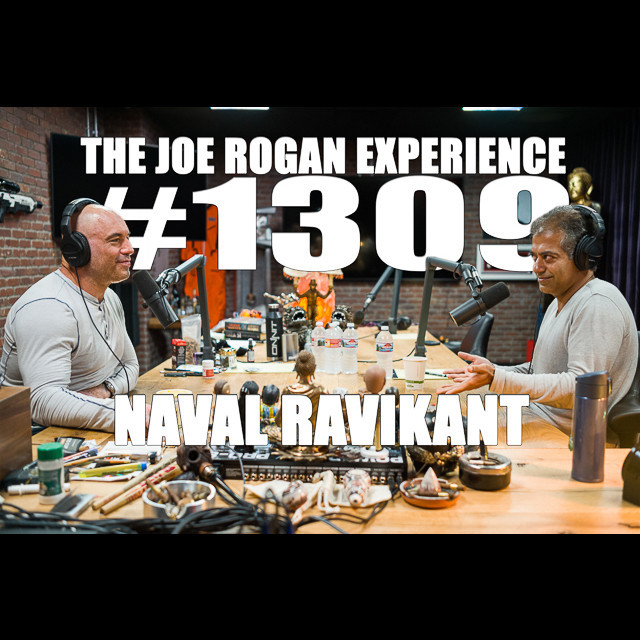
4-Jun-19
This podcast delves into the mind of Naval Ravikant, a prominent entrepreneur and angel investor, as he shares his insights on wealth creation, happiness, the future of work, and the perils of modern society. Ravikant challenges conventional wisdom, advocating for a balanced perspective on success and a focus on individual agency in navigating a complex world.
Major Topics:
1. The Multifaceted Nature of Life and Specialization
- Ravikant rejects the notion of specializing in one area, arguing for a more holistic approach to life, similar to the ancient Greek and Roman models. He emphasizes the importance of trying your hand at everything and embracing a “beginner’s mind.”
- He draws a parallel to mountain climbing, suggesting that while it can be comfortable to stay on a familiar path, the greatest rewards often come from starting over and exploring new routes.
- He highlights the courage of great artists and creators like Elon Musk and Paul Simon who are willing to reinvent themselves and embrace the risk of failure, a necessary ingredient for growth.
- Ravikant suggests that the pursuit of learning and the “aha” moment of connecting new ideas are the driving forces behind a fulfilling life, encouraging listeners to maintain a spirit of curiosity.
2. The Social Media Trap and the Pursuit of Anonymity
- Ravikant critiques the performative nature of social media, highlighting how it encourages people to present unrealistic versions of themselves and prioritize external validation over self-reflection.
- He argues that this constant signaling creates a fragile self-image that can be easily shattered by negative feedback, leading to unhappiness and a sense of vulnerability.
- He advocates for a shift towards “wealth and anonymity,” suggesting that while fame has its perks, it also comes with significant downsides that make it a problematic pursuit.
- He points to the challenges of navigating public life when your every action is scrutinized and potentially exploited, making anonymity a privilege worth striving for.
3. Principles of Wealth Creation and Achieving Financial Freedom
- Ravikant outlines his “How To Get Rich Without Getting Lucky” principles, emphasizing the importance of owning equity, building a brand, and leveraging modern technology to create wealth.
- He argues that wealth creation is a skill that can be learned and cultivated through understanding timeless principles and applying them to real-world scenarios. He rejects the idea of get-rich-quick schemes, emphasizing the importance of hard work and long-term thinking.
- He encourages listeners to embrace the idea of “infinite leverage” offered by the information age, where their actions can have a far greater impact than in previous eras, making wise decisions paramount.
- Ravikant emphasizes that true wealth goes beyond financial security, also encompassing happiness and inner peace, suggesting that these three pillars can be cultivated through conscious effort and a strategic approach.
4. The Power of Choice and the Art of Happiness
- Ravikant challenges the notion that happiness is a passive state, arguing that it’s a choice that can be cultivated through conscious effort and a commitment to a happier mindset.
- He proposes the idea of a “social contract” where you publicly declare your intention to be happy, creating a pressure to live up to that self-proclaimed identity.
- He draws a parallel to fitness, suggesting that just as you can choose to prioritize your physical well-being, you can also choose to prioritize your mental and emotional well-being.
- He emphasizes the importance of taming the mind, achieving a state of inner calm and clarity as a foundation for high performance in all areas of life, highlighting the example of Warren Buffett’s relaxed approach to success.
5. The Future of Work and the Rise of the Knowledge Worker
- Ravikant predicts a future where the information age will reverse the industrial age, leading to a world where most people work for themselves, choosing projects and schedules that align with their individual preferences.
- He discusses Ronald Cohen’s theorem, explaining the shrinking optimal size of companies as technology enables easier external collaboration and the rise of the gig economy.
- He envisions a future where high-quality work is readily available on-demand, with individuals taking on projects as they choose, allowing for greater freedom and flexibility.
- Ravikant encourages listeners to embrace this shift and strive for autonomy, believing that working for yourself is the highest calling, fostering greater creativity and happiness.
6. The Universal Basic Income Debate and the Role of Education
- Ravikant challenges the popular narrative of an automation apocalypse, arguing that while automation will continue to eliminate jobs, it will also create new, often more creative and fulfilling ones.
- He dismisses Universal Basic Income (UBI) as a non-solution to a non-problem, arguing that it would lead to socialism, discourage entrepreneurship, and diminish the meaning and purpose of work.
- He advocates for a more nuanced approach, emphasizing the need for retraining programs that equip individuals with the skills they need to thrive in the changing job market.
- Ravikant believes that education should be an ongoing process, embracing online learning and boot camps as tools for acquiring new skills and navigating the evolving workforce.
7. The Limits of AI and the Importance of Creative Thinking
- Ravikant expresses skepticism about the near-term threat of artificial general intelligence (AGI), arguing that current AI advancements are mainly focused on narrow tasks like pattern recognition and machine learning, not on true creative thinking.
- He emphasizes that we still have a limited understanding of the human brain and its complex biological processes, making the creation of AGI a long-term challenge.
- He challenges the assumption that AGI will be the ultimate form of intelligence, suggesting that intelligence is contextual and requires an evolving environment for growth.
- Ravikant highlights the importance of human creativity as the last frontier in the face of automation, emphasizing that creative pursuits like art, music, and storytelling will remain essential for human fulfillment.
8. The Ethical and Economic Challenges of Capitalism
- Ravikant acknowledges the problems of crony capitalism and the potential for exploitation, particularly by powerful institutions like banks, which privatize profits and socialize losses, creating economic inequality.
- He argues that free markets and free exchange are inherently beneficial to humanity, enabling cooperation and progress through specialization of labor and trade.
- He emphasizes the difference between equal opportunity and equal outcome, asserting that equal outcome can only be enforced through violence, as individuals make different choices and achieve different results.
- Ravikant advocates for a system that provides equal opportunities for all, enabling individuals to achieve success based on their own efforts and choices.
9. The Rise of Socialism and the Importance of Individual Agency
- Ravikant discusses the allure of socialism, acknowledging its appeal in the context of human empathy and desire for social justice, while also highlighting its inherent flaws and historical failures.
- He suggests that socialism is often driven by good intentions but lacks the practical mechanisms for equitable distribution of resources and incentivizes a culture of entitlement.
- He emphasizes that individual agency and self-reliance are essential for personal growth and societal progress, urging listeners to reject the notion of being a victim of the system.
- Ravikant highlights the importance of understanding the limitations of both capitalism and socialism, advocating for a more nuanced approach to economic and social policy.
10. The Dangers of Information Overload and the Importance of Digital Detox
- Ravikant warns of the dangers of constant information overload, arguing that it can lead to a loss of attention span, a sense of overwhelm, and even mental instability.
- He suggests that the human brain is not designed for the relentless bombardment of breaking news, clickbait headlines, and social media notifications.
- He advocates for a conscious retreat from digital distractions, emphasizing the importance of creating space for reflection and solitude, as well as cultivating a healthy skepticism toward information presented online.
- Ravikant highlights the importance of cultivating the art of doing nothing, suggesting that meditation and quiet contemplation are essential for mental and emotional well-being in the modern world.
11. The Role of Technology in Shaping Society and the Future
- Ravikant discusses the impact of technology on social and political structures, arguing that it has historically led to a leftward shift by empowering individuals and challenging traditional power structures.
- He acknowledges the power of social media platforms like Twitter, Facebook, and Google to shape public discourse and influence the flow of information, potentially leading to manipulation and censorship.
- He warns about the dangers of centralized control of information and the need for decentralized media platforms that resist manipulation and suppression.
- Ravikant suggests that the future of media will likely involve a few powerful hegemons and a vast long tail of independent creators, blurring the lines between traditional journalism and personal expression.
12. The Importance of Critical Thinking and Rejecting Groupthink
- Ravikant encourages listeners to become independent thinkers, challenging the tendency to blindly accept the opinions of others and conform to groupthink.
- He argues that political systems can stifle critical thinking by forcing people to align with one side or the other, leading to a loss of nuance and a silencing of dissenting voices.
- He suggests that a true commitment to critical thinking requires a willingness to challenge prevailing narratives and to question assumptions, even those that are widely accepted.
- Ravikant encourages listeners to embrace complexity and to avoid oversimplification, recognizing that the world is a messy and multifaceted place.
13. The Pursuit of Meaning and the Importance of Self-Discovery
- Ravikant explores the meaning of life, highlighting the limitations of finding a definitive answer to this existential question.
- He suggests that the pursuit of meaning is more important than arriving at a definitive answer, as the process of exploring this question fosters self-awareness and a deeper understanding of one’s values.
- He encourages listeners to embrace the paradox of being both unique and interconnected, finding meaning in the tapestry of life rather than seeking a singular and ultimate purpose.
- Ravikant emphasizes that the quest for meaning is an ongoing journey, requiring continuous self-reflection and a willingness to embrace the ambiguity and complexity of life.
14. The Importance of Authentic Living and Embracing Play
- Ravikant suggests that true happiness comes from aligning your actions with your passions and authentic self, rather than chasing external rewards or seeking validation from others.
- He emphasizes the importance of creating work that feels like play, finding joy in the process rather than solely focusing on the outcome.
- He advocates for a life that prioritizes experiences and relationships over material possessions, recognizing that true fulfillment comes from connection and creativity.
- Ravikant encourages listeners to embrace the freedom that comes from aligning their work with their passions and to reject the trap of working solely for money or status.
15. The Importance of Environmentalism and the Role of Technology
- Ravikant acknowledges the urgency of environmental challenges and the need for sustainable solutions.
- He argues that while environmental consciousness is important, it’s not enough. He emphasizes the need for technological solutions that create clean and sustainable alternatives to current polluting practices.
- He believes that the best way to inspire environmentalism is through creating technologies that benefit people’s health and well-being, making sustainable options more attractive and cost-effective.
- Ravikant suggests that the path to a more sustainable future requires a combination of technological innovation, economic incentives, and a shift in consumer behavior, driven by a desire for a healthier and more sustainable way of life.
Memorable Quotes:
- “If you combine things you’re not supposed to combine, people get interested. It’s like Bruce Lee: striking thoughts, philosophy plus martial arts.” – Ravikant highlights the power of integrating diverse perspectives and approaches.
- “Everyone should just be able to do everything. And so I don’t believe in this model anymore of trying to focus your life down on one thing. You’ve got one life. Just do everything you’re going to do.” – A bold statement encouraging listeners to embrace a more expansive view of life.
- “You want to be rich and anonymous, not poor and famous.” – Ravikant’s insightful take on the trade-offs of fame and wealth.
- “Happiness is a choice. If you’re so smart, how come you aren’t happy? How come you haven’t figured that out?” – A provocative challenge to listeners to take ownership of their happiness.
- “The best way to change the world is to change yourself.” – A timeless reminder of the power of personal transformation and its impact on the world around us.