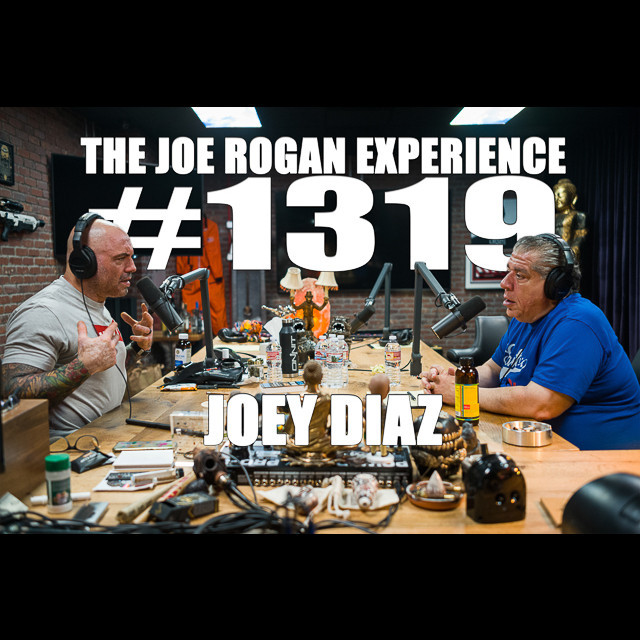
1-Jul-19
This episode of the Joe Rogan Experience dives into the vibrant and often controversial world of stand-up comedian Joey Diaz. The conversation ranges from provocative takes on social issues to light-hearted discussions on pop culture and personal experiences. Prepare for a rollercoaster of laughter, deep thoughts, and a touch of absurdity as Joey Diaz, with his unique blend of humor and honesty, shares his perspective on life.
Podcast Topic Breakdown:
Here are some of the major topics discussed in this episode:
1. The Gay Pride Parade:
- Diaz begins the episode with a humorous, albeit controversial, observation on the potential consequences of the Gay Pride parade, playfully suggesting a surge in hospital visits due to “gay” activity.
- This opening segment acts as a comedic springboard, showcasing Diaz’s irreverent and unapologetically provocative humor, which is a hallmark of his comedic style.
- While the topic is presented in a humorous light, it highlights the complex and evolving social dynamics surrounding sexuality and public displays of affection.
- It touches upon the broader themes of societal acceptance, tolerance, and the nuances of humor in a politically charged environment.
2. Navigating “Scumbaggery” with Gay Men:
- Diaz delves into the different types of gay men he’s encountered, drawing a distinction between those who are genuinely interested, those who are semi-interested, and those who are openly flamboyant.
- This discussion exposes Diaz’s personal experiences and his comedic approach to navigating a topic that can be sensitive and often misunderstood.
- He playfully explores the idea that “scumbaggery” applies to all men, regardless of sexual orientation, touching on the universal nature of human flaws and foibles.
- It subtly touches upon the broader theme of societal stereotypes and the need to move beyond simplistic classifications when understanding individuals.
3. The “Transgender” Debate:
- Diaz expresses his frustration with the ongoing debate surrounding transgender issues, particularly in the context of sports.
- He raises concerns about the potential unfair advantage transgender athletes might have, stemming from their prior exposure to testosterone.
- His argument centers around the inherent physical differences between men and women, highlighting the complexities of integrating transgender individuals into traditionally gendered spaces.
- This segment delves into the heart of a highly charged social debate, sparking conversation about fairness, inclusion, and the scientific realities of gender identity.
4. The “Church of What’s Happening Now” Podcast:
- Diaz promotes his own podcast, “The Church of What’s Happening Now,” highlighting his passion for storytelling and engaging in open conversations.
- This segment provides a glimpse into Diaz’s personal brand and his approach to content creation, showcasing his desire to connect with his audience on a personal level.
- It underscores the growing popularity of podcasts as a platform for diverse voices and perspectives, offering a counterpoint to traditional media.
- It also subtly promotes the importance of individual expression and the power of shared experiences in fostering a sense of community.
5. A Comedic Tribute to “The Blues Brothers”:
- Diaz launches into a nostalgic and hilarious recount of watching “The Blues Brothers,” detailing the absurdity and genius of the film’s comedic timing and social commentary.
- This segment highlights Diaz’s love for classic comedy and his ability to appreciate the nuances of satire and comedic storytelling.
- It touches upon the evolution of comedy, comparing the raw and edgy humor of the 1980s to the more politically correct climate of today.
- It also provides a glimpse into Diaz’s personal preferences and his appreciation for films that push boundaries and challenge societal norms.
6. Dan Aykroyd and UFOs:
- Diaz shares his admiration for Dan Aykroyd, highlighting his comedic talent and his unwavering belief in UFOs.
- This segment delves into a playful and slightly offbeat topic, showcasing Diaz’s willingness to embrace the extraordinary and explore seemingly fringe ideas.
- It introduces the theme of UFO sightings, which Diaz further explores with a personal anecdote about a UFO landing in his childhood neighborhood.
- This discussion touches on the enduring fascination with the unknown, questioning the nature of reality and the possibility of extraterrestrial life.
7. UFO Sightings in Northern New Jersey:
- Diaz asserts that Northern New Jersey is a hotbed for UFO sightings, offering a humorous and anecdotal account of a UFO landing in Hudson County Park during his childhood.
- This segment blends humor and personal experience with a touch of conspiracy theory, showcasing Diaz’s playful skepticism and his love for tall tales.
- It challenges the common perception that UFO sightings are confined to remote areas, suggesting that the phenomenon might occur in unexpected places.
- It also reinforces the idea that personal experiences, however strange, can shape our beliefs and perspectives.
8. Aliens and Human Behavior:
- Diaz posits that aliens might be drawn to Earth’s chaotic and unpredictable nature, particularly the densely populated areas like New York City and New Jersey.
- This humorous and slightly absurd theory provides a fresh perspective on the potential motivations behind extraterrestrial visits.
- It playfully contrasts the traditional image of aliens observing rural landscapes with the idea of them being intrigued by human civilization’s complexities and quirks.
- It subtly questions our own perceptions of what might be considered “interesting” or “worthy of observation” from an alien perspective.
9. The Credibility of UFO Sightings:
- Diaz tackles the question of what constitutes a credible UFO sighting, highlighting the importance of eyewitness accounts from reliable sources, particularly military pilots.
- He emphasizes the exceptional skills and training of these pilots, suggesting that their observations carry significant weight.
- This segment delves into the debate surrounding the validity of UFO reports, highlighting the challenges of verifying claims and distinguishing between genuine sightings and misinterpretations.
- It underscores the importance of evidence and the need to approach extraordinary claims with a critical yet open mind.
10. The Unseen and The Unknown:
- Diaz openly acknowledges his desire for the existence of alien life, but expresses his concern about the possibility of highly advanced technology being developed secretly by humans.
- This discussion explores the philosophical and psychological implications of confronting the unknown, questioning what might be more terrifying: the existence of alien life or the possibility of human beings exceeding our current understanding of technology.
- It delves into the theme of trust and skepticism, questioning the reliability of information and the challenges of verifying claims in a world where secrets are often kept.
- It also touches upon the broader anxieties surrounding technological advancements and their potential impact on humanity.
11. The Role of Memory in Storytelling:
- Diaz discusses the fallibility of human memory, acknowledging that our recollections can be distorted over time and shaped by our biases.
- He highlights the challenges of accurately recounting past experiences, especially those that are emotionally charged or extraordinary in nature.
- This segment delves into the complex relationship between memory, truth, and storytelling, prompting reflection on the subjective nature of our individual experiences and the limitations of our capacity to recall the past.
- It subtly touches upon the broader themes of self-deception, the power of narrative, and the challenges of discerning fact from fiction.
12. A Nostalgic Journey Through Movies and Music:
- Diaz embarks on a nostalgic journey through classic movies and music, expressing his love for the works of Bill Murray, Charles Bronson, and John Landis, among others.
- This segment provides a glimpse into Diaz’s personal history and his appreciation for the cultural touchstones of his youth.
- It delves into the power of nostalgia and its role in shaping our perceptions of the past, highlighting the significance of shared cultural experiences in creating a sense of connection and identity.
- It also subtly touches upon the theme of artistic evolution, comparing the cinematic styles of different eras and the impact of changing social values on storytelling.
13. The Evolution of Special Effects:
- Diaz compares the practical special effects of classic monster movies like “King Kong” and “Godzilla” to the CGI-driven films of today.
- He acknowledges the impressive advancements in visual effects technology while expressing a nostalgic fondness for the more “human” aspect of older films.
- This segment touches upon the evolution of filmmaking and the changing role of special effects, highlighting the trade-offs between technological innovation and the artistic value of “old-school” techniques.
- It also delves into the broader theme of artistic expression and the ongoing debate about the merits of traditional versus modern approaches to storytelling.
14. The Complexities of Immigration:
- Diaz tackles the issue of immigration, offering a thoughtful perspective on the challenges of navigating legal and ethical boundaries in a country where dreams are often pursued through unconventional means.
- He acknowledges the struggles faced by immigrants who seek a better life in America, but also raises concerns about the potential strains on resources and the need to balance compassion with responsible immigration policies.
- This segment delves into the heart of a contentious social debate, exploring the complexities of cultural identity, societal responsibility, and the challenges of managing a diverse and ever-changing population.
- It touches upon the broader themes of empathy, fairness, and the need for nuanced solutions in addressing complex social issues.
15. The Rise of Uber and the Changing Job Market:
- Diaz observes the growing prevalence of Uber drivers, highlighting the changing dynamics of the job market and the challenges faced by individuals seeking stable employment.
- He shares anecdotes about Uber drivers he’s encountered, revealing a diverse range of individuals struggling to make ends meet in a competitive economy.
- This segment touches upon the broader theme of economic inequality, the impact of automation on the job market, and the need for social safety nets to support individuals facing economic hardship.
- It also highlights the complexities of a globalized economy and the challenges of balancing individual aspirations with societal needs.
16. The Homeless Crisis in Los Angeles:
- Diaz discusses the growing homeless population in Los Angeles, acknowledging the complexities of the issue and the challenges of providing adequate support.
- He shares his personal experiences with homeless individuals, highlighting both their struggles and the importance of human connection and empathy.
- This segment delves into the social and political realities of homelessness, raising questions about the effectiveness of current solutions and the need for a more comprehensive approach.
- It also touches upon the broader themes of societal responsibility, mental health, and the importance of compassion in addressing social issues.
17. The Power of Music and Memory:
- Diaz explores the powerful link between music and memory, sharing how certain songs trigger vivid memories and emotions from different stages of his life.
- He discusses the impact of music on his personal experiences, highlighting its ability to evoke a sense of nostalgia, connection, and even trauma.
- This segment delves into the psychological and sociological power of music, underscoring its capacity to transport us to different times and places, eliciting emotions, and shaping our personal narratives.
- It also touches upon the broader theme of cultural influence, how music reflects and shapes societal values, and how it becomes an integral part of our collective memories.
18. The “Embalming Flu” and PCP:
- Diaz recounts his personal experiences with PCP, sharing a humorous and cautionary tale about the dangers of street drugs and the misinformation surrounding their use.
- This segment explores the darker side of drug culture, highlighting the risks associated with experimenting with substances without adequate knowledge or understanding of their effects.
- It delves into the complex relationship between drug use, societal perceptions, and the power of misinformation, underscoring the importance of education and critical thinking in navigating a complex world.
- It also touches upon the broader themes of addiction, public health, and the need for responsible drug policy.
19. The Perils of Cult Leadership:
- Diaz discusses the dangers of cult leadership, highlighting the manipulative tactics and psychological manipulation often employed by charismatic figures seeking control over others.
- He cites examples of historical cults like Jonestown and Waco, underscoring the devastating consequences of blind faith and the need for critical thinking in evaluating claims of authority.
- This segment delves into the complex psychological and social dynamics of cult formation, exploring the vulnerabilities of individuals, the allure of charismatic leaders, and the dangers of unchecked power.
- It touches upon the broader themes of social control, groupthink, and the importance of independent thought in navigating a world where persuasive narratives can be both captivating and dangerous.
20. The Fear of Sharks:
- Diaz shares his personal fear of sharks, recounting a memorable encounter with a lifeguard warning of shark sightings.
- He also discusses the recent increase in shark attacks, highlighting the potential impact of environmental changes and overfishing on shark behavior.
- This segment delves into the complex relationship between humans and nature, exploring the potential consequences of our actions on the environment and the delicate balance of ecosystems.
- It also touches upon the broader themes of fear, instinct, and the need to respect the power and unpredictability of the natural world.
Memorable Quotes:
- “It’s not brother and just on the drive up here, I was thinking about all the busted assholes that are in the hospital today from the gay bride parade yesterday.”
- “Gay dudes or dudes. It’s they all same rules apply. All same rules of scumbagery that apply to men played a gay man.”
- “It hurts my feelings as a 51 year old man that that’s still a big deal. That anyone cares at all. It really does. It does. It hurts my feelings.”
- “The only time it matters with me is with sports. Just stop with that. Just stop with that, and we’re we’re gonna be fine.”
- “The the universe is too big. It’s just too big to discount to say, no doubt it. Like, that’s so crazy to say. This is because we haven’t seen it yet. It’s so big. There’s the explanation.”