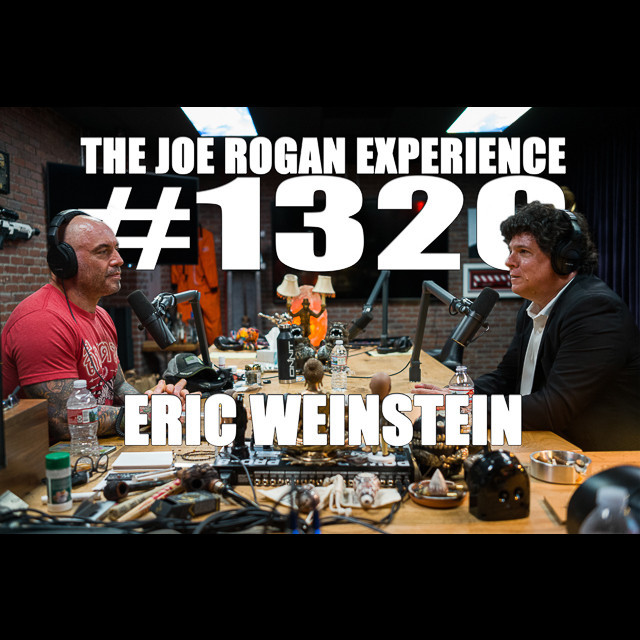
3-Jul-19
This podcast explores a wide range of topics with Eric Weinstein, a mathematician, economist, and managing director at Thiel Capital. The conversation covers everything from philosophical musings on the nature of reality to cultural critiques of the current social landscape. We dive into provocative topics, including the role of the “Intellectual Dark Web” in today’s discourse, the complexities of social justice movements, and the limitations of our current understanding of the universe.
Here’s a breakdown of the major themes and points discussed:
1. The Importance of Offline Time and Constraints
- Weinstein argues that enforced downtime, even if it seems restrictive, can actually lead to greater freedom and mental clarity.
- He points to the example of Shabbat, a Jewish tradition that creates a period of offline time, and suggests that a religion could be created solely to ensure individuals have time away from electronic devices.
- The podcast explores the impact of constant connectivity on our mental well-being and the potential benefits of disconnecting from the digital world.
- The discussion highlights the need for balance between engagement and detachment in our technology-driven lives.
2. The Power of Discipline and Routine
- Weinstein discusses the philosophy of Jocko Willink, who believes that discipline leads to freedom. He argues that having a strict routine can reduce decision fatigue and allow individuals to focus on their goals.
- The podcast explores the psychological and physical benefits of discipline, citing examples like Jocko Willink’s strict exercise regimen.
- The discussion examines the role of self-control in achieving personal and professional success.
- Weinstein acknowledges that even disciplined individuals can succumb to temptation, but suggests that embracing challenges and overcoming them can lead to a sense of liberation.
3. The Nature of Memory and Personal Evolution
- The podcast raises the issue of how our past selves are judged by our present selves, and how societal expectations can hinder personal growth.
- Weinstein uses the examples of Madonna and David Bowie, who embraced change throughout their careers, as models for navigating personal evolution in a public sphere.
- The discussion explores the concept of “stages” in life, suggesting that we should be allowed to change and grow, even if it means contradicting our previous beliefs or statements.
- The podcast challenges the idea that we are bound by our past actions and encourages individuals to be open to new perspectives and possibilities.
4. The “Intellectual Dark Web” and Its Evolution
- Weinstein coined the term “Intellectual Dark Web” (IDW) to describe a group of individuals with diverse ideologies who share a commitment to open, honest, and rigorous dialogue.
- The podcast examines the pressures faced by individuals within the IDW, particularly in an online environment where their statements can be scrutinized and misinterpreted.
- The discussion explores the potential for manipulation and online harassment within the IDW, highlighting the need for critical thinking and discernment when navigating online discourse.
- Weinstein emphasizes the importance of maintaining a healthy skepticism towards information, particularly in a world where misinformation can spread rapidly.
5. The Nature of Mental Health and the Artistic Process
- Weinstein argues that the creative process can be informed by states of mind that are often labeled as “unhealthy.”
- He suggests that the rigid boundaries of normalcy can stifle creativity and that true artistic outliers often operate outside of conventional societal norms.
- The podcast explores the relationship between mental health and creativity, suggesting that individuals with different perspectives and experiences can bring unique insights to the creative process.
- Weinstein challenges the stigma surrounding mental health and emphasizes the need to create spaces where individuals can explore their creative potential without fear of judgment.
6. The Concept of “The Portal”
- Weinstein introduces the concept of “The Portal,” a metaphor for those transformative experiences that lead us out of our everyday routines and into a realm of greater wonder and possibility.
- He draws inspiration from classic stories that feature portals, such as The Chronicles of Narnia and The Phantom Tollbooth, and suggests that these stories reflect a universal human desire for something beyond the mundane.
- The podcast explores the potential for art, architecture, and scientific discoveries to act as portals, offering glimpses into hidden realities and inspiring us to expand our understanding of the world.
- Weinstein believes that embracing these portals can help us unlock a deeper sense of meaning and purpose in our lives.
7. The “Twin Nuclei Problem” and the Future of Humanity
- Weinstein presents the “Twin Nuclei Problem,” a concept that highlights the dangerous gap between our technological advancements and our ability to handle the power we have unleashed.
- He argues that the discovery of nuclear fission and the understanding of DNA have given us godlike powers, but that we lack the wisdom to handle them responsibly.
- The podcast explores the existential risks posed by our current trajectory, emphasizing the need for greater foresight and ethical considerations in the face of our growing capabilities.
- Weinstein suggests that spreading humanity across multiple planets could be a necessary step to ensure our long-term survival, but warns that we must also address the deeper issues of human behavior and our propensity for conflict.
8. The Importance of Unforgiving Science
- Weinstein argues that the scientific process is inherently unforgiving, demanding rigor, evidence, and a willingness to challenge established theories.
- He critiques the encroachment of social justice agendas into scientific fields, arguing that they can stifle innovation and hinder progress.
- The podcast explores the tension between promoting diversity and inclusion in science and maintaining the integrity of the scientific process.
- Weinstein believes that science must be protected from political agendas and that the pursuit of knowledge should be based on objective truth, not social engineering.
9. The “Edge Case” of Intersex and the Binary
- Weinstein advocates for a greater understanding and acceptance of intersex individuals, arguing that the traditional male/female binary is inadequate and oppressive.
- The podcast explores the complexities of gender identity and the need to move beyond rigid classifications.
- Weinstein suggests that the experiences of intersex individuals offer valuable insights into the fluidity of human experience and the need for greater compassion and inclusivity.
- He believes that society should acknowledge the existence of diverse biological and social realities and create a more equitable and accepting environment for everyone.
10. The Role of the “Loudest Voices” in Society
- Weinstein argues that the “loudest voices” on the fringes of the political spectrum, both left and right, are disproportionately influential in shaping public discourse.
- He criticizes the tendency of both sides to embrace violence and extremism, suggesting that it is a symptom of a deeper societal malaise.
- The podcast explores the dynamics of polarization and the dangers of echo chambers, emphasizing the need for open dialogue and a willingness to engage with diverse perspectives.
- Weinstein warns against the dangers of allowing extremist groups to define the terms of the debate and calls for a more nuanced and compassionate approach to navigating complex societal issues.
11. The Importance of Recognizing the Limits of IQ Testing
- Weinstein expresses skepticism towards IQ testing, arguing that it is an inadequate measure of intelligence and can be culturally biased.
- He acknowledges the existence of different forms of intelligence, such as creative intelligence, and emphasizes the need to move beyond simplistic metrics.
- The podcast challenges the assumption that intelligence is a single, quantifiable trait, suggesting that it is a complex and multifaceted concept.
- Weinstein encourages a broader understanding of human potential, recognizing that individuals can excel in different domains and that standardized tests should not be used to limit or define their abilities.
12. The “Greasy” Topic of Race and IQ
- Weinstein navigates the sensitive topic of race and IQ, acknowledging the controversial nature of the debate and the potential for misuse of data.
- He emphasizes the need to approach this subject with caution and nuance, avoiding simplistic generalizations and acknowledging the complexities of human variation.
- The podcast explores the potential for cultural bias to influence IQ scores and the dangers of using such tests to justify racial prejudice.
- Weinstein challenges the idea that intelligence is inherently tied to race, arguing that individuals should be judged on their individual merits, not on group affiliations.
13. The Danger of Weaponized Knowledge
- Weinstein expresses concern about the potential for scientific knowledge to be weaponized, particularly in the fields of genetics and physics.
- He argues that the rapid pace of technological advancements has outpaced our ability to address the ethical implications of our discoveries.
- The podcast explores the dangers of unchecked scientific progress and emphasizes the need for responsible stewardship of knowledge.
- Weinstein believes that humanity must engage in a more profound conversation about the ethical implications of our technological capabilities and develop safeguards to prevent their misuse.
14. The Importance of Courage and Critical Thinking in a World of Chaos
- Weinstein argues that we are living in a time of unprecedented danger, both from external threats like climate change and from internal divisions fueled by misinformation and extremism.
- He believes that courage, critical thinking, and a willingness to challenge conventional wisdom are essential for navigating these challenges.
- The podcast encourages individuals to embrace intellectual honesty, to question authority, and to strive for a deeper understanding of the world around them.
- Weinstein suggests that it is through the pursuit of knowledge and the cultivation of critical thinking that we can hope to overcome the challenges of our time.
15. The “Irresponsible” Act of Sharing Ideas
- Weinstein acknowledges the risks of sharing his ideas publicly, particularly in a field like theoretical physics where he is considered an outsider by many.
- He discusses the potential for backlash and criticism, but believes that the need for progress outweighs the fear of rejection.
- The podcast explores the value of intellectual risk-taking and encourages individuals to share their ideas, even if they are unconventional or controversial.
- Weinstein believes that the pursuit of knowledge requires a willingness to be wrong and that fear of judgment should not hinder the search for truth.
16. The Importance of Compassion and Decency
- Throughout the podcast, Weinstein emphasizes the importance of compassion and decency in human interaction.
- He argues that these values should be at the core of our approach to navigating complex societal issues.
- The podcast explores the dangers of allowing ideology to override compassion, urging individuals to treat each other with kindness and understanding, even in the face of disagreement.
- Weinstein believes that compassion and decency are essential for building a more equitable and harmonious world.
These are just some of the many themes and ideas explored in this fascinating podcast with Eric Weinstein. The conversation is wide-ranging and thought-provoking, challenging listeners to think critically about the world around them and to engage in more meaningful and honest dialogue.
5 Memorable Quotes
- “Discipline equals freedom.” – Jocko Willink
- “I think that there’s a way in which I’ve left this planet. Really? Yeah. I think that there’s a way in which I’ve checked out.” – Eric Weinstein
- “We are now gods, but for the wisdom.” – Eric Weinstein
- “If you can launch that objection, cheaply. If you can just say, I can take any group and say, why does this group have no 1 in a wheelchair? Now I’ve got to spend 30 minutes explaining that. Right. I don’t wanna do it. It’s not a good enough objection.” – Eric Weinstein
- “I just wanted to say that there is like an aspect. We we keep talking about, is there any use for men whatsoever? And standing up in a situation in which you can take a fair amount of guff, you can take a lot of heat. You know, you said this thing to me that was really amazing, which is that this is a golden age comedy. And my interpretation was that there was a period of time where nobody could figure out how to tell a joke on a college campus. And our best comedians have figured out how to be compassionate enough and kind enough, and touch the things that are animating us and making us uncomfortable.” – Eric Weinstein