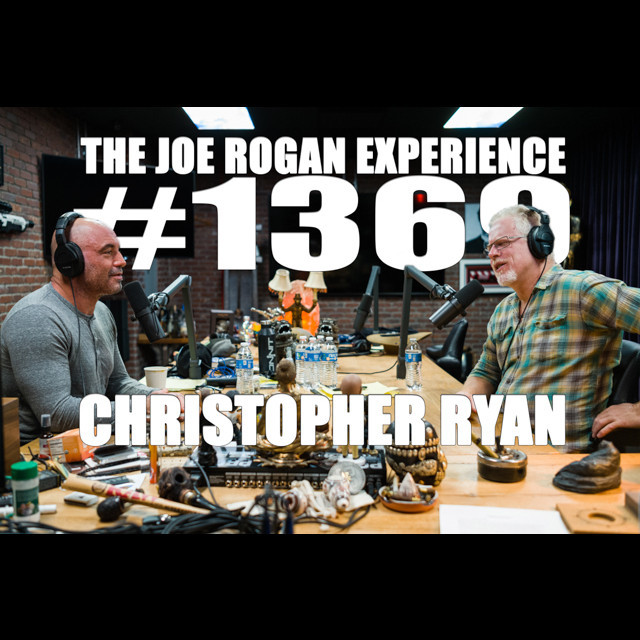
23-Oct-19
This podcast episode features a fascinating conversation between Joe Rogan and Christopher Ryan, a psychologist, author, and podcaster known for his work on human behavior, particularly in the context of evolutionary psychology. The discussion touches upon a wide range of topics, from the nature of identity and consciousness to the impact of civilization on human behavior, sprinkled with humorous anecdotes and insightful reflections.
Major Topics and Themes:
1. Vanthropology and the Modern Nomad:
- Christopher Ryan’s unique approach to travel and living in a van, “Vanthropology,” as a modern form of backpacking.
- The freedom and simplicity of van life, providing a break from the complexities of modern society.
- The legal nuances of drinking while parked in a van, raising questions about the distinction between vehicle and domicile.
- The potential implications of autonomous vehicles for law enforcement and societal norms around driving.
2. The Ubiquity of Law Breaking and the Commodity of Data:
- The realization that most people break laws on a daily basis, often without realizing it.
- The ethical implications of data collection by technology companies, raising questions about privacy and consent.
- The “outrage algorithm” used by social media platforms to keep users engaged, potentially leading to polarization and societal division.
- The concept of data as a commodity, highlighting the potential for exploitation and the lack of control individuals have over their own information.
3. The Malleability of Identity and the Role of Context:
- The idea that identity is not fixed but fluid, influenced by factors such as language, culture, and personal experience.
- The influence of different languages on shaping one’s identity, as demonstrated by Ryan’s anecdote about his girlfriend’s multilingualism.
- The connection between multiple personality disorder and trauma, particularly childhood abuse.
- The concept of “epigenetics” and its implications for understanding how environmental factors can influence the expression of genes, even without altering DNA.
4. The Locust Analogy and the Transformation of Human Behavior:
- The analogy of the locust, which transforms from a solitary grasshopper to a swarming, cannibalistic creature in response to environmental conditions, is used to illustrate the potential for human behavior to shift dramatically depending on context.
- The argument that hunter-gatherer societies were fundamentally different from modern civilization, with humans behaving more like the “solitary grasshopper” in a natural setting.
- The idea that modern civilization, with its dense populations and complex social structures, has transformed humans into something akin to the “swarming locust.”
- The need for humans to understand their evolutionary past in order to navigate the challenges of modern life and design a more sustainable future.
5. The Power of Placebo and Hypnosis:
- The exploration of the placebo effect and its role in healing, suggesting that belief can have a significant impact on physical outcomes.
- The hypothesis that hypnotic susceptibility might have been an adaptive trait in prehistoric societies, allowing for more effective healing rituals.
- The potential for hypnosis to alleviate allergies, demonstrating the strong connection between mind and body.
- The importance of recognizing the psychosomatic nature of many aspects of human experience, particularly in terms of stress, anxiety, and physical well-being.
6. The Nature of Exercise and the Runner’s High:
- The debate about whether exercise is a purely physical activity or also has a significant mental component, specifically addressing the “runner’s high.”
- The different experiences of exercise, with some individuals finding it intensely enjoyable and others finding it unpleasant.
- The potential benefits of exercise for reducing anxiety and promoting mental clarity, particularly in high-intensity workouts.
- The importance of finding forms of exercise that are personally enjoyable and sustainable in the long term.
7. The Role of Risk and Adrenaline in Human Experience:
- The exploration of high-risk activities, such as base jumping and wing suit flying, and the psychological impact of adrenaline on the human psyche.
- The contrast between the calm focus of experienced individuals engaged in high-risk activities and the reckless impulsivity often seen in younger participants.
- The potential for peer pressure and societal expectations to lead to dangerous behavior, particularly in competitive environments.
- The role of personal experience and wisdom in shaping one’s approach to risk and the importance of prioritizing safety and well-being.
8. The Mab Mentality and the Fragility of Civilization:
- The concept of the “Mab mentality,” where individuals in a chaotic or violent environment engage in behavior they would not normally consider, often resulting in spontaneous brawls and riots.
- The potential for primal instincts and tribalism to emerge in moments of crisis, leading to sudden and unexpected violence.
- The realization that civilization is often a thin veneer, with the potential for violence to erupt even among seemingly ordinary people.
- The importance of understanding the underlying psychological mechanisms that drive both individual and collective behavior in moments of chaos.
9. The Impact of Trauma and the Importance of Forgiveness:
- The discussion of PTSD and its impact on individuals returning from war, highlighting the challenges of integrating traumatic experiences into everyday life.
- The need for increased support for veterans and first responders, acknowledging the mental health burdens they often face.
- The importance of self-forgiveness, particularly for individuals who have been involved in traumatic events, as a crucial step in healing and moving forward.
- The realization that forgiveness is not just about others but also about freeing oneself from the weight of past mistakes and regrets.
10. Dunbar’s Number and the Limits of Human Sociality:
- The concept of Dunbar’s number, which suggests that humans have a limited capacity for maintaining stable social relationships, typically around 150 people.
- The implications of Dunbar’s number for understanding the dynamics of hunter-gatherer societies, which tended to splinter into smaller groups.
- The potential for reputational damage to become less effective in larger, more complex societies, leading to increased individualism and a decline in social cohesion.
- The need to find ways to foster a sense of community and connection in modern society, despite the challenges of large populations and complex social structures.
11. The Power of Humor and the Importance of Being Yourself:
- The use of humor as a tool for coping with difficult situations and as a means of connecting with others, particularly in the context of the “Motherfucker Awards.”
- The argument that genuine enthusiasm and authenticity are contagious, making podcasts and stand-up comedy more enjoyable for listeners and viewers.
- The importance of admitting mistakes and being vulnerable in public, as a way to build trust and connection with audiences.
- The idea that being true to oneself, even when it’s challenging, is ultimately the most rewarding path.
12. The Glass Ceiling in Hollywood and the Difficulty of Coming Out:
- The persistent prejudice against openly gay male actors in Hollywood, particularly in leading roles, highlighting the lingering social stigma surrounding homosexuality.
- The challenges of coming out and the fear of rejection, particularly for individuals whose careers are tied to their public image.
- The importance of finding support and acceptance, allowing individuals to be themselves without fear of judgment.
- The need to challenge societal norms and create a more inclusive and tolerant environment for LGBTQ+ individuals.
13. Sleep Apnea and the Importance of Sleep:
- The widespread nature of sleep apnea and the potential for it to have a significant negative impact on health, relationships, and work performance.
- The availability of effective treatments for sleep apnea, such as CPAP machines and oral appliances, which can dramatically improve quality of life.
- The importance of addressing sleep apnea, not just for individuals but also for society as a whole, given its potential to contribute to accidents and other negative outcomes.
- The need to reduce the stigma surrounding sleep apnea and encourage individuals to seek treatment.
14. The Environmental Impact of Human Behavior:
- The devastating impact of human activities on the environment, particularly the introduction of invasive species like pythons in the Everglades.
- The role of pet ownership and the release of exotic animals into the wild as a major factor in ecological disruption.
- The importance of recognizing the interconnectedness of human actions and their impact on the natural world.
- The need for individuals to take responsibility for their environmental footprint and make choices that promote sustainability.
15. The Importance of Nature and Connecting with the Wild:
- The inherent human connection to nature and the psychological benefits of spending time outdoors, as illustrated by Ryan’s experiences in the mountains and by the water.
- The argument that humans are inherently designed by evolution to thrive in natural settings, explaining the appeal of outdoor activities like hunting and fishing.
- The potential for reconnecting with nature to promote mental and physical well-being, fostering a sense of peace and connection to the world.
- The importance of protecting and preserving natural environments for the benefit of both human and non-human life.
Memorable Quotes:
- “Humans are strange creatures, you know, and we vary so widely that, you know, trying to make any sense of putting 300,000,000 of us together on an island essentially. Good luck with that.”
- “Don’t you feel like you’re different people with different people as well?”
- “The focus of his book is the hunter-gatherers were essentially a different sort of animal. They were essentially, you know, the parallels with the grasshoppers, and now we’re swarming.”
- “It’s almost like you handicap yourself by getting baked, like… I was talking to Redban, Brian Redban about this. Like, we were talking about like, how the early days of podcasting, we would get obliterated before we do the podcast.”
- “What is money worth if you can’t buy your freedom with it? Your freedom to be who you are.”