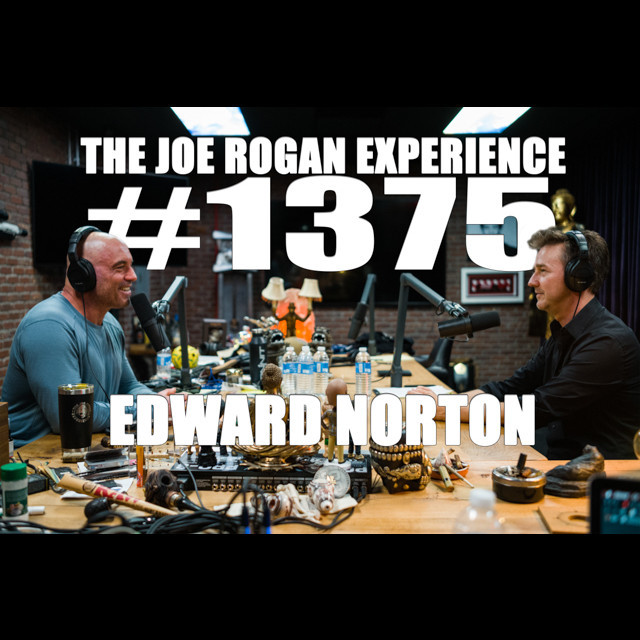
31-Oct-19
This episode of the Joe Rogan Experience features a fascinating conversation with Edward Norton, a renowned actor, writer, producer, director, and filmmaker. Norton’s insights into the world of acting, his reflections on cultural icons like Marlon Brando, Bob Dylan, and Lenny Bruce, and his passion for martial arts are just a few of the topics explored in this captivating discussion. Underlying themes explore the nature of fame and its influence on individuals, the transformative power of creative expression, and the search for authenticity amidst a world of expectations.
Topics
Here are 15 major topics discussed in the podcast:
1. The Paradox of Acting:
- Norton delves into the inherent contradiction of acting, where intense and emotionally demanding roles are often played by individuals who, in their personal lives, may not necessarily embody those same traits.
- He uses the line “scratch an actor, you’ll find an actress” as a starting point to explore the often playful and performative nature of the profession.
- The discussion extends to the idea of actors potentially creating a public persona that contrasts with their true selves, perhaps as a form of compensation for the act of “playing dress up” that acting entails.
- Norton suggests that some actors might use their fame to reshape their identity, escaping past difficulties and crafting a more desirable image for themselves.
2. The Influence of Cultural Icons:
- Norton discusses the profound impact of Marlon Brando on the psychology of American men, particularly on actors. Brando redefined what it meant to be a male actor, emphasizing visceral intensity, masculinity, and a raw, unpolished authenticity.
- He examines Brando’s legacy as a catalyst for the emergence of a new generation of actors, including Dustin Hoffman, Robert De Niro, and Al Pacino, who were inspired by his groundbreaking approach.
- The discussion also touches upon Bob Dylan’s transformative influence on music and his rebellious attitude towards societal expectations. Dylan’s refusal to conform and his constant evolution as an artist are presented as a parallel to Brando’s impact on acting.
- Lenny Bruce’s influence on comedy, his willingness to push boundaries, and his defiance of social norms are also acknowledged as a significant force in shaping artistic expression.
3. The Power of Authenticity:
- Norton contrasts the personas of actors like Brando and Dylan, who embraced their true selves, with those who ultimately became prisoners of their initial public image, succumbing to the expectations placed upon them.
- The discussion touches upon the phenomenon of performers becoming caricatures of their most popular roles, losing their personal identity in the process.
- He highlights the importance of personal growth, acknowledging that individuals evolve and change over time, and emphasizing the need to embrace these transformations instead of clinging to a fixed self-image.
- The podcast emphasizes the importance of authenticity in all aspects of life, advocating for embracing one’s true self, even when it may be perceived as unconventional or challenging.
4. The Role of Long-Form Conversations:
- Norton credits Howard Stern for revolutionizing talk radio, proving that audiences have an appetite for long-form conversations and in-depth discussions. He argues that the rise of podcasts and longer-form entertainment is a testament to this shift in consumer preferences.
- The discussion highlights the value of engaging with complex ideas, challenging the assumption that contemporary audiences are only interested in short, digestible content.
- Norton suggests that the accessibility of podcasts and the ability to consume content on the go has contributed to a renewed appreciation for long-form discussions, offering a stimulating alternative to the fragmented and often superficial nature of social media.
- The podcast embraces the power of conversation, showcasing how extended dialogue can lead to insightful explorations of diverse topics, fostering deeper understanding and connections.
5. The Transformative Power of Martial Arts:
- Norton describes his personal experience with Aikido, emphasizing its emphasis on mental and physical control and its empowering effect on individuals, particularly those who are physically smaller.
- He highlights the contrast between traditional karate, which he found intimidating as a smaller child, and Aikido, which taught him techniques for leveraging a larger opponent.
- The discussion delves into the significance of Gracie Jiu-Jitsu, particularly Hickson Gracie’s dominance in the Ultimate Fighting Championship, as a testament to the power of technique and mental discipline over brute force.
- Norton emphasizes the importance of calm, controlled breathing and mental focus in martial arts, arguing that these skills extend far beyond the fighting arena, fostering a sense of composure and inner strength in daily life.
6. The Intricacies of Jiu-Jitsu:
- Norton dives into the complexities of Jiu-Jitsu, highlighting its intellectual and spiritual dimensions. He emphasizes the importance of understanding the intricacies of technique, combined with mental discipline and a deep awareness of one’s own body.
- He discusses Hickson Gracie’s mastery of Jiu-Jitsu, highlighting his unique ability to combine physical prowess with a profound understanding of the art, resulting in his exceptional dominance in the sport.
- The podcast sheds light on Hickson Gracie’s dedication to yoga and breathing techniques, showcasing the importance of physical conditioning and mental focus in achieving mastery in Jiu-Jitsu.
- Norton paints a vivid picture of Jiu-Jitsu as a discipline that transcends brute force, requiring a deep understanding of technique, self-control, and a keen awareness of the nuances of combat.
7. The Influence of Blockbuster Films:
- Norton discusses the impact of Jaws on the movie industry, acknowledging its status as a groundbreaking blockbuster that influenced the rise of big-budget filmmaking.
- He suggests that the influx of executives in major studios, often lacking a deep understanding of contemporary audiences, can sometimes hinder the production of more unconventional and thought-provoking films.
- The discussion touches upon the cyclical nature of filmmaking, where periods of experimentation and innovation often emerge when studios are uncertain of what audiences want, giving rise to new voices and unique perspectives.
- Norton points to the year 1999 as a prime example of this phenomenon, showcasing a remarkable surge of memorable and influential films, attributed to a period of uncertainty and openness within the industry.
8. The Collaborative Nature of Filmmaking:
- Norton acknowledges the inherent challenges and complexities of filmmaking, emphasizing its collaborative nature and the importance of bringing together talented individuals to realize a shared vision.
- He highlights the vital role of collaborators, from stunt coordinators to actors, in making a film successful, emphasizing that a director’s vision is only as strong as the team that executes it.
- The podcast acknowledges the financial constraints often faced by independent filmmakers and the necessity of securing backing and support from those who believe in the project.
- Norton emphasizes the crucial role of trust and collaboration in filmmaking, highlighting the power of assembling a team of passionate individuals who are committed to bringing a vision to life.
9. The Challenges of Iconic Roles:
- Norton discusses the difficulties actors face when they become typecast, particularly after taking on iconic roles that leave a lasting impression on audiences.
- He suggests that choosing roles that challenge expectations and break free from typecasting can be a form of liberation, allowing actors to explore diverse characters and showcase their range.
- The discussion touches upon the importance of embracing unexpected opportunities and taking risks, particularly in the early stages of an actor’s career, to avoid becoming confined by a particular persona.
- Norton reflects on his decision to take on roles that differed from the intense and edgy characters he was known for early in his career, acknowledging the importance of challenging preconceptions and pursuing projects that genuinely resonated with him.
10. The Importance of Collaboration:
- Norton emphasizes the importance of assembling a team of talented individuals who share a vision and commitment to a project.
- He describes the process of working with renowned actors like Bruce Willis, Alec Baldwin, William Defoe, and Michael K. Williams, who believed in his project and contributed their talents despite financial constraints.
- The podcast highlights the power of collaboration, showcasing how a group of passionate individuals can overcome financial hurdles and produce a remarkable film.
- Norton credits the support of his collaborators for making “Motherless Brooklyn” a reality, acknowledging their dedication and willingness to contribute their time and talents to a project they believed in.
11. The Challenges of Period Films:
- Norton delves into the logistics and complexities of creating period films, specifically highlighting the difficulties of replicating historical settings and obtaining necessary permits for filming in urban environments like New York City.
- He describes the meticulous process of scouting locations, securing permits, and coordinating the use of vintage vehicles, emphasizing the collaborative effort required to bring a period piece to life.
- The podcast highlights the challenges of working within budgetary constraints, particularly when creating ambitious scenes like the opening car chase sequence in “Motherless Brooklyn.”
- Norton shares his experiences of navigating the logistical hurdles of period filmmaking, showcasing the dedication and resourcefulness required to bring a historical setting to the screen.
12. The Appeal of Noir Films:
- Norton discusses his affinity for classic noir films, citing “Chinatown” and “LA Confidential” as examples of complex and thought-provoking narratives that blend mystery, intrigue, and social commentary.
- He praises the masterful storytelling techniques employed in noir films, particularly the ability to captivate audiences with captivating visuals, atmospheric music, and nuanced performances.
- The discussion highlights the enduring appeal of noir films, attributed to their ability to explore dark and complex themes, delve into the underbelly of society, and challenge conventional notions of morality.
- Norton expresses his admiration for the ability of noir filmmakers to craft stories that are both entertaining and thought-provoking, leaving audiences with a lasting impression and a deeper understanding of the complexities of human nature.
13. The Importance of Taking Risks:
- Norton advocates for filmmakers and artists to embrace risk-taking, challenging conventions, and pursuing projects that are both personally fulfilling and commercially viable.
- He cites examples of directors like Spike Lee, who have made bold and impactful films that pushed boundaries and addressed critical social issues.
- The podcast encourages viewers to support filmmakers who dare to break molds and create unconventional works that challenge the status quo.
- Norton emphasizes the importance of trusting one’s instincts, pursuing projects that ignite passion, and refusing to compromise on creative vision.
14. The Value of Original Storytelling:
- Norton discusses the significance of creating original stories, particularly in an era where remakes and sequels are prevalent.
- He highlights the importance of investing in fresh ideas and supporting filmmakers who have a unique vision and a passion for telling stories that are both entertaining and thought-provoking.
- The discussion emphasizes the value of originality in storytelling, celebrating films that offer something new and compelling, rather than relying on familiar formulas.
- Norton encourages audiences to seek out and support films that push boundaries, explore uncharted territory, and offer a fresh perspective on the world.
15. The Importance of Artistic Integrity:
- Norton emphasizes the importance of maintaining artistic integrity, even in the face of commercial pressures and industry expectations.
- He advocates for filmmakers to stay true to their vision and refuse to compromise their creative voice for the sake of commercial success.
- The discussion highlights the importance of creative independence, encouraging filmmakers to pursue projects that resonate with them, even if they may not appeal to the mainstream.
- Norton champions the importance of artistic integrity, showcasing the value of pursuing creative endeavors that are driven by passion and personal vision, rather than solely by commercial considerations.
Memorable Quotes
- “I think that it’s fun. When you have people come through a space, so that you’re actually, like, sharing the things, like, the it’s sort of, like, you’re letting someone come in and wander.” – Norton reflects on the joy of creating a space for sharing and connecting with others through curated objects.
- “He he changed the idea of the type of person that male actors wanted to be. They want suddenly, it was like, they wanted to have, like, a patina or a rep as a visceral They wanted to be visceral, not polished, they wanted to be muscular, they wanted to be masculine, they wanted to be you know, intense.” – Norton highlights Marlon Brando’s impact on the male actor archetype, emphasizing a shift towards raw authenticity and visceral intensity.
- “It’s like, you’re like, oh, at thoughtful activity. I look at him and I’m like, nobody has that discipline at that age.” – Norton marvels at Bob Dylan’s remarkable maturity and self-awareness at a young age, showcasing his resistance to the allure of fame and his commitment to artistic integrity.
- “And I think, like, you know, you look at things like like, from peaky blinders to Chernobyl to, like, the Kenburn Civil War series. Like, we’re going through this thing where people are realizing, like, no. That’s not actually true. People actually like you, my pal DAX, you know, Shepard who’s got a great radio show. People like to listen to people have actual conversations?” – Norton celebrates the resurgence of long-form conversations and storytelling, reflecting a shift in audience preferences towards deeper engagement with complex narratives.
- “And I think that that I really dig those things where you go through the movie starts, you look at it, and you go this looks really good. This looks really grown up. This is big. The actors are like like adult and authoritative The dialogue’s great. The music is great. It’s hypnotic. And your brain just goes, I don’t know what’s going on. I don’t care. I’m bought in.” – Norton reflects on the allure of classic noir films, emphasizing their ability to draw audiences in with captivating visuals, atmospheric music, and compelling performances, leaving them eager to unravel the mysteries within.