21-Nov-19
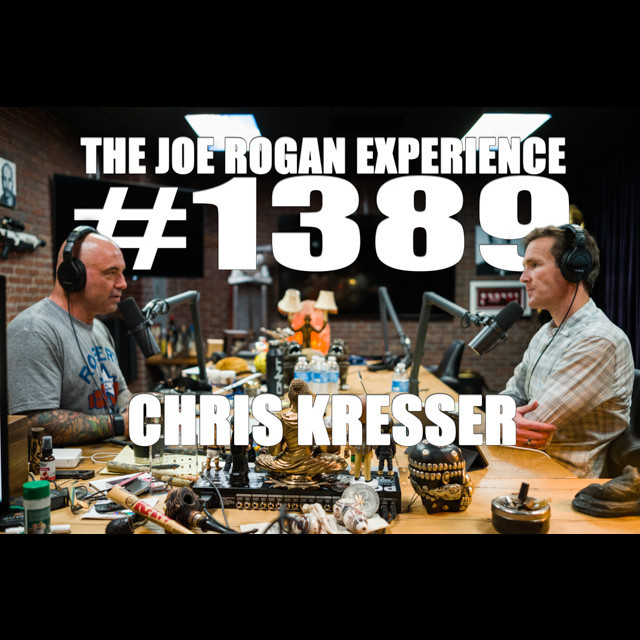
Joe Rogan Podcast #1389: Chris Kresser Debunks “The Gamechangers” Documentary
This podcast is a deep dive into the “Gamechangers” documentary, a vegan film that claims plant-based diets are optimal for health and athletic performance. Chris Kresser, a functional medicine expert, dismantles the film’s claims, presenting a nuanced and evidence-based counter-argument. The podcast tackles controversial topics like the effectiveness of vegan diets for athletes, the ethical implications of plant-based agriculture, and the scientific validity of the documentary’s claims. Underlying themes explore the power of confirmation bias, the importance of critical thinking, and the need for objective scientific evidence in nutrition.
Major Topics and 4-Point Summaries:
- The “Gamechangers” Documentary and its Claims:
- The documentary promotes the idea that vegan diets are superior to omnivorous diets for athletic performance and overall health.
- It argues that athletes can achieve peak performance and recovery on a plant-based diet, citing anecdotal evidence from various athletes.
- The film presents claims about the environmental benefits of veganism, highlighting the impact of animal agriculture on greenhouse gas emissions.
- It asserts that plant-based agriculture is more ethical, claiming that killing animals for meat is more harmful than the death of small animals in plant agriculture.
- The Vegan Honeymoon:
- Chris Kresser emphasizes the “Vegan Honeymoon,” a short-term improvement experienced by individuals switching from a standard American diet to a plant-based diet.
- This initial improvement is often attributed to the elimination of processed foods and unhealthy habits, not necessarily to the vegan diet itself.
- Over time, potential deficiencies in protein, essential amino acids, and micronutrients may lead to a decline in health and performance.
- Long-term studies are crucial to assess the true impact of vegan diets, going beyond the initial honeymoon period.
- Protein Quality and Bioavailability:
- Kresser highlights the importance of protein quality, emphasizing that not all protein sources are created equal.
- The amino acid profile of animal-based proteins, particularly beef, is superior to plant-based proteins, providing a more complete and bioavailable source.
- To achieve the same level of protein intake and amino acid profile, vegan diets require significantly higher quantities of plant-based foods.
- This difference in protein quality can significantly impact muscle protein synthesis and athletic performance.
- The RDA and its Limitations:
- The RDA (Recommended Dietary Allowance) for protein is often cited as sufficient for vegans, but Kresser argues it’s a bare minimum and not optimal for health and performance.
- Newer research suggests a higher RDA, and even then, it may not be adequate for athletes who require significantly more protein for muscle recovery and growth.
- Vegan diets, even with protein supplements, may struggle to provide the optimal amount and quality of protein for athletes.
- The RDA is designed to prevent malnutrition, not to optimize health and performance, especially for athletes.
- Vitamin B12 Deficiency and its Consequences:
- The documentary downplays the importance of vitamin B12, stating that animals get it from soil and water and that supplementation isn’t necessary.
- Kresser debunks this claim, explaining that B12 is produced by bacteria in the gut of animals and that supplementation is essential for vegans.
- B12 deficiency can lead to serious and irreversible neurological damage, particularly in children, impacting brain development and cognitive function.
- The documentary’s claim about B12 availability in soil and water is factually inaccurate, lacking scientific evidence.
- The Environmental Impact of Animal and Plant Agriculture:
- The film argues that veganism is more environmentally friendly, claiming that animal agriculture contributes significantly to greenhouse gas emissions.
- Kresser argues that both animal and plant agriculture can be environmentally destructive, depending on the practices used.
- He emphasizes the potential of regenerative agriculture, specifically with holistically managed livestock, to sequester carbon and improve soil health.
- He highlights the limitations of industrial-scale monocrop agriculture, which can deplete soil nutrients and contribute to environmental degradation.
- The Ethical Implications of Plant-Based Agriculture:
- The documentary suggests that plant-based agriculture is more ethical, as it doesn’t directly involve killing animals.
- Kresser challenges this by pointing out that large-scale plant agriculture leads to the death of numerous small animals, such as insects and rodents.
- He raises ethical questions about the value of different life forms and the morality of causing animal deaths for food.
- The podcast prompts a deeper examination of the ethical considerations of both animal and plant-based agriculture.
- The Case for Regenerative Agriculture:
- Kresser argues for regenerative agriculture as a solution to both the ethical and environmental concerns of food production.
- He emphasizes the potential of holistically managed livestock to improve soil health, sequester carbon, and provide nutrient-dense food.
- He highlights the importance of restoring grasslands and reducing reliance on industrial-scale monocrop agriculture.
- He suggests that regenerative agriculture could be a more sustainable and ethical approach to food production.
- The Rise of Fake Meat and its Environmental Impact:
- The podcast examines the emergence of “fake meat” companies like Impossible Foods and Beyond Meat, which aim to replicate the taste and texture of meat.
- While these products may reduce reliance on traditional meat production, they come with their own environmental and ethical considerations.
- Kresser points out that the production of fake meat often relies on highly processed ingredients and industrial-scale agriculture, which can have negative environmental impacts.
- He suggests that regenerative agriculture offers a more sustainable and ethically sound alternative.
- The Science of Cholesterol and Saturated Fat:
- The film largely avoids the topic of cholesterol and saturated fat, arguably acknowledging the shift in scientific understanding regarding their health effects.
- Kresser highlights the crucial role of cholesterol in the body and the potential harm of excessive cholesterol restriction.
- He emphasizes the importance of individual variability in response to dietary cholesterol and the need for individualized approaches to nutrition.
- The podcast challenges the long-held dogma surrounding cholesterol and saturated fat, promoting a more nuanced perspective.
- The Role of Dairy and Lactose Intolerance:
- The podcast discusses the scientific evidence surrounding dairy consumption and its potential health benefits.
- Full-fat dairy products, especially raw milk, have been linked to reduced risk of heart disease, diabetes, and other health issues.
- Kresser addresses the issue of lactose intolerance, explaining that it’s a natural consequence of our evolutionary history and that lactase persistence is a relatively recent adaptation.
- The podcast challenges the notion that dairy is universally harmful, promoting a more balanced and evidence-based perspective.
- The Misinformation Spread by the “Gamechangers” Documentary:
- Kresser highlights various instances of misinformation and cherry-picked data within the film.
- He emphasizes the use of misleading anecdotes, flawed studies, and false claims to support the vegan agenda.
- The podcast underscores the importance of critical thinking and evidence-based decision-making in navigating conflicting nutritional information.
- The film’s use of rhetorical devices like the “illusory truth effect” highlights the need for robust scientific scrutiny of health claims.
- The Importance of Context in Nutrition:
- Kresser consistently emphasizes the importance of context in evaluating nutritional claims.
- He stresses that dietary effects are influenced by a multitude of factors, including individual genetics, health status, and overall lifestyle.
- The podcast cautions against making sweeping generalizations about dietary choices, emphasizing the need for personalized approaches.
- Kresser argues that a “one-size-fits-all” approach to nutrition is flawed and can lead to harmful consequences.
- The Limitations of Anecdotal Evidence:
- The documentary relies heavily on anecdotal evidence from athletes who claim to have benefited from veganism.
- Kresser cautions against placing too much emphasis on anecdotal stories, highlighting the need for robust scientific data.
- He emphasizes that anecdotal evidence can be influenced by confirmation bias, placebo effects, and other confounding factors.
- The podcast underscores the importance of relying on well-designed and peer-reviewed studies for evidence-based decision-making.
- The Need for Objective Scientific Evidence:
- Kresser advocates for a reliance on objective scientific evidence in navigating dietary choices.
- He emphasizes the importance of peer-reviewed research, meta-analyses, and rigorous scientific methodology in evaluating health claims.
- The podcast challenges the spread of misinformation and promotes a more scientific and critical approach to nutrition.
- Kresser encourages listeners to question claims, seek evidence, and be skeptical of information that lacks scientific backing.
- The Role of Confirmation Bias and Ideology:
- The podcast explores the role of confirmation bias and ideology in shaping dietary choices.
- Kresser highlights the tendency of individuals to seek out and interpret information that supports their pre-existing beliefs.
- He suggests that this bias can lead to an overemphasis on anecdotal evidence and a dismissal of conflicting scientific data.
- The podcast emphasizes the importance of being aware of one’s biases and actively seeking out diverse perspectives.
- The Importance of Critical Thinking:
- Kresser encourages listeners to engage in critical thinking when evaluating dietary information.
- He emphasizes the need to question claims, evaluate evidence, and be skeptical of information that lacks scientific rigor.
- The podcast promotes a more informed and nuanced approach to nutrition, encouraging listeners to be active consumers of scientific knowledge.
- Kresser highlights the importance of avoiding confirmation bias and seeking out diverse perspectives to form well-informed dietary choices.
5 Memorable Quotes:
- “The purpose of this film was to say, it’s possible to thrive on a plant-based diet. And look, here are some athletes that have done that. I wouldn’t have had any qualms with it. Clearly, there are examples of people who thrive on a plant-based diet. If you follow the diet correctly, it can be done.” – Kresser acknowledges the potential for individuals to thrive on a plant-based diet, but highlights the need for careful planning and understanding.
- “The most recent scale that’s used is called the deuce, digestible, indispensable amino acids score. So it ranks proteins according to 2 main categories. 1 is the amino acid profile. And as you mentioned, when it comes to protein quality, it’s not just does the protein have every amino acid. You know, this is what’s a little disingenuous about the film. They said, every plant protein has every amino acid. Well, yeah, nobody disagrees with that, but does it have enough of each of them? That’s the key question.” – Kresser emphasizes the importance of the amino acid profile and bioavailability of protein sources, highlighting the limitations of simply focusing on grams of protein.
- “If you wanna make an argument that you should probably follow a more complicated diet, more complicated meaning that it’s more difficult for you to acquire in some cities You have to be a little bit more careful about getting supplementation with vitamin B Twelve and and essential amino acids. Gotta be a little bit more careful. if you wanna maintain a healthy robust life, it’s possible to do that, but it’s a little more complicated. And if you wanna say, I wanna live like that because the way I feel about eating animals makes me feel terrible. I don’t wanna have any part of that and I found out that I can not have a part of that and I can live my life. That’s great. But that’s not what they’re saying.” – Kresser distinguishes between personal ethical choices and the film’s assertion of veganism as the optimal diet for everyone.
- “The difference between transportation, which is basically taking out fossil fuels that have not been part of that natural cycle for millions of years and then just emitting them into the atmosphere. With the carbon the the biogenic carbon cycle, you have methane, you know, cows are burping out methane. Methane goes up into the atmosphere. And then via hydroxal oxidation, it’s converted into CO 2 and water vapor. Then the plants take in CO 2 and then bio synthesis they convert it into food, basically. And then the cows eat the food, and the the whole cycle keeps going. And this is a this is a natural cycle. This is not something you have to use equipment to. This is a natural cycle.” – Kresser highlights the natural biogenic carbon cycle, explaining how holistically managed livestock can be carbon neutral or even a carbon sink.
- “The truth is somewhere in the middle, and it’s biological variable. It’s variable. Yeah. And it varies. And and sometimes you can get I and I see this that, you know, I’ve been working with patients for over 10 years, I test every single person that comes through the door with a full lipid panel. And I have people who are doing keto, super low carb diets who have totally optimal normal cholesterol. And then I have people who go from eating, you know, a low moderate fat diet to, like, a high fat keto or low carb diet, and their LDL p goes up to 25 100 or 3000 and their LDL cholesterol goes up to 300.” – Kresser emphasizes the importance of individual variability in response to dietary cholesterol and the need for personalized approaches to nutrition, challenging the notion of a one-size-fits-all solution.