17-Jan-20
“`html
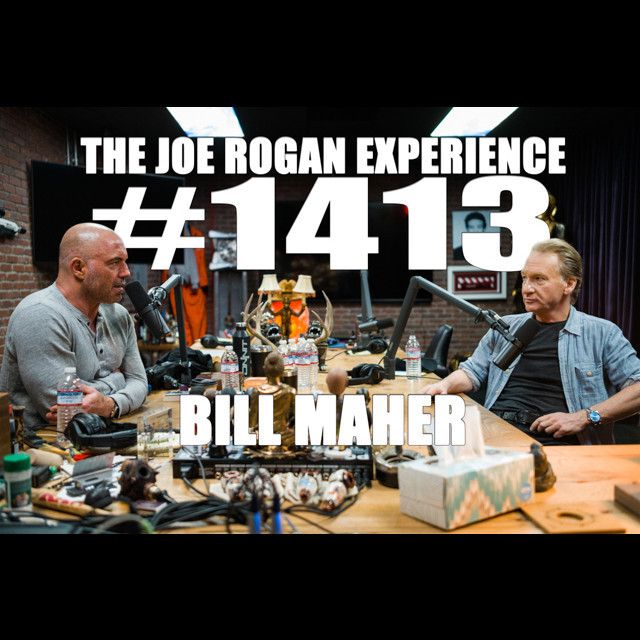
This podcast features a conversation between Joe Rogan and Bill Maher, exploring a wide range of topics, from the evolution of comedy and the changing landscape of media to the nature of human behavior and the complexities of modern society. The conversation touches on several provocative, controversial, and viral issues, revealing underlying themes about the human condition, societal progress, and the challenges of navigating a rapidly evolving world.
1. The Evolution of Comedy and the Changing Landscape of Media:
- Bill Maher reflects on the evolution of his career, from his early days on “Politically Incorrect” to the current success of “Real Time with Bill Maher.”
- Maher discusses the challenges of capturing the essence of stand-up comedy in film and television, citing examples like “Punchline” and “I’m Dying Up Here.”
- The conversation delves into the impact of streaming services on the format of comedy, with Maher expressing both the benefits of condensing material and the limitations of time constraints.
- Joe Rogan and Bill Maher discuss the evolving attention spans of audiences, highlighting the challenges of creating content that resonates in both the age of short-form entertainment and the era of long-form podcasts.
2. The Enduring Legacy of Bill Cosby and the Dark Side of Fame:
- Joe Rogan and Bill Maher share their perspectives on Bill Cosby’s legacy, discussing both his groundbreaking contributions to comedy and the disturbing allegations of sexual assault and misconduct.
- The conversation explores the complex relationship between fame, power, and abuse, highlighting the potential for unchecked behavior within high-profile individuals.
- The topic of Bill Cosby’s alleged “kink” for control and manipulation is discussed, with examples of bizarre behavior reported by those who interacted with him.
- The conversation probes the question of whether fame and power can lead to a sense of entitlement and a belief that one is above the law.
3. The Impact of Pornography on Modern Society and the Changing Landscape of Sexuality:
- Joe Rogan and Bill Maher delve into the impact of easy access to pornography on young people, expressing concerns about the desensitization and potential harm it may cause.
- The conversation examines the changing nature of pornography, from the more “straightforward” versions of the past to the often-disturbing and extreme content prevalent today.
- The topic of the high rates of sexual abuse among pornographic actors is discussed, raising questions about the vulnerability and exploitation within the industry.
- Maher argues that pornography often misrepresents the reality of female sexual desire, with the content often catering to male fantasies rather than female experiences.
4. The Complexities of Monogamy and the Evolution of Relationships:
- The podcast explores the potential for monogamy to breed possessiveness and resentment in relationships, questioning whether it’s a natural or socially constructed concept.
- Joe Rogan and Bill Maher discuss the idea of communal fatherhood in early human societies, suggesting that monogamy may be a relatively recent development.
- The conversation explores the differences between love and possessiveness, arguing that true love is characterized by selflessness and concern for the happiness of the other person.
- Maher shares his perspective on love, defining it as the act of caring for another person’s happiness more than your own.
5. The Debate Over “Coddling” and the Changing Dynamics of Parenting:
- Joe Rogan and Bill Maher discuss the changing dynamics of parenting, with Maher expressing concerns about over-protection and the potential for coddling to create a generation of overly sensitive individuals.
- They share their experiences of being raised in a less-structured and more hands-off environment, contrasting it with the more cautious approach to parenting prevalent today.
- The conversation delves into the potential impact of easy access to information and technology on young minds, raising questions about the implications of constant exposure to adult content and diverse viewpoints.
- Maher argues that the current emphasis on protecting children from all harm may be hindering their development of resilience and independence.
6. The Rise of Political Correctness and the Polarization of Society:
- Joe Rogan and Bill Maher discuss the increasing emphasis on political correctness in society, expressing concerns about its impact on free speech and the ability to engage in open dialogue.
- Maher argues that the over-sensitivity surrounding language and social norms can lead to a culture of censorship and a fear of expressing dissenting opinions.
- They examine the role of social media in perpetuating the culture of outrage and cancelation, highlighting the rapid spread of misinformation and the pressure to conform to prevailing narratives.
- Maher criticizes the tendency for both the left and the right to prioritize ideology over facts, leading to a breakdown of trust in institutions and a general distrust of information.
7. The Challenges of Navigating Income Inequality and the Gender Pay Gap:
- The podcast tackles the issue of income inequality and the gender pay gap, with Maher challenging the idea that women are systematically paid less than men for the same work.
- Maher argues that the pay gap is often attributed to factors like career choices and negotiation styles, rather than systemic discrimination.
- He emphasizes the importance of women being assertive and advocating for themselves in the workplace, suggesting that men have historically been more likely to do so.
- The conversation highlights the need for nuanced discussions about gender issues, moving beyond simplistic and often misleading narratives.
8. The Debate Over Divorce Laws and the Financial Consequences of Marriage:
- Joe Rogan and Bill Maher discuss the complexities of divorce laws, with Maher expressing concerns about the financial burden placed on men in many situations.
- They examine the role of lawyers in exacerbating the financial consequences of divorce, highlighting the incentives for lawyers to seek large settlements.
- Maher argues that alimony can be problematic, particularly in cases where the receiving spouse is capable of supporting themselves financially.
- The conversation raises questions about the fairness of divorce laws and the potential for them to be exploited by those seeking financial gain.
9. The Importance of Honesty and Integrity in Public Discourse:
- Joe Rogan and Bill Maher emphasize the importance of honesty and integrity in public discourse, criticizing those who engage in virtue signaling and calculated expressions of opinion.
- Maher critiques the concept of “male feminist” as a disingenuous and often self-serving position, suggesting it often stems from a desire to impress women rather than genuine advocacy.
- They express concerns about the negative impact of social media on public discourse, highlighting the tendency for people to express opinions for the sake of gaining likes and attention rather than engaging in meaningful conversations.
- The conversation underscores the need for genuine dialogue and critical thinking in a world saturated with misinformation and competing narratives.
10. The Role of Forgiveness and the Difficulty of Moving On:
- Joe Rogan and Bill Maher discuss the challenges of forgiving those who have wronged us, particularly in the context of sexual misconduct.
- The conversation examines the case of Louis C.K., exploring the complexities of his situation and the difficulty of reconciling his past actions with his current efforts to return to public life.
- They raise questions about the appropriate punishments for misconduct, questioning whether “cancel culture” and the pursuit of permanent consequences are effective or just.
- Maher expresses empathy for Louis C.K.’s situation, recognizing the difficulty of navigating public shaming and the challenges of finding redemption after making mistakes.
11. The Impact of Social Media on Mental Health and the Perils of Online Fame:
- The podcast delves into the negative impact of social media on mental health, highlighting the pressure to maintain a perfect online persona and the potential for online harassment and bullying to lead to suicide.
- Maher and Rogan discuss the case of K-Pop stars who have committed suicide as a result of online harassment, underscoring the real-world consequences of cyberbullying.
- They discuss the challenges of managing online fame, particularly for young people who may not be equipped to handle the intense scrutiny and pressure.
- The conversation encourages caution in the use of social media, particularly for those who are susceptible to negative influences.
12. The Changing South and the Regional Differences in American Culture:
- Joe Rogan and Bill Maher discuss the changing demographics and cultural landscape of the American South, exploring the evolving attitudes toward social issues and the lingering effects of the region’s history.
- The conversation explores the differences between urban and rural communities, highlighting the potential for both political and cultural divides.
- Maher shares his perspective on Texas, describing it as a unique blend of Western and Southern influences, with a strong tradition of conservatism.
- The discussion touches upon the role of social media in influencing perceptions of different regions and the potential for it to both reflect and shape public opinion.
13. The 2020 Election and the Future of American Politics:
- Joe Rogan and Bill Maher discuss the 2020 presidential election, analyzing the political landscape and the potential for a Trump victory.
- Maher expresses concerns about the polarization of the electorate and the potential for voters to gravitate toward candidates who appeal to their fears and anxieties.
- They discuss the challenges of finding a consensus on issues like healthcare and immigration, highlighting the gridlock that often characterizes the American political system.
- The conversation touches upon the need for moderate and pragmatic leaders, who can bridge divides and find solutions to complex challenges.
14. The Importance of Open Dialogue and the Dangers of Dogma:
- Joe Rogan and Bill Maher reiterate the importance of open dialogue and critical thinking in a world often dominated by dogma and ideological divides.
- Maher encourages listeners to question assumptions and challenge narratives that seem to be universally accepted, even if they originate from those who seem to be on their side of the political spectrum.
- They both argue that the pursuit of truth requires a willingness to engage with diverse perspectives and to acknowledge the possibility that one’s own beliefs may be flawed.
- The conversation emphasizes the need for intellectual humility and the ability to embrace complexity and nuance in an increasingly polarized world.
5 Memorable Quotes:
- “We’re just talking about how people were rougher. Yeah. No Novocaine. You know? That wasn’t even the roughest thing.”
- “You could take 2 minutes before you got to the punch line. You could take 2 minutes to set something up. The audience was perfectly okay with that. You could never do that today.”
- “I don’t think that’s on common. But his pathology. But most people try to hide that. Well, I’ve been trying to hide that feeling.”
- “It’s the same shit. Followed by dead air. Why? This is complete dead air. Listen, man. I’ve been a fan of yours for a long time. I bought true story. And I have you. Wow. Wow. Yeah. I bought that book way back in the day, man. I I was living in New It was a great book. Thank you. Very underrated book on Stanley Conner. Appreciate that. Yeah. It’s a novel. Yeah. You know, it’s a novelization of my early life. Very accurate though. Like, it’s you could feel like you lived the life and, you know, the names were hilarious of the the characters each other. No. I I worked probably harder on that than almost anything I’ve ever done. I would never write. Yeah. I would never write another non But we’ll just to to make every sentence, every paragraph funny or telling, no extra words. To me, that’s the kind of what year did you write that? I it’s funny. I started it in the early eighties when I was still almost living it. And I would get busy and put it aside, not to look at it for years. And then I did my old life.”
- “I’m not saying that’s good. It wasn’t, but that’s So there weren’t racial issues. There weren’t drug issues. I didn’t I didn’t try pot in high school. May maybe there was a rumor that few kids were doing it, but that wasn’t even a thing. There wasn’t even any, like, divorce. It was really the land that time for god. You know, it was leave it to beaverland. And I was telling someone this time, my father, who grew up in the depression, cheap. I, you know, love him dearly, but I don’t think that’s the wrong word. And sent us to an army friend of his as the dentist, and this is 1964. I was 8 and did not use Novocaine. And I remember vividly, like, he I had, like, 8 cavities that had to be filled. He said, if it hurts, raise your hand, you know, has to drill what into It’s like, okay. So they’re drilling into me, and then I’m riding home up this big hill. It was cold. on my bike with the tears freezing on my cheek. So, get to the dentist yourself. First of all, they wouldn’t do that today. They don’t let kids just be on their own. Like, get your ass to the dentist on your bike. Get home after they drill into you with no Novocade. And I’m saying, I wasn’t raised by bad people. Yeah. People were just rougher. Yeah. It was just a rougher time. And I I wouldn’t recommend these things exactly necessarily, although getting some place on your own. I don’t think it’s the worst thing in the world. but a a little more of that.”
“`