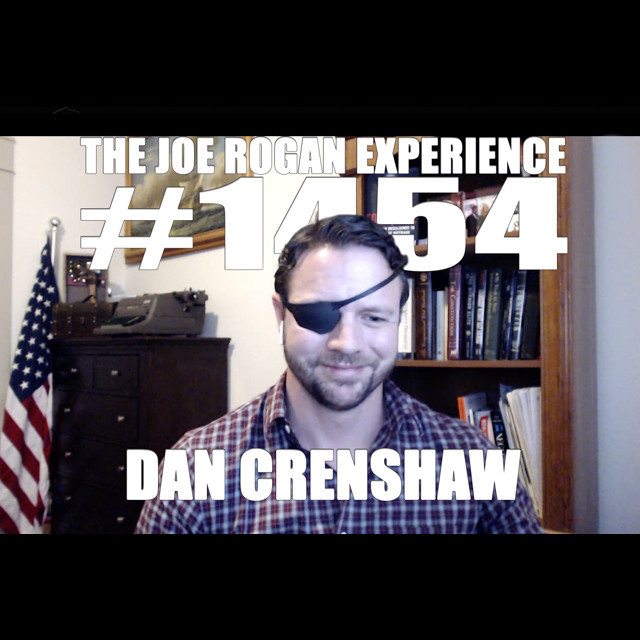
7-Apr-20
This podcast features Dan Crenshaw, a politician and former United States Navy SEAL officer, discussing his new book, “Fortitude: American Resilience in the Outrage Era,” as well as his views on the current state of American politics and culture. Crenshaw offers his perspective on the COVID-19 pandemic, the role of the media, the rise of democratic socialism, and the importance of personal responsibility and mental toughness. The podcast delves into a range of provocative and controversial topics, exploring themes of individual agency, societal dysfunction, and the need for resilience in the face of adversity.
1. Dan Crenshaw’s Perspective on the COVID-19 Pandemic:
Crenshaw describes the initial lockdown as a “tactical retreat” in the face of an unexpected threat. He believes the focus should shift from risk containment to risk mitigation, ramping up testing and production of necessary medical supplies.
He criticizes the media’s tendency to use the pandemic as a means of attacking President Trump, highlighting the need for factual reporting with full context.
Crenshaw expresses concern over the potential long-term costs of an indefinite lockdown, including the economic impact and the detrimental effects on public health, such as increased divorce rates and suicide.
He argues for a balanced approach, taking into account the risks and benefits of reopening society, while remaining mindful of the need to protect vulnerable populations.
2. Crenshaw’s View on the Media’s Role and Outrage Culture:
Crenshaw criticizes the media’s tendency towards adversarial reporting, particularly towards conservative politicians.
He believes that the media’s primary function should be to educate the public, providing full context and understanding, rather than engaging in “gotcha” games and promoting outrage.
He blames social media for fueling outrage culture, creating a system where individuals are rewarded for overly emotional and confrontational behavior.
He argues that we must stop rewarding such behavior and instead prioritize reason, empathy, and a shared sense of national purpose.
3. The Rise of Democratic Socialism and Its Consequences:
Crenshaw contends that democratic socialism is not a new idea but rather a repackaged version of failed 20th-century policies.
He points out that while the concept may sound appealing, the reality is that policies like price controls and wealth redistribution have unintended consequences, such as reduced innovation and economic stagnation.
He draws parallels between the socialist policies of the Soviet Union and China, highlighting their devastating effects on economic growth and human well-being.
Crenshaw emphasizes the importance of individual incentives and the free market in driving innovation and prosperity, arguing that socialism undermines these essential components of a healthy society.
4. The Importance of Personal Responsibility and Mental Toughness:
Crenshaw stresses the importance of personal responsibility as a cornerstone of American culture, arguing that it fosters empowerment and agency.
He believes that the emphasis on victimhood in today’s society disempowers individuals and undermines their ability to control their own destinies.
He highlights the importance of mental toughness as a necessary attribute for navigating a free society where competition is inevitable.
He champions the virtues of self-imposed suffering, arguing that it builds character, resilience, and a sense of fulfillment.
5. The Need for Balance and Accountability in Public Policy:
Crenshaw advocates for a balanced approach to addressing complex issues such as healthcare and the pandemic.
He critiques the “one-size-fits-all” solutions often proposed by proponents of democratic socialism, emphasizing the need to tailor policies to specific contexts and acknowledge regional differences.
He argues for a system that balances government intervention with individual choice and competition, pointing to the success of Medicare Advantage as an example.
Crenshaw emphasizes the importance of local and state government accountability in managing public health and economic recovery efforts, highlighting the need for a collaborative approach that respects federalism.
6. The Role of China in the COVID-19 Pandemic and Global Trade:
Crenshaw expresses serious concerns over the Chinese government’s handling of the pandemic, including its initial denial of human-to-human transmission and its alleged obstruction of international aid.
He calls for a complete overhaul of the World Health Organization’s leadership due to its perceived bias towards China.
He argues that the pandemic has exposed the vulnerabilities of American reliance on China for critical goods and services, highlighting the need to rebalance supply chains and bring manufacturing back to the United States.
Crenshaw suggests that a shift towards greater American manufacturing could come with costs, but ultimately be beneficial for both national security and economic self-sufficiency.
7. Crenshaw’s Personal Journey and Views on Politics:
Crenshaw shares anecdotes about his time in the Navy SEALs, highlighting the role of self-discipline, mental toughness, and overcoming adversity in his personal development.
He describes his decision to enter politics as a natural evolution from his interest in policy and national security.
Crenshaw acknowledges the rapid changes and challenges of the current political landscape but expresses his commitment to engaging in the process and advocating for his principles.
He is optimistic about the future of America, emphasizing the resilience and potential of the American people.
5 Memorable Quotes:
“We are in a, what I would call, a tactical retreat. So I’m gonna use a military term there to describe what we are doing. We all of a sudden ran into a hail of gunfire. Okay?” – Crenshaw uses military analogy to explain the initial lockdown during the COVID-19 pandemic.
“The press needs to figure out who they wanna be. And It’s actually like chapter 2 in my book. It’s called who is your hero. And that and that conversation is about who we think we should be.” – Crenshaw questions the media’s role in promoting outrage culture and calls for a return to a more objective and informative approach.
“We’ve replaced sophisticated reasoning with outrage.” – Crenshaw identifies the prevailing trend of substituting thoughtful discourse with emotional reactions.
“It’s not cool to be a victim. Right.” – Crenshaw emphasizes the need to foster a culture of resilience and personal responsibility rather than victimhood.
“The way you do anything is the way you do everything.” – Crenshaw highlights the importance of applying principles of integrity, discipline, and excellence to all aspects of life.