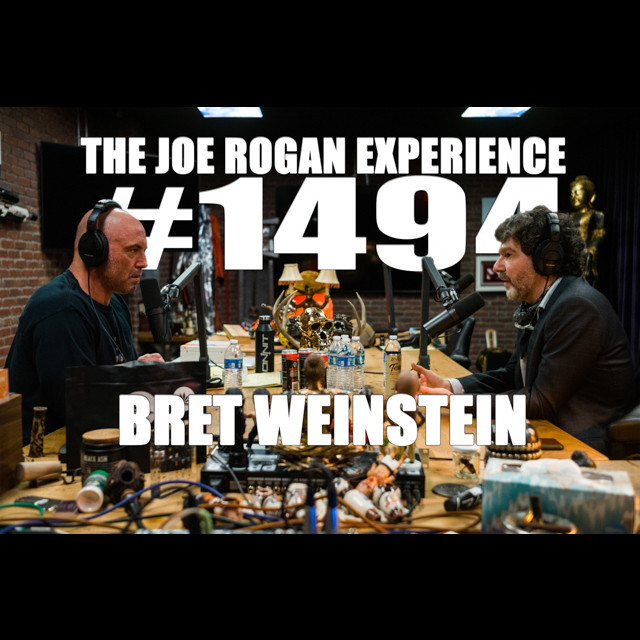
18-Jun-20
This podcast dives into the aftermath of Bret Weinstein’s departure from Evergreen State College and the broader societal and political implications of the events. It touches upon issues of free speech, cancel culture, the rise of anarchism, and the role of social justice movements in shaping contemporary discourse. Underlying themes explore the fragility of democratic institutions, the dangers of mob mentality, and the need for critical thinking and reasoned debate in addressing complex societal issues.
-
Weinstein’s Departure from Evergreen:
- Weinstein’s outspoken criticism of a planned “Day of Absence” event, where white students were asked to leave campus, sparked outrage and ultimately led to his resignation.
- The incident became a focal point in the national debate over free speech and the limitations of academic freedom on college campuses.
- Weinstein’s critics accused him of being insensitive and promoting white supremacy, while supporters argued that he was simply defending the principles of academic freedom.
- The events at Evergreen served as a microcosm of the growing polarization and intolerance on college campuses, highlighting the clash between traditional values and emerging social justice movements.
-
The Rise of Anarchism and Occupy 2.0:
- Weinstein argues that the current wave of protests and unrest, fueled by movements like Black Lives Matter, bear a striking resemblance to the anarchist elements of the Occupy movement.
- He criticizes the movement’s embrace of extreme ideas, such as defunding the police, which he believes is counterproductive and dangerous.
- The fusion of these disparate movements, he believes, creates a potent cocktail of anger, frustration, and a lack of coherent strategy, making it difficult to address the underlying issues.
- The absence of clear leadership and a shared vision, Weinstein argues, exacerbates the movement’s tendency towards violence and chaos.
-
The Democratic Party’s Shift and Economic Despair:
- Weinstein posits that the Democratic Party’s shift away from its traditional focus on working-class interests and its embrace of corporate interests has left many feeling disenfranchised and economically insecure.
- He argues that this has created a breeding ground for anger and resentment, fueling the rise of populist movements like Trump’s MAGA movement.
- The current unrest, Weinstein contends, is a symptom of this deep-seated economic despair and the perception that the system is rigged against them.
- He criticizes the movement for failing to address the root causes of this discontent, instead focusing on symbolic gestures and targeting convenient scapegoats.
-
The Dangers of Critical Theory and the Attack on STEM:
- Weinstein expresses alarm at the growing influence of critical theory in academia, which he views as an attack on reason, logic, and scientific progress.
- He argues that the movement’s rejection of science and its embrace of postmodern ideas, such as the notion of “systemic racism” in STEM fields, is deeply problematic.
- He criticizes the movement for its focus on identity politics and its attempts to undermine established institutions and knowledge systems.
- Weinstein fears that this trend could lead to a decline in scientific innovation and the dismantling of the very foundations of Western civilization.
-
The Case of George Floyd and the Problem of Police Brutality:
- Weinstein expresses outrage at the killing of George Floyd but argues against the prevailing narrative of a clear-cut murder, urging for a more nuanced understanding of the events.
- He believes that while the video footage is disturbing and raises serious questions about police brutality, it does not provide sufficient evidence to definitively conclude that Floyd’s death was a murder.
- He raises concerns about the potential for a miscarriage of justice if Derek Chauvin is convicted based solely on public opinion, arguing for a fair trial and due process.
- Weinstein warns against the dangers of mob mentality and the tendency to sacrifice individuals in the name of social justice, arguing that it undermines the very principles of American democracy.
-
The Systemic Nature of Inequality and the Need for Reform:
- Weinstein believes that the roots of inequality in America lie in a system that perpetuates historical injustices and disadvantages, particularly for Black and Native American communities.
- He rejects the idea of reparations as a solution, arguing that it would be counterproductive and undermine the principles of individual responsibility and meritocracy.
- Instead, he advocates for systemic reforms aimed at providing opportunities and empowering those who have been historically marginalized.
- Weinstein argues that this requires a deep understanding of the complex forces that shape societal outcomes and a commitment to addressing the root causes of inequality.
-
The Origins and Dangers of COVID-19:
- Weinstein expresses concern about COVID-19, not primarily because of its lethality but because of its novel nature and the potential for it to have been manipulated in a laboratory.
- He presents evidence supporting the “lab leak” hypothesis, arguing that the virus’s unique characteristics and rapid spread suggest possible laboratory manipulation.
- He criticizes the scientific community for its reluctance to entertain the lab leak hypothesis and for prioritizing political correctness over scientific inquiry.
- Weinstein emphasizes the importance of rigorous scientific inquiry and the need to be transparent about the potential risks associated with gain-of-function research.
-
The Broken System of Scientific Inquiry:
- Weinstein recounts his own experiences with the scientific establishment, highlighting the resistance he encountered when he attempted to challenge a widely accepted assumption about mice and telomeres.
- He argues that the system is riddled with perverse market incentives that prioritize funding and career advancement over scientific integrity.
- He criticizes the scientific community’s reluctance to acknowledge its own mistakes and its tendency to protect its own interests at the expense of truth and progress.
- Weinstein’s story serves as a cautionary tale about the dangers of groupthink and the importance of independent thinking and rigorous scientific inquiry.
-
The Dark Horse Duo Plan:
- Weinstein proposes a radical solution to the current political impasse, suggesting a bipartisan governing duo composed of a center-left and a center-right individual.
- He believes that this would foster greater collaboration and compromise, leading to more effective governance and a more cohesive society.
- The plan, he argues, is a potential antidote to the current dysfunction and paralysis in American politics.
- He suggests Admiral William McRaven and Andrew Yang as potential candidates for this bipartisan duo, highlighting their shared patriotism, courage, and competence.
This podcast transcript presents a wide range of provocative and thought-provoking topics, showcasing Weinstein’s unique perspective on the state of American society and politics. From the dangers of mob mentality and cancel culture to the limitations of scientific inquiry and the potential risks of gain-of-function research, Weinstein’s analysis is both insightful and unsettling, leaving listeners to ponder the challenges facing American democracy and the future of Western civilization.
5 Memorable Quotes:
- “If anybody sounded the alarm that all this madness was gonna come to fruition in the real world, it’s you, sir. You you were the guy. Like, you were the one who was saying this is, what’s happening at Evergreen? And if you don’t know, go Google it.” – Rogan recognizes Weinstein’s foresight and the importance of his early warnings about the potential consequences of the events at Evergreen.
- “The absence of leadership is going to prevent us from doing what we should do. And that means that the next set of predictions are far more dire.” – Weinstein expresses his pessimism about the ability to contain the current social unrest and foresees a potentially catastrophic outcome if the underlying issues are not addressed.
- “It is explicitly about disassembling the very things that make the West marvelous. Right? It is anti science. Right? It does not want policy based on science.” – Weinstein condemns the movement’s hostility towards science and its desire to undermine the very foundations of rational thought and scientific progress.
- “The fact that ancient racism people who are dead, their racism still haunts us today. through mechanisms of the reproduction of patterns of distribution.” – Weinstein articulates the insidious and persistent nature of systemic racism, arguing that it is not a matter of individual prejudice but rather the result of enduring societal structures and inequalities.
- “We are in we’re in tremendous danger. And what what do you think their motivation is? Power. Power.” – Rogan and Weinstein agree that the movement’s driving force is ultimately about power and control, not genuine social change.