31-Aug-20
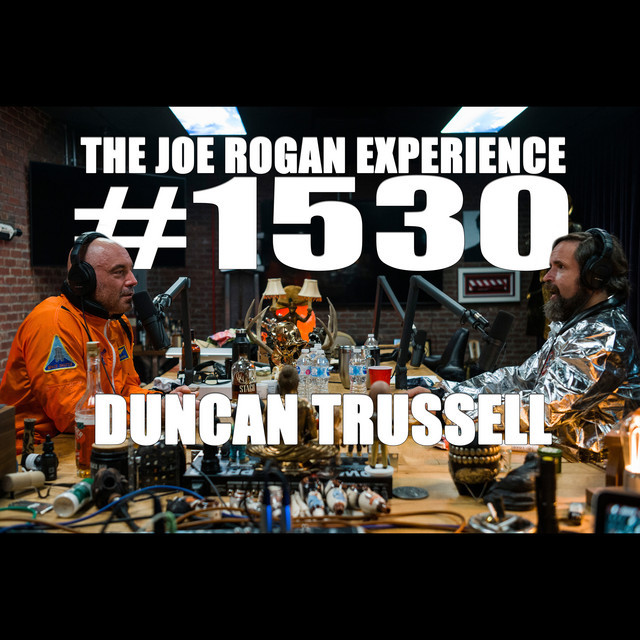
#1530 – Duncan Trussell
This Joe Rogan podcast with Duncan Trussell, a stand-up comedian and host of “The Duncan Trussell Family Hour,” dives deep into topics ranging from the social and political landscape to personal experiences with psychedelics and the nature of reality. The conversation explores themes of societal fragmentation, the allure of utopian ideals, the dangers of centralized power structures, and the importance of compassion and self-acceptance.
Here are some of the major topics discussed in the podcast:
The Exodus from Los Angeles
- Both Rogan and Trussell have recently left Los Angeles, citing a sense of unease and a growing feeling of community breakdown in the city.
- They attribute this to a combination of factors, including homelessness, drug use, crime, and a transient population.
- Rogan argues that while large cities are often considered progressive, they can also be susceptible to social unrest and a lack of law and order when problems arise.
- Trussell highlights the inherent contradiction of a city that is built on creating illusions and monetizing identity, while simultaneously lacking a sense of genuine community.
The Red-Blue Divide and the American Experiment
- Rogan and Trussell discuss the increasingly polarized political climate in the United States, questioning the validity of the red-blue divide and emphasizing the need for more nuanced dialogue.
- They argue that the American spirit is rooted in the belief that people can work together to create something better, but this utopian ideal is often undermined by tribalism and partisan politics.
- Trussell suggests that a key problem is the shaming and demonization of people with different political views, creating an environment where people feel unable to express their true beliefs.
- Both Rogan and Trussell stress the importance of looking beyond ideological labels and seeking common ground, particularly when it comes to core values like safety, justice, and well-being.
The Trump Phenomenon and the Rise of the Con Artist
- Rogan expresses his strong disapproval of Donald Trump, characterizing him as a “lunatic” who thrives on division and lacks empathy.
- They discuss how Trump’s divisive rhetoric has exacerbated societal tensions, particularly in the context of the COVID-19 pandemic.
- Trussell points out the dangers of tribalism and how it can lead people to accept falsehoods if they believe that those falsehoods serve their interests.
- Rogan argues that Trump’s appeal lies in his “cartoonish” persona as a “strong boss” who doesn’t give a fuck, which resonates with certain segments of the population.
The Dangers of Censorship and the Role of Social Media
- Rogan and Trussell express concerns about the increasing censorship of online platforms, particularly when it comes to topics like COVID-19 and public health.
- They argue that while it is important to combat misinformation, silencing people based on their beliefs, even if those beliefs are wrong, is dangerous and ultimately counterproductive.
- Trussell believes that the internet, while a powerful tool for communication, can also be addictive and lead to a distorted perception of reality.
- They discuss the challenges of navigating a world where information is disseminated in a hyper-seductive and manipulative way, highlighting the need for critical thinking and media literacy.
The Power of Psychedelics and the Search for Meaning
- Rogan and Trussell share personal experiences with psychedelics, discussing their potential for healing, self-discovery, and expanded consciousness.
- Trussell argues that psychedelics can help people to reconnect with their innate sense of unity and transcend the limitations of their ego.
- They acknowledge the dangers of psychedelic use, particularly when it is not done responsibly or in a safe environment, but they also emphasize the potential benefits.
- The conversation touches on the ongoing debate around the legalization of psychedelics and the need for a more nuanced understanding of their therapeutic potential.
The Mystery of Bohemian Grove
- Rogan and Trussell discuss the controversial Bohemian Grove, a private club for powerful men that has been the subject of numerous conspiracy theories.
- They share their own experiences with the club, including Rogan’s encounter with Alex Jones, who filmed footage of a ritual held there.
- Rogan expresses skepticism about the club’s sinister reputation, suggesting that it may be nothing more than a “summer camp for billionaires,” but they both acknowledge the strange and unsettling nature of the rituals that have been documented.
- The conversation touches on the dangers of conspiracy theories and the importance of critical thinking, while also acknowledging the potential for real-world power structures to engage in unethical behavior.
The Future of Humanity and the Importance of Connection
- Rogan and Trussell explore the potential future of humanity, particularly in light of advances in technology and the accelerating pace of change.
- They discuss the dangers of technological singularity and the need for greater compassion and understanding in an increasingly interconnected world.
- Trussell believes that the key to a better future lies in embracing our shared humanity and moving away from rigid ideologies and divisive rhetoric.
- The conversation emphasizes the importance of personal connection and the need to foster more meaningful relationships in a world that often encourages isolation and superficiality.
The Comedy Store: A Temple of Laughter and a Crucible of Talent
- Both Rogan and Trussell share fond memories of the Comedy Store, a legendary Los Angeles comedy club that has played a pivotal role in shaping the careers of many prominent comedians.
- They discuss the unique environment of the club, which fostered a sense of camaraderie, competition, and artistic growth.
- Rogan credits the Comedy Store with providing him with early opportunities and mentorships, highlighting the importance of community and support in nurturing talent.
- Trussell shares his own experience of being mentored by Mitsy Shore, the club’s matriarch, and how she played a crucial role in shaping his comedic identity.
The Legacy of Mitsy Shore and the Importance of Chaos
- Rogan and Trussell pay tribute to Mitsy Shore, the legendary owner of the Comedy Store, who was known for her fierce independence, unconventional approach to running a comedy club, and unwavering support for her comics.
- They discuss how Shore created a unique environment that celebrated chaos and encouraged artists to push boundaries.
- Rogan emphasizes the importance of Shore’s unconventional methods in nurturing a generation of comedic talent.
- Trussell highlights Shore’s core belief that comedians should never feel beholden to the system, reminding them of their inherent power and creativity.
The Role of Compassion in a Divided World
- Rogan and Trussell express a deep sense of compassion for humanity, recognizing the inherent flaws and struggles that we all face.
- They emphasize the need to approach others with empathy and understanding, even when we disagree with their beliefs or actions.
- Trussell believes that true progress requires recognizing our shared humanity and finding ways to connect and collaborate, rather than resorting to division and conflict.
- The conversation highlights the importance of being open-minded, willing to listen to different perspectives, and fostering a culture of empathy and acceptance.
The Search for Meaning and the Importance of Connection
- The podcast concludes with a hopeful outlook on the future, emphasizing the importance of connection, compassion, and the ongoing search for meaning.
- Rogan and Trussell believe that even in challenging times, there is always hope for progress and a better future.
- They encourage listeners to embrace their own uniqueness and to find ways to connect with others in a meaningful way, even if those connections challenge our existing beliefs and assumptions.
- The podcast concludes with a strong sense of optimism and a reminder that we are all interconnected, capable of making a positive impact on the world.
5 Memorable Quotes:
- “I think it’s when it works great, it was wonderful. When when LA was was working well, it was fantastic. When the comedy store was packed, and restaurants were doing well, and the economy was doing well. And the the crime wasn’t high, it’s great. But when things go bad, there’s no sense of community.” – Rogan
- “I love the American dream. And the what’s so beautiful about it is it’s this idea of, like, I think together, we can do something new that’s going to be better than anything that happened before.” – Trussell
- “I keep trying to get out of the like, I I keep trying to get out because I I this is what I’ve realized because I love flipping through. I go from I will jump back and forth from, like, Fox News to CNN to MSNBC. I’ll check out some Tucker Carlson blast over to Rachel Maddow. find these, like like polar opposites and what I feel like what’s happening just as a result of the entertainment that is news is that we’re getting a very non nuanced we’re being told what we are.” – Rogan
- “What we all have in common is we wanna be happy. Yeah. When I talk to my my my liberal friends, they wanna be happy. When I talk to my conservative friends, They wanna be happy.” – Trussell
- “The problem is more people not talking than anything.” – Rogan