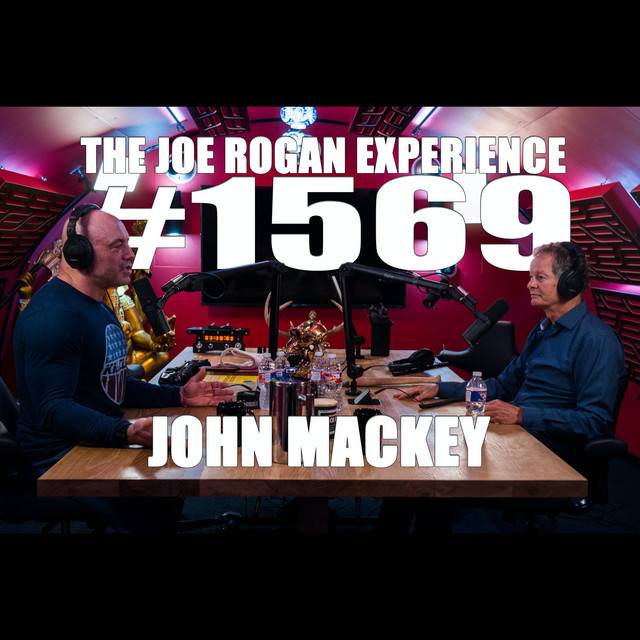
24-Nov-20
This podcast delves into a conversation with John Mackey, the CEO and co-founder of Whole Foods Market, exploring his perspectives on capitalism, leadership, and the current societal landscape. Provocative topics include the merits of capitalism versus socialism, the role of intellectuals in society, and the impact of government intervention on business. Underlying themes examine the importance of incentives, the power of innovation, the need for conscious leadership, and the ethical considerations of business practices.
1. Capitalism: The Engine of Progress or The Root of Evil?
- Mackey passionately argues that capitalism, which he calls “innovationism,” is the greatest force for good in human history, citing the dramatic reduction in poverty and increase in lifespan over the past two centuries.
- He refutes the common criticism of capitalism as inherently greedy and destructive, claiming that its focus is on creating value for customers, employees, suppliers, and society as a whole.
- Mackey emphasizes the win-win-win nature of capitalism, where all stakeholders benefit from the exchange, leading to a positive feedback loop of innovation and progress.
- He contrasts capitalism with socialism, which he views as fundamentally flawed due to its reliance on coercion and its inability to incentivize innovation and create long-term prosperity.
2. The Intellectuals vs. the Entrepreneurs: A Clash of Worldviews
- Mackey argues that intellectuals, particularly those in academia, often resent the success of entrepreneurs, viewing them as less intelligent and deserving of social status.
- He suggests that this resentment stems from a worldview clash, with intellectuals valuing abstract thought and academic achievement, while entrepreneurs value practical skills and creating tangible value.
- Mackey believes that this worldview clash contributes to the rise of socialist ideologies, as intellectuals seek to redistribute wealth and control business practices.
- He challenges the notion that intellectuals are inherently more intelligent than entrepreneurs, pointing to examples like Elon Musk and Jeff Bezos, whose innovative achievements demonstrate exceptional intelligence and creativity.
3. The Role of Government: Balancing Regulation and Innovation
- Mackey acknowledges the potential negative consequences of capitalism, particularly environmental impacts, but argues that regulation can effectively mitigate these issues.
- He emphasizes that the power of innovation lies within the private sector, allowing businesses to find solutions to environmental problems through incentive-driven progress.
- He expresses concern about the influence of special interest groups and lobbyists on government, which can lead to regulations that favor large corporations and stifle competition.
- Mackey believes that a balance between regulation and innovation is essential for a healthy economy and society, but emphasizes the importance of limiting government control and allowing businesses to thrive.
4. The Importance of Conscious Leadership: Bridging Worldviews and Promoting Ethical Practices
- Mackey advocates for conscious leadership, which emphasizes creating value for all stakeholders, embracing ethical principles, and prioritizing a higher purpose beyond profit maximization.
- He sees conscious capitalism as a bridge between traditional, modern, and progressive worldviews, acknowledging the merits of each while addressing their potential pitfalls.
- Mackey believes that conscious leadership can foster a more harmonious and sustainable society, where businesses contribute to the well-being of their employees, customers, and communities.
- He sees Whole Foods as an example of conscious capitalism in action, where a focus on employee growth and happiness, quality products, and ethical sourcing has contributed to both commercial success and positive social impact.
5. The Future of Business: Embracing Technology, Conscious Practices, and Personalized Wellness
- Mackey anticipates that technology will play an increasingly important role in business, with innovations like CRISPR potentially revolutionizing medicine and extending lifespans.
- He believes that the future of business lies in embracing conscious practices, prioritizing ethical sourcing, employee well-being, and a commitment to environmental sustainability.
- Mackey foresees a shift towards personalized wellness, with businesses focusing on optimizing individual health and well-being, potentially through concierge medicine and wellness coaching programs.
- He emphasizes the need for businesses to adapt to changing societal values, recognizing the importance of social responsibility and ethical conduct to achieve long-term success.
6. The Dilemma of Food: Balancing Pleasure and Health
- Mackey’s passionate advocacy for a plant-based diet sparks a lively debate with Rogan, highlighting the complexities of nutrition and the varying perspectives on the role of animal products in a healthy diet.
- The discussion delves into the scientific evidence for the benefits of a plant-based diet, with Mackey emphasizing the ability to reverse heart disease through a whole-foods, plant-based, low-fat approach.
- Rogan presents a counterargument, citing the importance of animal foods in providing essential nutrients and the lack of conclusive evidence that meat directly causes heart disease or cancer.
- Both agree on the importance of minimizing processed foods, sugary drinks, and unhealthy fats, but differ on the role of animal foods in a healthy diet, leaving the debate open for further exploration and personal interpretation.
7. A Glimpse into John Mackey’s Personal Life: Passion, Discipline, and Occasional Indulgences
- Mackey shares his passion for long-distance backpacking, highlighting the mental and physical benefits of a challenging, nature-immersed activity.
- He discusses his commitment to a plant-based diet, but acknowledges his occasional indulgences, such as coconut ice cream and pasta, showcasing a balanced approach to food.
- Mackey reveals his struggles with overeating, particularly pasta, emphasizing the importance of self-awareness and recognizing the impact of food choices on well-being.
- He shares his perspective on the role of passion in life, recognizing its power to drive success but also acknowledging the challenges of maintaining discipline and avoiding overindulgence.
8. The Impact of Social Media: Polarization, Manipulation, and the Need for Discernment
- Mackey and Rogan discuss the impact of social media on society, highlighting the increased polarization, the spread of misinformation, and the potential for manipulation.
- Mackey expresses concern about the echo chambers created by social media algorithms, leading to a lack of diverse perspectives and reinforcing existing biases.
- Both emphasize the importance of critical thinking, seeking out diverse viewpoints, and avoiding confirmation bias, which can lead to distorted understanding and extreme ideologies.
- They highlight the need for self-discipline and awareness when engaging with social media, recognizing its potential to both inform and manipulate, and encouraging responsible consumption to maintain a balanced and informed perspective.
9. The Future of Humanity: Embracing Longevity, Wisdom, and a Shared Destiny
- Mackey and Rogan delve into the implications of potential technological advancements, such as CRISPR-based gene editing, which could significantly extend human lifespans.
- They speculate on the potential benefits of extended lifespans, such as increased wisdom, experience, and the opportunity for greater societal progress.
- Mackey proposes an intriguing theory about the role of DNA in the aging process, suggesting that DNA is immortal while the physical bodies that hold it are expendable, perhaps indicating a potential future where humans can transcend their physical limitations.
- They discuss the challenges of navigating a future with extended lifespans, considering the need for ethical considerations, societal adjustments, and the potential impact on resource allocation and global stability.
10. The Power of Authenticity: Embracing Imperfection and Seeking Meaningful Connections
- Mackey acknowledges the importance of authenticity, recognizing that embracing imperfections and openly expressing opinions, even those that might be controversial, fosters stronger connections.
- He shares his experiences with public criticism and the importance of maintaining a sense of self-awareness, recognizing that opinions are not necessarily a reflection of one’s worth.
- Mackey emphasizes the need for a greater understanding of human nature, recognizing the tendency for people to conflate beliefs with identity, leading to unnecessary polarization and conflict.
- He advocates for a more open and compassionate dialogue, embracing diverse perspectives and seeking meaningful connections based on shared values and common goals.
5 Memorable Quotes:
- “Capitalism is not perfect, it does not. Because human choices and what people want. Various people to capitalism will sell cigarettes to people because that’s what people want. It gives them pleasure, but it’s bad for their health, but they’re they’re they’re giving people what they want. It’s it’s the same thing in in any type of externality. That’s not that’s not deliberately done to harm the society. It’s sort of a byproduct.”
- “The sad truth is that humanity is not perfectible. we can never create the perfect system. And the attempt to create the perfect system, the perfect same to me, the good.”
- “The beauty of capitalism is It’s a win win win game. It’s an infinite game. It’s a game because the customers are winning or they wouldn’t trade. The employees are winning. how the customer’s winning. They’re getting products and services at a at a and and and there’s competition to make those services and products better. the employees are winning because they have jobs and opportunities to grow. Benefits are paid, and they do that voluntarily. They’re not forced to work. for any particular company. They do it because they think it’s in their best interest, win for the employees. The suppliers who are trading with the business, they’re winning as well. or they wouldn’t make the exchanges. Investors are winning or they wouldn’t make the investments. And the larger society is winning because businesses, the engine, that creates all the money that goes into nonprofits and governments without business. There is no government, and there is no and there is no nonprofit sector because those are ultimately supplied through what business creates. So business is a win win win game. All of these stakeholders are winning, and that’s why capitalism lifts society up.”
- “If you want a system that allows for a continual progress of innovation, like constant innovation. You gotta give people incentives to do that. They have been sent to just the human animal strives to achieve. for whatever reason.”
- “We’re gonna muddle our way through like we always do.”