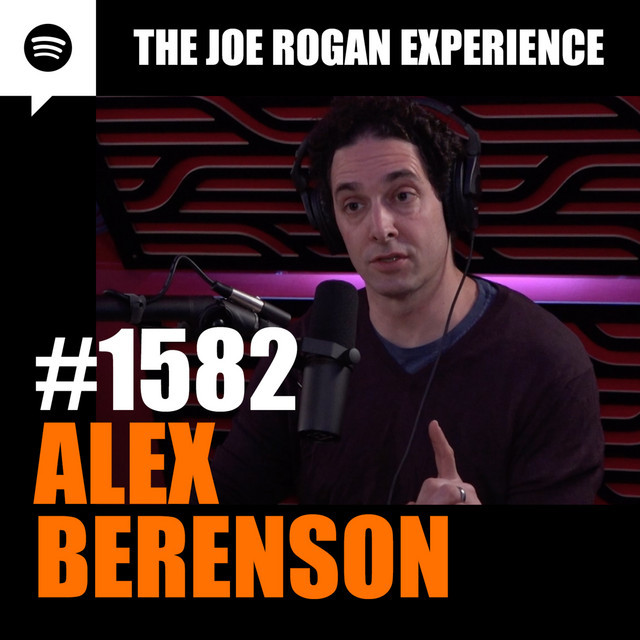
23-Dec-20
This podcast digs deep into the controversial topic of COVID-19 and its impact on society, featuring the perspective of Alex Berenson, an award-winning journalist and author known for his critical analysis. It challenges mainstream narratives, delving into provocative claims about lockdowns, masks, and the vaccine, sparking intense debate. Underlying themes explore the role of fear, manipulation, and scientific literacy in shaping public policy and individual choices.
1. The Reality of COVID-19:
While acknowledging the virus’s real and contagious nature, Berenson argues it’s been overhyped, especially regarding the severity of the illness for most of the population.
He emphasizes the highly stratified risk based on age, noting the vast majority of deaths occur in individuals over 65.
Berenson points out that deaths attributed to COVID-19 are often linked to individuals with multiple underlying health conditions, raising questions about the accuracy of death counts.
He criticizes the lack of focus on promoting healthy habits and building a robust immune system as a means of mitigating the disease’s impact.
2. Lockdowns and Their Consequences:
Berenson strongly criticizes lockdowns as a misguided response to the pandemic, emphasizing the significant economic and social damage caused by business closures and school shutdowns.
He argues that lockdowns disproportionately impact low-income communities and exacerbate existing inequalities.
Berenson highlights the evidence suggesting lockdowns are counterproductive, as the virus spreads more aggressively indoors, potentially making indoor confinement more risky.
He believes that focusing on protecting vulnerable populations like the elderly and those with pre-existing conditions should be a priority, rather than imposing broad shutdowns.
3. The Effectiveness of Masks:
Berenson challenges the effectiveness of cloth and surgical masks, arguing they are largely useless in preventing the spread of COVID-19.
He believes social distancing is a more effective strategy, pointing out that the virus is primarily airborne, with minimal evidence of significant outdoor transmission.
Berenson cites studies showing that masks did not effectively protect the wearer and questions the rationale for widespread mask mandates.
He criticizes the reliance on pseudoscience and the “fear porn” surrounding masks as driving public policy decisions.
4. The COVID-19 Vaccine and Its Controversies:
Berenson expresses concerns about the rushed development and widespread adoption of the mRNA-based COVID-19 vaccines, emphasizing the lack of long-term data and the potential for unforeseen side effects.
He highlights the significant side effects reported in clinical trials, including fever, chills, and even hospitalizations, particularly among younger individuals.
Berenson raises questions about the rationale for encouraging individuals who have already contracted and recovered from COVID-19 to receive the vaccine, given the potential for adverse reactions and the evidence suggesting natural immunity may be stronger.
He criticizes the push to vaccinate everyone as a result of political and financial incentives, rather than a focus on evidence-based risk assessment.
5. The Medical Industrial Complex and Tech Censorship:
Berenson believes the pandemic has amplified the power of the medical industrial complex, which he argues has benefited significantly from the heightened focus on healthcare.
He criticizes the lack of transparency regarding side effects of vaccines and the role of financial incentives in shaping the narrative.
Berenson expresses concern about tech censorship, highlighting the suppression of dissenting voices and the potential for bias in how information is disseminated.
He believes this suppression of dissenting voices, particularly those challenging the mainstream narrative on COVID-19, fuels distrust and leads to the spread of misinformation.
6. The Importance of Open Dialogue and Critical Thinking:
Throughout the podcast, Berenson emphasizes the importance of open dialogue, critical thinking, and a willingness to question authority, particularly in the face of complex scientific issues.
He criticizes the prevailing “groupthink” mentality that discourages dissent and stifles honest debate.
Berenson argues that social media, while offering a platform for diverse voices, can also be detrimental due to its addictive nature, lack of social cues, and the prevalence of misinformation and targeted attacks.
He suggests that a new model of journalism is needed, one that prioritizes objectivity, fact-checking, and a commitment to representing reality, unfiltered by political agendas or financial pressures.
7. The Future of Public Discourse:
Berenson expresses deep concern about the polarization and heightened aggression in public discourse, arguing that this negativity is detrimental to building community and fostering healthy relationships.
He believes that the pandemic has created a climate where individuals are more likely to attack those with differing opinions, leading to an erosion of trust and a decline in civility.
Berenson advocates for a shift in tone, emphasizing the need for respectful dialogue, open-mindedness, and a willingness to challenge assumptions, even when they come from established authorities.
He believes that the future of a healthy society hinges on embracing critical thinking, seeking truth, and fostering constructive dialogue, rather than resorting to fear, manipulation, and silencing dissenting voices.
5 Memorable Quotes:
“COVID is real, it’s contagious and it’s been a problem this year. It is not worthy of the response that we have had to it.” – Berenson’s concise statement captures his central argument that the pandemic’s impact has been disproportionate to the virus’s actual threat.
“There has been no accounting for the damage that has been done by forcing people to shut down their businesses.” – This quote highlights the devastating economic consequences of lockdowns, arguing that the focus on preventing hospital overcrowding has come at the expense of individual livelihood and overall societal well-being.
“I don’t think the logic is particularly strong, but I think that’s a case you can make. The idea that my mask protects me, you just can’t make a case for it.” – Berenson’s straightforward assessment of the mask debate, acknowledging the “plausibility” of masks potentially reducing viral load but dismissing the notion that they protect the wearer.
“We’ve been trying to scare you about. They make, they, they, they’ve been, they go chicken little over and over and over again.” – This analogy vividly captures Berenson’s frustration with the media’s tendency to amplify fears and sensationalize events, often without a strong basis in evidence.
“I just wanted to smoke pot and talk to my friends. And now I have to interview people. I’m fucking some weirdo de facto journalist.” – This self-deprecating statement reveals Berenson’s unexpected role as a voice of reason and a counterpoint to the prevailing narrative, highlighting the responsibility he feels to provide a different perspective.”