10/24/2016
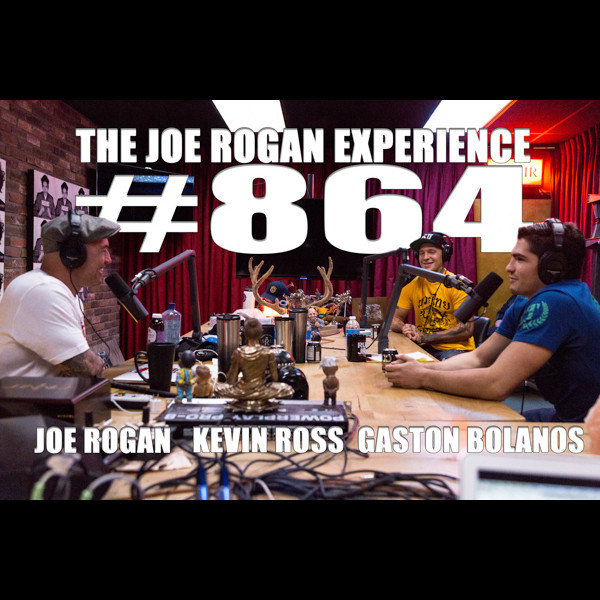
This Joe Rogan podcast features Kevin “The Soul Assassin” Ross, a seasoned Muay Thai kickboxer and former mixed martial artist, and Gaston “The Dreamkiller” Bolanos, a rising professional Muay Thai fighter recently signed to Bellator. They delve into the world of Muay Thai, exploring its unique characteristics, its growth in America, and the challenges it faces in establishing itself against other striking arts. Underlying themes of passion, dedication, and the complexities of pursuing a demanding athletic career are interwoven throughout their conversation.
-
Muay Thai’s Rise in America
- Rogan expresses his long-standing admiration for Muay Thai, considering it a thrilling combat sport that deserves greater recognition in America.
- The podcast highlights the challenges Muay Thai has faced in gaining mainstream appeal in America, often overshadowed by other striking arts and struggling to overcome negative associations with “pants fighting.”
- The discussion centers on the importance of television exposure and the need for promotions to focus on building a solid foundation for the sport, rather than aiming for immediate success with high-profile events.
- The conversation points to a hopeful future for Muay Thai in America, fueled by increased television exposure and the growing talent pool emerging from countries like Peru, where the sport is rapidly gaining popularity.
-
The Complexities of Muay Thai Technique
- Ross and Bolanos emphasize the intricate techniques and strategies involved in Muay Thai, highlighting the importance of training to fully appreciate the sport’s depth.
- The conversation showcases the nuanced differences between Muay Thai and kickboxing, specifically emphasizing the inclusion of elbows and knees and the importance of clinching in Muay Thai.
- They discuss the importance of finding the right training environment and partners, emphasizing that a good coach doesn’t necessarily translate to a successful partnership.
- The podcast highlights the importance of constantly adjusting training methods and approaches throughout a fighter’s career, as physical and mental demands evolve.
-
The Mental and Physical Demands of Muay Thai
- Ross shares his personal journey into Muay Thai, detailing how his initial passion was sparked by seeing the sport on ESPN in the 1990s, but he ultimately found himself drawn to the sport after the passing of a friend.
- The conversation explores the transformative nature of Muay Thai, where the intense training and challenges push fighters to discover their true potential and resilience, often leading to personal growth beyond the sport itself.
- Ross and Bolanos discuss the importance of mental toughness and finding the right balance between being confident and overconfident, emphasizing how mental fatigue can impact physical performance.
- The podcast highlights the importance of having a strong support system, including coaches and close friends, who can help fighters navigate the mental and emotional challenges of the sport.
-
The Importance of Experience and Understanding
- Ross and Bolanos share their perspectives on the importance of experience, highlighting how early starts and consistent training are invaluable in Muay Thai, but also recognizing the benefits of starting later in life with greater maturity and wisdom.
- They discuss the unique challenges of judging and refereeing Muay Thai, emphasizing the need for deep understanding of the sport’s nuances to ensure fair and accurate evaluations, especially when it comes to scoring clinches and takedowns.
- The conversation explores the misconception of Muay Thai as a purely brute force sport, emphasizing the importance of technical proficiency and strategic thinking at higher levels.
- They discuss the differences in Muay Thai styles, highlighting the effectiveness of unorthodox techniques like those utilized by fighters like Saenchai, who defy traditional approaches and often dominate opponents with their unique skillsets.
-
The Future of Muay Thai in MMA
- Ross and Bolanos discuss the effectiveness of Muay Thai as a striking art in MMA, noting that its combination of kicks, elbows, knees, and clinching makes it a versatile and successful approach in the mixed martial arts arena.
- The conversation explores the challenges of translating Muay Thai techniques to MMA, acknowledging that fighters may adapt their striking styles to accommodate takedowns and grappling, potentially leading to a less pure expression of Muay Thai.
- They discuss the growing popularity of kickboxing in MMA promotions like Bellator, but also emphasize their belief that Muay Thai, with its full range of techniques, has the potential to be more captivating and exciting for audiences.
- The podcast concludes with a discussion of the future of Muay Thai, expressing a hope that the sport will eventually achieve greater mainstream recognition and acceptance in America, mirroring its popularity in Thailand.
5 Memorable Quotes:
- “It’s like the difference between American football and rugby. Like, they’re similar. They’re running. There’s a ball. Yeah. But they’re not the same whatsoever. They’re two they’re two different Does that dissimilar? Because I don’t think it is. Yeah. Yeah. Completely because it it’s a completely different pace. It’s a completely different mentality.”
- “You know, there was this long y crew where he was shooting arrows at him. Yeah. Yeah. Do you remember that? Yeah. That was the NPL. Right? Yes. That doesn’t feel. Yeah. Yeah. What happened in that organization? Same thing that happens to a lot of organizations. They they they try to go too hard out the gate.”
- “When you’re there live, you can feel it. You feel the energy and the air. You feel the impact as opposed to watching it on TV, which is still great, but nothing compares to being there in person, particularly in Muata. It’s just brutal.”
- “A lot of it had to do with with seeing my friend pass away at at 18. You know? I’m like, there’s no reason to ever halfway do something because there’s people who don’t get the opportunity to to even try attempt to go after these things.”
- “I’ve always felt like I owed him everything to go after my life with everything I have. All my dreams, I need to go after a hundred percent because there’s people that don’t get to.”