10/5/2016
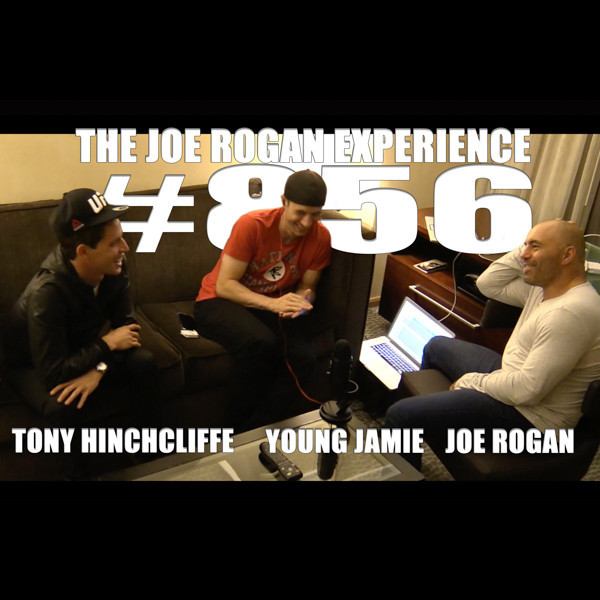
Joe Rogan Podcast #856 – Tony Hinchcliffe & Young Jamie
This podcast takes a comedic and often controversial look at the 2016 US Presidential election, featuring Joe Rogan alongside comedians Tony Hinchcliffe and Young Jamie. They dissect the personalities, policies, and controversies surrounding Hillary Clinton and Donald Trump, sprinkled with off-topic tangents and humor. Underlying themes delve into the nature of truth in a media-saturated world, the power of rhetoric and charisma in politics, and the often uncomfortable intersections of race, gender, and social power in modern discourse.
1. The “Fat-Shaming” Controversy:
The conversation kicks off with an analysis of a campaign commercial featuring a former Miss Universe, who Donald Trump allegedly called “Miss Piggy.”
They discuss how Hillary Clinton used this incident to paint Trump as a misogynistic bully.
The comedians question the sincerity of the woman’s claims and delve into her history, which includes allegations of violent behavior and criminal activities.
This segment highlights the use of victimhood narratives in political campaigns, emphasizing the importance of critical thinking and media literacy.
2. Trump’s Potential “Blowjob Card”
The discussion turns to Donald Trump’s alleged “winning temperament,” suggesting that he has a strategic advantage in the debates, and his potential to bring up Bill Clinton’s past sexual scandals.
They hypothesize that Trump is holding back this information, potentially using it as a last resort if he loses the second debate.
This segment explores the ethically questionable tactics that politicians might employ, raising questions about the limits of political discourse and the impact of personal scandals on public perception.
3. Hillary Clinton’s Email Scandal
The podcast delves into Hillary Clinton’s infamous email scandal, questioning the reasons behind her deletion of thousands of emails during her time as Secretary of State.
They speculate on whether she knowingly deleted these emails, and if she did, the potential motivations behind her actions.
This segment explores the intersection of technology, power, and transparency in modern politics, highlighting the potential for abuse and manipulation within the digital sphere.
4. The DNC Leaks and Bernie Sanders
The conversation shifts to the Democratic National Convention (DNC) leaks, which revealed the party’s alleged efforts to undermine Bernie Sanders’ campaign.
They debate the ethics of the DNC’s actions, discussing whether they were trying to protect the party from an outsider candidate or simply rigging the system in favor of Hillary Clinton.
This segment raises questions about the nature of democratic processes and the potential for manipulation within political parties, underscoring the importance of transparency and accountability in political campaigns.
5. The “Outsider” Phenomenon in Politics
The podcast examines the rise of “outsider” candidates like Donald Trump and Bernie Sanders, questioning what drives their popularity.
They discuss the appeal of candidates who challenge the status quo and present themselves as alternatives to the established political system.
This segment delves into the growing disillusionment with traditional politics, highlighting the public’s desire for change and the potential for charismatic but unconventional figures to disrupt established power structures.
6. The Economics of Wealth Inequality
The podcast explores the issue of wealth inequality, focusing on Bernie Sanders’ platform, which advocates for policies to address this issue.
They discuss the potential benefits and drawbacks of socialist policies, including higher taxes and increased social welfare programs.
This segment examines the complexities of economic policy and the political debate surrounding income distribution, highlighting the different perspectives and potential solutions for addressing wealth disparities.
7. Universal Basic Income
The podcast dives into the concept of universal basic income, a policy proposal that would provide a guaranteed minimum income to all citizens.
They discuss the potential benefits and drawbacks of this policy, including the potential to reduce poverty, stimulate economic growth, and alleviate stress.
This segment explores innovative policy proposals that challenge traditional economic models, sparking discussion about the role of government in supporting citizens and the potential impact of alternative economic systems.
8. Systemic Racism and the Baltimore Ghetto
The discussion turns to systemic racism and the enduring effects of discriminatory policies in American society.
They discuss the specific case of Baltimore, where historical housing policies have created a segregated and disadvantaged Black community.
This segment addresses the ongoing struggles for racial equality and the need for radical solutions to dismantle systems of oppression, highlighting the importance of addressing historical injustices and promoting social change.
9. The “Warmer Vagina” Theory
The podcast features a provocative and highly controversial segment where the comedians discuss their personal experiences with Black women, making generalizations about their sexual behavior and comparing their body temperatures.
This segment exemplifies the potential for harmful stereotypes and prejudice to emerge from seemingly humorous or anecdotal conversations, highlighting the need for sensitivity and awareness in discussing race and sexuality.
10. Racial Jokes and Punching Up
The comedians grapple with the complexities of racial humor, acknowledging that while it’s generally acceptable to “punch up” at dominant groups, it can be risky to make jokes about marginalized groups.
They discuss the double standard that often exists in comedy, where certain groups are more susceptible to criticism or ridicule than others.
This segment explores the ethical boundaries of humor and the challenge of navigating sensitive topics in a culturally diverse society.
11. The Enduring Legacy of Slavery
The podcast touches upon the enduring impact of slavery on American society, acknowledging that it’s still a relevant topic despite being a historical event.
They discuss how this legacy continues to shape racial dynamics and power structures in the present day.
This segment acknowledges the ongoing struggles for racial justice and the need for ongoing dialogue about historical injustices and their impact on modern society.
12. The Evolution of the Human Race
The conversation delves into the evolution of the human race, exploring the possibility that all humans will eventually converge into a single race due to interracial mixing.
They discuss the potential implications of this for racial diversity and cultural identity.
This segment raises questions about the future of race and the potential for a more inclusive and integrated society, but also acknowledges the potential for homogenization and the loss of cultural diversity.
13. The Power of Social Media
The podcast touches upon the impact of social media on modern society, highlighting how it can be used for both positive and negative purposes.
They discuss how it can be used to organize flash mobs and protests, but also how it can be used to spread misinformation and propaganda.
This segment examines the double-edged sword of social media, underscoring its potential to empower individuals and communities, but also its vulnerability to manipulation and control.
14. The Drug Trade in Latin America
The podcast shifts to a discussion of the drug trade in Latin America, focusing on the infamous drug lord Pablo Escobar.
They discuss his life, his criminal activities, and the impact of his reign on the region.
This segment offers a glimpse into the dark underbelly of the global drug trade, exploring the violence, corruption, and human cost associated with this industry.
15. The Legalization of Marijuana
The podcast touches upon the ongoing debate surrounding the legalization of marijuana.
They discuss the economic benefits of legalizing marijuana, pointing to the success of Colorado’s recreational marijuana market.
This segment explores the potential for marijuana legalization to generate revenue, reduce crime, and create new industries, highlighting the evolving social and political landscape surrounding this issue.
16. The OxyContin Epidemic
The podcast addresses the ongoing opioid epidemic in the United States, discussing the widespread use of prescription painkillers, particularly OxyContin.
They explore the role of pharmaceutical companies in fueling this epidemic, highlighting the potential for profits to outweigh public health concerns.
This segment delves into the complexities of the pharmaceutical industry and its impact on public health, raising questions about the ethics of profit-driven healthcare and the need for greater regulation and oversight.
17. The Importance of Gut Flora
The podcast explores the importance of gut flora, the bacteria that live within the digestive system.
They discuss how this bacteria impacts health, mood, and even personality.
This segment delves into the fascinating and relatively new field of microbiome research, highlighting the impact of bacteria on human health and well-being.
18. The “Stall of Demolition”
Joe Rogan recounts a personal anecdote about almost having to “shit his pants” while driving on a long stretch of road in California.
The comedic element highlights the absurdity of human biology and the importance of finding a bathroom in a pinch.
This segment explores the universal human experience of needing to use the bathroom, emphasizing the importance of planning and the potential consequences of not finding a bathroom in time.
19. The Naked Bike Ride
The podcast touches upon the annual “naked bike ride” event in San Francisco, where participants ride their bikes naked.
They discuss the social and political implications of this event, highlighting the conflicting views on nudity and public expression.
This segment explores the tension between individual freedom and societal norms, questioning the boundaries of acceptable behavior and the role of law enforcement in regulating public nudity.
20. The “Bigger and Blacker” Joke
The podcast ends with a discussion of Chris Rock’s stand-up comedy, including a reference to a joke where he mentions Africa being “bigger and blacker” than other continents.
The comedians acknowledge the potentially offensive nature of this joke, but also discuss the context and intent behind it, highlighting the complexities of racial humor.
This segment further explores the ongoing debate about the boundaries of acceptable humor and the challenge of navigating sensitive topics in comedy.
5 Memorable Quotes:
1. “She got fat. She just picked a rush. She definitely got fat. But, you know, ordinarily, that’s a very rude thing to do.” – Joe Rogan’s blunt commentary on the former Miss Universe, highlighting the potential for double standards in judging women.
2. “I think Trump is gonna pull it because I think people are gonna wanna shake this shit up. I think that people talk a lot of smack now and they wanna seem like this and that. But I think when once they’re in the booth and it’s just you and 2 boxes and 1 says Trump and the other says Clinton and you think you know what? Let’s make these next 4 years a little more interested.” – Joe Rogan expresses his belief that Trump’s unconventional approach and appeal to change might lead to his victory.
3. “I think black girls do have warmer vagina than white girls.” – Tony Hinchcliffe’s provocative and controversial statement, sparking a debate about race and sexuality.
4. “The only reason why race existed in such specific, like, distinctive ways, like, Chinese people, African people, like, really distinct did differences is because those people very rarely met each other.” – Joe Rogan’s theory about the origins of race, highlighting the impact of globalization and interracial mixing on modern society.
5. “It’s so strange. Well, not feeling not entirely apparently, but obviously, walking a bathroom after so much shit. You know, there’s gas. Whoa. It’s so gas, but I knew this thing. It’s a bit traps a lot in there.” – Joe Rogan’s comedic description of the “gas” produced after a large bowel movement, highlighting the universal human experience and the humor that can be found in even the most mundane aspects of life.